Leave Your Message

What Are the Top Extruder Screw Manufacturers?

Extruder Screw manufacturers sit at the center of modern plastics processing. Their designs influence melting stability, output consistency, energy use, and product quality. A small change in flight depth can affect pressure, residence time, and material degradation.

Industry demand remains substantial. PlasticsEurope reported global plastics production of approximately 414 million tonnes in 2023. Much of this material moves through extrusion, including films, pipes, profiles, sheets, and compounding lines. Grand View Research and MarketsandMarkets also identify steady growth in plastic extrusion equipment and related processing technologies. These reports show market direction. They do not provide a complete ranking of screw manufacturers.

That distinction matters.

A serious comparison needs more than company size or website claims. It should examine screw metallurgy, machining accuracy, coating options, geometry design, cooling control, technical support, and documented service life. Manufacturers such as Coperion, Leistritz, KraussMaffei, Reifenhäuser, and regional specialists are often evaluated against different processing requirements. A food-grade compounding line needs different screw expertise from a high-throughput pipe extrusion system.

Performance depends on the material.

Polyolefins, engineering plastics, recycled polymers, and filled compounds can demand very different screw configurations. Buyers should review test data, tolerances, wear resistance, and application references before choosing a supplier. ISO-certified processes can strengthen confidence, but certification alone cannot guarantee excellent results.

No ranking is flawless. Supplier performance may change by region, project scale, and technical team. This guide therefore compares leading Extruder Screw manufacturers through practical evidence, published industry research, and measurable engineering considerations. The goal is not to promote the loudest brand. It is to help processors make a clearer, more defensible investment decision.
What Are the Top Extruder Screw Manufacturers?

What Is an Extruder Screw and Why Does the Manufacturer Matter?

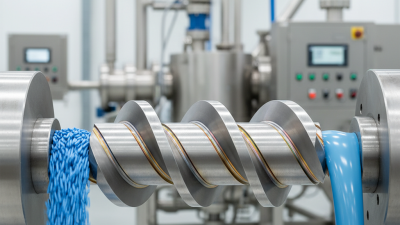
An extruder screw is the rotating core inside an extrusion barrel. It conveys, melts, mixes, and pressurizes polymer material. Its flights, diameter, length, and compression ratio directly affect output quality.

The manufacturer matters because screw geometry must match the material and process. A screw for rigid plastic may perform poorly with recycled blends or heat-sensitive compounds. Experienced manufacturers study resin behavior, barrel temperature, torque, and expected production speed before recommending a design. They should provide material certificates, dimensional inspection records, and wear-resistance data. Reliable suppliers also explain tolerances clearly, rather than promising impossible results. That honesty matters. In practice, even a well-designed screw can disappoint when installation, heating, or feeding conditions are neglected.

Tips: Ask how the manufacturer validates screw performance. Request drawings, steel specifications, surface-treatment details, and test results. Check whether engineers can adjust flight depth for your actual resin. Confirm delivery times and after-sales support in writing. Measure the old screw before ordering a replacement. Small errors can create large pressure changes. Also, compare manufacturers by technical evidence, not attractive photographs or low prices. A costly mistake is choosing a screw based only on diameter. I have seen specifications look correct while mixing performance remained uneven. That possibility deserves careful review.
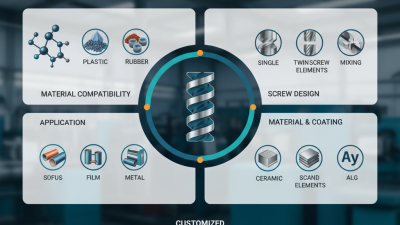
Which Factors Define a Top Extruder Screw Manufacturer?

What Are the Top Extruder Screw Manufacturers?

Which Factors Define a Top Extruder Screw Manufacturer?

A top extruder screw manufacturer begins with process understanding, not just machining capacity. Experienced engineers study polymer type, output targets, temperature, pressure, and mixing demands. They ask how the screw will operate inside the production line. That question matters.

Material selection reveals technical discipline. Hardened tool steel may suit abrasive compounds, while corrosion-resistant alloys can support demanding chemical environments. Surface treatment also affects wear, cleaning, and service life. A reliable manufacturer explains these choices clearly instead of hiding behind vague specifications.

Dimensional accuracy is equally important. Small changes in flight depth or clearance can alter melt quality and energy use. Skilled manufacturers use controlled machining, heat treatment records, and inspection reports. They should verify critical dimensions before shipment. Good documentation builds trust.

Practical support separates capable suppliers from ordinary workshops. A strong team can review drawings, identify weak mixing zones, and recommend changes based on production evidence. It should also provide maintenance guidance and realistic lead times. Fast delivery sounds attractive. It is not always wise.

No manufacturer gets every design right. Processing conditions change, and field data can expose assumptions that looked reasonable on paper. The best suppliers admit this possibility and improve their designs. Buyers should inspect references, testing methods, quality records, and communication habits. A polished website proves very little. Hands-on experience proves more.

What Are the Top Extruder Screw Manufacturers? - Which Factors Define a Top Extruder Screw Manufacturer?

Evaluation Dimension What a Top Manufacturer Demonstrates Relevant Technical or Commercial Indicator How Buyers Can Verify It
Material Selection Uses steel grades and surface treatments appropriate for the polymer, filler content, temperature, and wear conditions. Common options may include nitrided steels, tool steels, stainless steels, and corrosion- or wear-resistant alloys. Request material certificates, heat-treatment records, and documented compatibility recommendations.
Dimensional Accuracy Maintains consistent flight geometry, root diameter, pitch, clearances, and concentricity throughout the screw. Critical dimensions should be measured against approved engineering drawings and application tolerances. Review inspection reports, coordinate-measuring-machine records, and sample dimensional data.
Screw Design Capability Can design conveying, melting, mixing, barrier, venting, and metering sections for specific resins and output targets. Design inputs typically include resin type, additives, throughput, screw speed, barrel dimensions, and processing temperature. Ask for a cross-sectional drawing, design rationale, and documented trial or simulation methodology.
Wear Resistance Provides an appropriate balance between hardness, toughness, corrosion resistance, and repairability. Wear risk increases with abrasive fillers such as glass fiber, mineral filler, and flame-retardant compounds. Compare hardness data, coating or treatment specifications, previous service-life records, and warranty terms.
Manufacturing Process Control Uses controlled machining, heat treatment, welding or hardfacing procedures, finishing, and final inspection. Traceability should link raw material, production route, inspection results, and final shipment. Review quality procedures, process flow documents, nonconformance records, and inspection checklists.
Quality Management Operates a documented quality system with repeatable inspection and corrective-action processes. A current ISO 9001 certification can indicate a formal quality-management system, but it does not replace product-specific verification. Verify certification scope and validity through the issuing certification body.
Application Coverage Supports common extrusion processes, including film, sheet, pipe, profile, compounding, recycling, and injection-related applications. Experience should match the buyer’s polymer family, filler level, output range, and equipment configuration. Request anonymized case studies, reference applications, and performance data from comparable installations.
Performance Consistency Delivers stable output, melt quality, pressure behavior, mixing performance, and temperature control when the screw is correctly matched to the process. Key results include output rate, melt-temperature uniformity, pressure stability, dispersion quality, and energy use. Use acceptance tests with agreed operating conditions and measurable pass/fail criteria.
Compatibility and Installation Matches the extruder’s barrel, drive, thrust bearing, coupling, feed direction, and screw-removal arrangement. A screw can fail to perform correctly if its geometry or interface dimensions do not match the machine. Provide equipment drawings and confirm interface dimensions before production approval.
Lead Time and Capacity Communicates realistic production schedules and has sufficient machining, treatment, inspection, and packaging capacity. Lead time varies with screw length, diameter, alloy, treatment, geometry, and production load. Obtain a written schedule covering drawing approval, manufacturing, inspection, shipment, and contingency time.
Technical Support Provides engineering consultation, start-up guidance, troubleshooting, maintenance advice, and replacement support. Support quality is especially important when processing unfamiliar materials or changing screw geometry. Confirm response channels, service coverage, documentation, and escalation procedures in writing.
Total Cost of Ownership Balances purchase price with service life, output stability, maintenance frequency, energy consumption, and downtime risk. The lowest initial price may not produce the lowest cost per operating hour or unit of output. Compare lifecycle costs using expected service intervals, production losses, repair costs, and warranty coverage.
Documentation and Transparency Supplies clear drawings, specifications, material data, inspection results, operating recommendations, and warranty conditions. Complete documentation reduces installation errors and supports repeat orders or future screw modifications. Use a standardized supplier questionnaire and require document approval before manufacturing begins.
Practical selection principle: A top extruder screw manufacturer should be evaluated through application fit, measurable quality controls, documented materials and processes, verified performance, technical support, and total cost of ownership rather than price alone.

Who Are the Leading Extruder Screw Manufacturers by Market Focus?

Extruder screw manufacturers often separate themselves by market focus, not by catalog size. In commodity plastics, leading suppliers prioritize stable output, wear resistance, and repeatable screw geometry. Their designs support high-volume processing of polyethylene, polypropylene, and similar materials. Buyers usually examine flight depth, compression ratio, surface hardness, and delivery consistency.

Engineering plastics require a different manufacturing approach. Suppliers in this segment develop screws for glass-filled, mineral-filled, and heat-sensitive compounds. They may use specialized alloys, corrosion-resistant surfaces, and mixing sections that reduce material degradation. I have found that practical testing matters more than impressive specifications. A screw can look excellent on paper yet produce unstable melt pressure during long production runs.

Recycling-focused manufacturers concentrate on contamination, variable moisture, and inconsistent feedstock. Their screws often include stronger feeding zones and adaptable mixing elements. Medical and food-processing markets demand tighter documentation, cleaner surfaces, and traceable quality checks. Custom-service manufacturers support processors with drawings, wear analysis, and process trials. This is valuable when a standard design fails. Still, custom engineering is not automatically better. It can increase cost, extend lead times, or introduce untested assumptions. A reliable supplier should explain those limits clearly. Purchase decisions should compare test data, material compatibility, machining tolerances, inspection records, and technical support after installation. Ask for evidence. The details often reveal more than the sales language.

How Do Manufacturers Differ in Materials, Designs, and Customization?

The top extruder screw manufacturers differ most in metallurgy, geometry, and engineering discipline. PlasticsEurope reported global plastics production of 413.8 million tonnes in 2023. That scale intensifies demand for stable output and longer screw life. Nitrided steel suits standard polyolefin processing and moderate abrasion. Bimetallic screws offer stronger protection for mineral-filled or glass-filled compounds. Tool steels can improve hardness, but heat treatment and machining quality remain critical. Material choice is never universal.

Design separates a basic replacement screw from a process-specific solution. Manufacturers may offer barrier flights, mixing sections, deeper feed zones, or adjustable compression ratios. Twin-screw systems also require careful control of element arrangement, torque, and residence time. OECD data shows that only 9% of global plastic waste was recycled in 2019. This pressure encourages screws designed for recycled feedstock, which often contains moisture, contamination, and inconsistent melt flow. A promising design can still fail without reliable feeding.

Customization should begin with measurable process data. Strong suppliers review resin type, filler percentage, throughput, barrel dimensions, L/D ratio, and operating temperature. They should provide material certificates, dimensional inspection records, and trial-run results. Ask for wear mapping after production, not only polished photographs. The cheapest quotation may look efficient. I would question it. A lower initial price can hide shorter service life, unstable pressure, or difficult maintenance. Independent test reports, documented tolerances, and practical commissioning support offer stronger evidence than marketing claims. Based on PlasticsEurope and OECD findings, durability and recycled-material capability deserve equal attention with purchase price.

How Should Buyers Compare Extruder Screw Manufacturers?

When comparing extruder screw manufacturers, buyers should examine measurable performance, not impressive catalog language. Grand View Research estimates the global plastic extrusion machine market reached about USD 7.7 billion in 2023, with growth near 4.8% annually through 2030. Mordor Intelligence forecasts a similar expansion, although its market boundary differs. This growth increases supplier choices, but it also makes technical screening more important.

Start with screw geometry, steel grade, heat treatment, and machining tolerance. Ask for documented test results using your resin, filler level, output rate, and barrel temperature. A reliable manufacturer should explain mixing quality, residence time, torque limits, and expected wear. Request microscope images of coatings and a dimensional inspection report. Small errors matter. A 0.05-millimeter mismatch can affect leakage, melt temperature, and energy use. Compare expected service life, not only purchase price. Industry maintenance studies commonly show that wear parts and unplanned downtime can create a large share of extrusion operating costs, but exact percentages vary by process and accounting method.

Check traceability from raw material certificate to final inspection. ISO 9001 certification supports process control, but it does not prove superior screw design. Ask for customer references with comparable polymers and production speeds. Delivery promises also need evidence, including production capacity and replacement-part availability. Some buyers overlook technical support after installation. That is a mistake. Still, no supplier can guarantee identical results without trials; resin formulation, barrel condition, and operator settings may change performance. A fair comparison should include a controlled sample run, written acceptance criteria, warranty terms, and total cost over three to five years.

How Should Buyers Compare Extruder Screw Manufacturers?

Use a weighted evaluation framework when comparing extruder screw manufacturers. Product quality and application expertise typically receive the highest priority, followed by material selection, delivery reliability, technical support, and total ownership cost. The values represent an illustrative 100-point buyer assessment model and do not contain company or brand data.