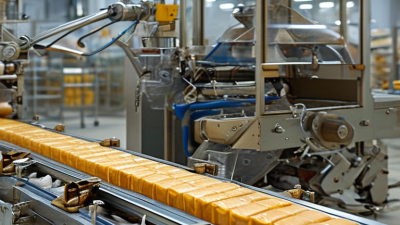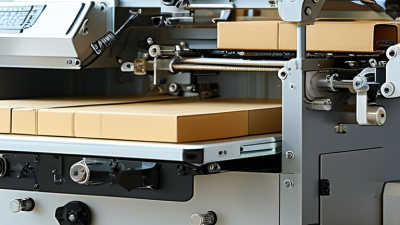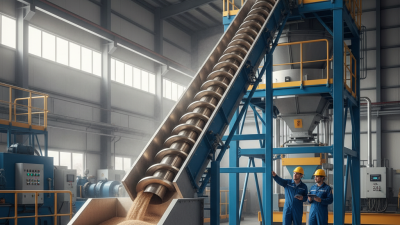
Choosing the right Flow Wrap Machine can shape your production speed, product protection, and daily operating costs. A machine may look impressive in a showroom, yet perform poorly with sticky products, uneven shapes, or thin film. The best choice begins with your actual packaging conditions, not a supplier’s headline capacity.
In this guide, we examine seven practical tips for making a dependable decision. You will learn how to compare sealing quality, film compatibility, machine speed, changeover time, and operator safety. We also consider cleaning access, spare-part availability, technical support, and long-term energy use. These details matter when a line runs for eight hours and every unsealed package creates waste.
Small tests reveal a lot. Watch the film track around the product. Listen for unusual sealing-jaw noise. Check whether operators can adjust settings without special tools. Ask suppliers for trial results using your product, dimensions, and preferred packaging material. Independent certifications and documented performance data can strengthen your evaluation, but they should not replace hands-on testing. I have seen equipment chosen for maximum speed become a daily bottleneck after frequent format changes. That assumption deserves a second look. A reliable Flow Wrap Machine should match your products, workforce, facility, and future plans. The cheapest quotation may not be the lowest total cost. Take time to question every promise.
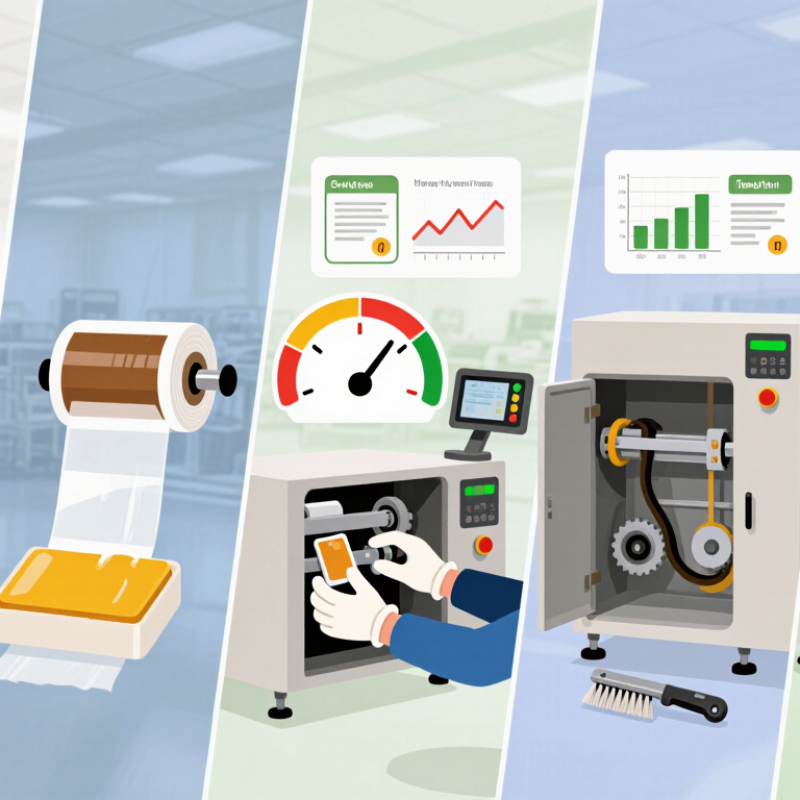
Choosing a flow wrap machine starts with the product, not the machine name. Horizontal models suit bakery items, bars, hardware, and other individual products. Intermittent-motion machines often handle delicate products with careful stopping and sealing. Continuous-motion systems can support higher output, but they may require steadier feeding and more accurate product spacing. Consider product length, width, height, weight, and shape before comparing speeds.
Check the packaging material carefully. Film thickness, sealability, stiffness, and barrier needs affect machine performance. A fragile biscuit needs gentle infeed handling. A sticky snack may require different sealing temperatures and film control. Ask whether the package needs gas flushing, tamper evidence, or extended shelf protection. Confirm the machine can create clean end seals without crushing the product. Small details matter.
Test real products during a factory trial. My early estimates were too optimistic when product sizes changed during production. That mistake taught me to test the smallest and largest formats. Review changeover time, sensor accuracy, cleaning access, and spare-part availability. Inspect the sealing jaws after repeated cycles. A fast machine is not a good choice if operators struggle with adjustments. Leave room for future product variations, but avoid paying for features you cannot use. Reliable performance usually comes from matching the machine to actual packaging requirements.

Choosing a flow wrap machine starts with matching speed to product size and daily volume. In production trials, I measure actual packs per minute, not the brochure’s maximum. A small snack may run quickly, while a tall carton needs slower film control and longer sealing time. Tip 1: Record product length, width, height, weight, and shape. Tip 2: Calculate hourly demand, then add realistic allowance for changeovers, cleaning, and minor stops. Peak speed can mislead.
Tip 3: Compare the machine’s stable operating speed with your required output. If demand is 120 packs per minute, a reliable 140 may outperform an unstable 180. Tip 4: Test the smallest and largest products on the same line. Test real products. Watch film tracking, seal pressure, cutting accuracy, and rejected packs. Product spacing matters too. Crowded infeed systems often create jams. I once underestimated spacing on a mixed-size run; the speed target looked fine, but downtime erased the gain.
Tip 5: Check whether format changes need tools, recipes, or manual adjustments. Frequent size changes make flexibility more valuable than top speed. Tip 6: Ask for a long trial using your real film and products. Short demonstrations can hide heat-up delays. Tip 7: Review data from several shifts, including rejects, operator interventions, and maintenance stops. A simple spreadsheet can expose the real cost per good pack. Leave headroom, but not too much. An oversized machine may waste floor space, energy, and budget.
The chart shows practical speed ranges for horizontal flow wrapping applications. Smaller products generally support higher speeds, while larger products require lower speeds to maintain accurate film tracking, stable sealing, and consistent product spacing. Select a machine whose rated speed comfortably exceeds your target output so it can operate reliably without running continuously at maximum capacity.
Choosing the Best Flow Wrap Machine: 7 Practical Tips
Tip 1: Test film compatibility before comparing machine speed. Film stiffness, thickness, and shrink behavior affect feeding and sealing. In production trials, I check whether the film tracks smoothly around the forming box. Wrinkles often reveal poor tension control. Tip 2: Inspect the sealing system closely. A strong seal should remain closed after gentle pulling and a basic leak test. Record sealing temperature, pressure, and dwell time. Small changes matter.
Tip 3: Match the machine to your product dimensions. Irregular products may need adjustable guides and stronger film support. Tip 4: Measure material efficiency, not only output speed. Track trim waste, rejected packs, and unused film from each roll. A fast machine can still be expensive. Tip 5: Examine cutting accuracy. Clean cuts reduce loose edges and improve package appearance. Misaligned blades can damage film or product surfaces.
Tip 6: Run longer trials with real materials. Short demonstrations can hide heat buildup, film stretching, or inconsistent seals. I once approved a setting too quickly; later, afternoon humidity changed the seal quality. That mistake was avoidable. Tip 7: Request measurable test data, including pack rate, waste percentage, seal strength, and changeover time. Ask how operators adjust the machine during film changes. Practical usability matters. A perfect seal on day one is not enough. Reliable performance needs repeatable settings, clear maintenance access, and documented checks.
A flow wrap machine should fit your production reality, not only its brochure speed. The International Federation of Robotics reported 541,302 industrial robots were installed worldwide in 2023. This signals growing automation, but faster is not always better. Check servo control, automatic film tracking, recipe storage, and sensor-based product detection. These features can reduce setup errors and stabilize sealing during product changes. Ask for a live trial with your actual products. Small tests reveal large problems.
Tip 1: Test usability. Operators should adjust temperature, film tension, and timing from a clear interface. Tool-free changeovers are valuable, especially with frequent product sizes.
Tip 2: Inspect maintenance access. Hinged guards, visible lubrication points, and easy belt replacement can shorten downtime. Request documented maintenance intervals and spare-part lead times. I would not trust a machine that hides every service task behind complicated panels.
Tip 3: Verify safety functions. Emergency stops, guarded sealing areas, interlocks, and lockout provisions should be clearly documented. OSHA’s FY2024 enforcement data continued to list machine guarding among its most frequently cited standards.
Tip 4: Measure cleaning time. Crumbs and film scraps often collect beneath conveyors.
Tip 5: Review data access. Production counts, alarms, and downtime history support practical decisions.
Tip 6: Compare energy use at your normal speed.
Tip 7: Ask operators to score the machine after a full shift. Their feedback may be less polished, but usually more honest.
Comparing total cost requires more than checking the purchase price. PMMI’s 2023 State of the Industry report placed U.S. packaging machinery shipments above $10 billion, showing a highly competitive investment market. Ask for verified figures on film waste, electricity use, changeover time, maintenance, and rejected packs. A machine saving two minutes per changeover may outperform a cheaper model after several years. However, projected savings can be optimistic. Test them with your own products and operators.
Supplier support can protect production when problems occur at 2 a.m. Request response-time targets, technician availability, spare-parts coverage, and training records. Practical experience matters here. A clear service agreement is stronger than a friendly sales promise.
Smithers’ Future of Global Packaging to 2028 forecasts continued packaging-market growth, so expansion planning deserves equal attention. Check whether the wrapper can accept additional feeders, coding systems, inspection equipment, and digital production reporting. Confirm available floor space, electrical capacity, and software compatibility before purchase. Otherwise, growth may require replacing the entire machine. That mistake is expensive.