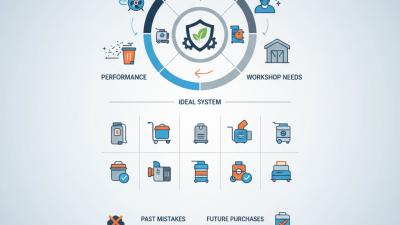
Choosing among the top dust collector suppliers for global buyers involves more than comparing prices. A workshop needs dependable airflow, suitable filtration, replacement parts, and clear technical support. A system that looks impressive in a catalog may struggle when connected to long duct runs or several machines. Details matter.
Dust-collection educator Bill Pentz’s published guidance can be summarized this way: “Capture fine dust at its source, before it spreads.” This is a paraphrase, not a verified verbatim quotation. The principle still gives buyers a useful starting point: assess the dust type, required airflow, filter performance, and collection layout before requesting a quote. Ask suppliers for performance data and written recommendations. Check how they handle installation guidance, spare filters, and service across your region.
A careful supplier comparison should also consider materials, build quality, delivery timelines, and the availability of replacement components. For international orders, confirm that product specifications and documentation match the requirements of the destination market. Do not rely on broad claims such as “high efficiency” without supporting figures. A second opinion may help. It can also expose gaps in an early plan. No supplier can choose the right system from a product photo alone. Share realistic operating details, compare proposals on equal terms, and treat Collector Dust control as an ongoing process, not a one-time purchase. Some decisions remain uncertain until the equipment runs under real shop conditions. That deserves honest discussion.

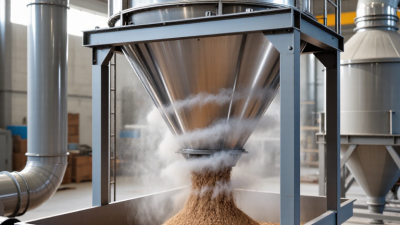
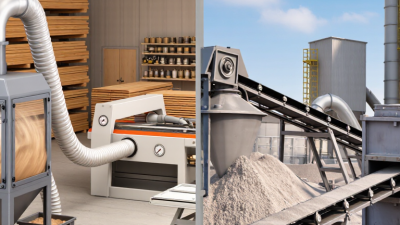
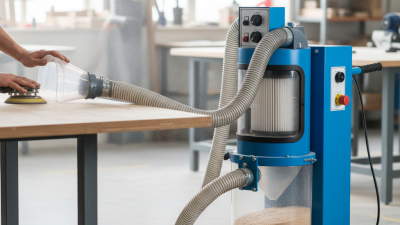
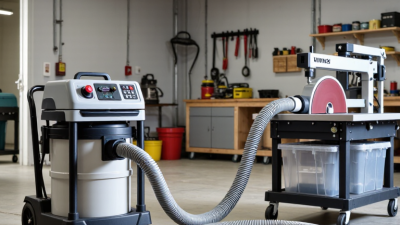
Dust collectors capture airborne particles near cutting, grinding, mixing, and material-transfer points. In a woodworking shop, that may mean fine sawdust drifting from a planer. In metalworking, it may be smoke and particulate from machining or thermal processes. The right system depends on particle size, dust load, airflow, moisture, and whether the process changes during a shift. A collector is not just a fan and a filter.
The U.S. Environmental Protection Agency’s fabric-filter fact sheet reports typical collection efficiencies of 99% to 99.9% for new installations. Actual results vary with design, filter condition, and operating practices. OSHA’s Table Z-1 lists permissible exposure limits of 15 mg/m³ for total particulate not otherwise regulated and 5 mg/m³ for the respirable fraction. These are exposure limits, not proof that a particular collector will protect workers.
Placement matters. So does maintenance. A clogged filter can reduce airflow, while poor hood positioning may let dust escape before it reaches the duct. Still, no collector solves every problem. Buyers should check the supplier’s airflow calculations, filter specifications, and service plan against the actual process. Small details can change performance.
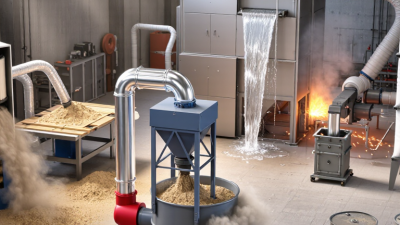
Global buyers should evaluate dust collector suppliers by asking for evidence, not broad performance claims. Start with the process: dust type, particle size, temperature, moisture, and required airflow. A supplier should explain how its proposed unit handles those conditions and provide supporting calculations or test data. Ask for pressure-drop figures, filter-life assumptions, and operating costs, not only the purchase price. A glossy brochure is not proof.
Check construction details closely. Request drawings that show access doors, hopper dimensions, filter replacement clearance, and connection points. These details matter when equipment must fit an existing plant. Confirm the filter media suits the actual dust and cleaning method. Ask how the supplier verifies collection efficiency and which local requirements its design addresses; requirements vary by market and application. Clear documentation matters.
Service capability is equally important. Ask whether technicians can support commissioning, troubleshooting, and operator training in your region. Get realistic lead times for filters, valves, and other wear parts. References from facilities with similar dust and duty cycles can reveal practical strengths and recurring problems. Compare warranty limits and response times in writing. Then ask one harder question: what happens when the system performs below its stated target? A candid, specific answer is more useful than another polished promise. There may still be gaps in a proposal; record them before comparing suppliers.
Global buyers should compare suppliers by regional engineering strengths and product fit. Many North American suppliers offer custom baghouses and cartridge collectors, with options for heavy industrial processes. European suppliers often emphasize compact designs, energy use, and fine-particle filtration. Across Asia, buyers can find modular systems and broad production capacity, but service coverage varies. Regional patterns are useful, not guarantees.
Product specialization matters more than a polished catalogue. Cartridge collectors suit many dry, fine-dust applications; baghouses handle larger air volumes and demanding loads. The U.S. EPA’s Fabric Filter fact sheet, EPA-452/F-03-025, reports typical collection efficiencies of 99–99.9%. Actual performance depends on filter media, dust properties, and operating conditions. A high number alone proves little. Supplier comparisons should include pressure-drop data, replacement-filter availability, and commissioning support. A map alone can mislead.
Tips: Share dust samples, airflow, temperature, and shift patterns when requesting quotes. Ask for comparable test data and local service response times. Check the fine print. EPA’s Air Pollution Control Cost Manual also stresses application-specific equipment and cost evaluation; real plants rarely match a catalogue example exactly.
For global buyers, supplier quality is more than a polished catalogue. The ISO Survey 2022 recorded 1,265,216 valid ISO 9001 certificates across 189 countries and economies. That scale makes certification a useful screening tool, not proof of a well-built collector. Check whether the certificate covers the manufacturing site and product process you are buying. Ask for inspection records, filter specifications, and documented airflow test results. One caveat: paperwork cannot show how carefully a unit was assembled.
Dust-handling experience matters because the wrong design can create serious risks. The U.S. Chemical Safety Board’s 2006 Combustible Dust Hazard Study documented 281 incidents, 119 deaths, and 718 injuries from 1980 to 2005. These historical figures are not a current incident rate, but they underline why buyers should examine hazard assessment, isolation features, and application-specific engineering. Ask suppliers to explain how their design handles your material, dust load, and operating conditions. Vague answers deserve a second look.
Service can distinguish two technically similar offers. Request commissioning steps, local spare-parts availability, response times, and clear instructions for checking airflow and filter pressure drop. A useful supplier can interpret readings from the actual installation, not just send a generic maintenance sheet. Ask for references from comparable processes, then confirm what support those customers received after delivery. Ask for evidence. A neat certificate still cannot guarantee a smooth handover, and buyers should verify the details before signing.
A practical comparison framework for assessing supplier quality, certifications, and service.
Illustrative buyer-assessment weights, not measured supplier rankings. Verify certificates, test reports, and service commitments directly with each supplier; requirements vary by application and destination market.
Selecting a dust-collection supplier starts with the material, not the equipment catalog. Describe the dust’s particle size, moisture, temperature, and production rate. Include the machines, hoods, and duct lengths that will connect to the system.
OSHA’s 2016 respirable crystalline silica rule estimated that 2.3 million U.S. workers were exposed to silica dust; it sets an eight-hour exposure limit of 50 micrograms per cubic meter. This makes capture performance and suitable filtration more than purchasing details.
Ask suppliers to explain their airflow and pressure calculations for your actual layout.
Numbers matter. Ask for data.
Compare proposals on measurable performance, not filter area alone. Request test results, expected filter life, cleaning requirements, and the pressure-drop range that signals maintenance. For combustible dust, ask how the supplier will assess the hazard and design appropriate safeguards.
Check who commissions the system and verifies airflow at each hood. A gauge reading at the collector does not prove effective capture at a worker’s breathing zone. Then check it.
Review service response times, spare-part availability, and references from facilities with similar dust and operating hours. A low quote may omit ductwork or commissioning. Even a polished proposal can miss a shift-specific production change, so have operators review the assumptions before signing.
Cite: OSHA, Occupational Exposure to Respirable Crystalline Silica, Final Rule, 2016.