Leave Your Message

2026 Top Collector Dust Types What Should Buyers Choose?

Choosing the right Collector Dust system in 2026 requires more than comparing prices and motor ratings. Buyers should examine the dust itself, including particle size, moisture, temperature, abrasiveness, and collection volume. Wood dust behaves differently from metal dust. Mineral dust can wear filters quickly. Fine particles may also escape through weak seals.

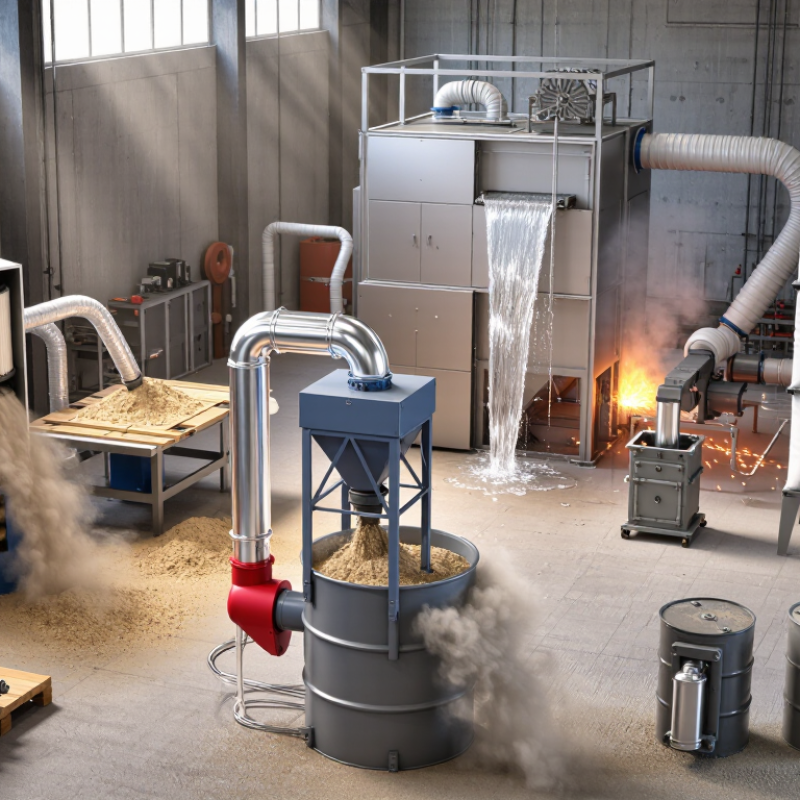
Dr. Elena Morris, an independent dust-control engineer, explains, “The right Collector Dust solution begins with the material, not the machine.” Her observation offers a practical starting point for buyers. Cartridge collectors suit many fine, dry particles and compact workshops. Baghouse systems often handle heavier industrial loads and longer operating periods. Cyclone collectors can remove larger particles before final filtration. Wet collectors may help with selected combustible or sticky dust, but they require careful water management and maintenance.

Small details matter. A clogged filter can reduce airflow within hours. A poorly fitted hose can leave visible dust on a workbench. Buyers should check airflow ratings under real operating conditions, not only laboratory figures. They should also confirm filter efficiency, replacement costs, noise levels, grounding features, and manufacturer support.

There is no perfect type.

That is the difficult part. Product descriptions often simplify complex dust behavior. A system that performs well in a clean woodworking room may struggle in a busy fabrication plant. This guide compares leading Collector Dust types through practical use, operating limits, maintenance demands, and long-term value. The goal is not to promote one design. It is to help buyers choose with clearer evidence and fewer expensive assumptions.
2026 Top Collector Dust Types What Should Buyers Choose?

What Are Collector Dust Types and How Do They Work?

Collector dust types describe how a system captures, separates, and stores airborne particles. The main options include cyclones, cartridge collectors, baghouses, and wet scrubbers. A cyclone spins dusty air inside a cone. Centrifugal force pushes heavier particles into a hopper. It works well for coarse dust, but fine particles may escape. Cartridge and baghouse systems pass air through pleated media or fabric bags. The filter surface holds particles while cleaned air exits. The U.S. EPA’s AP-42 guidance notes that well-designed fabric filters can exceed 99% particulate collection efficiency under suitable conditions.

Wet scrubbers use liquid droplets to capture dust. They suit some hot, sticky, or reactive dust streams. However, they create wastewater and require careful corrosion control. The correct choice depends on particle size, moisture, temperature, airflow, and dust loading. A 2023 industrial filtration market analysis by MarketsandMarkets identified air pollution control and process filtration as major demand areas, reflecting stricter workplace exposure expectations. Still, a published efficiency figure is not a guarantee. Poor sealing, overloaded filters, or neglected maintenance can reduce real performance quickly.

Tips: Test the dust before choosing equipment. Ask for particle-size data, pressure-drop limits, and airflow readings. Inspect the hopper and filter seals regularly. OSHA and NIOSH guidance also support exposure monitoring, not assumptions. My practical view is simple: buyers often focus on collector type too early. The dust’s behavior should lead the decision. A slightly oversized system may cost more, yet an undersized unit can waste energy and fail quietly.

2026 Top Collector Dust Types: What Should Buyers Choose?

Typical particulate removal efficiency of common dust-collection technologies under properly designed and maintained operating conditions.

Cyclones are effective for larger particles and pre-separation. Baghouse and cartridge collectors generally provide higher fine-dust capture, while wet scrubbers are useful when dust control and gas cooling are both required. HEPA filtration provides the highest rated capture efficiency for particles around 0.3 micrometers, but it is usually used as a final filtration stage.

Which Dust Collector Types Match Different Materials and Workplaces?

2026 Top Collector Dust Types: What Should Buyers Choose?

Choosing a dust collector starts with the material, not the machine’s appearance. Fine wood dust usually suits a cartridge collector with high-efficiency filtration and automatic cleaning. Metal grinding creates heavier particles and sparks, so a spark-resistant pre-separator may be necessary. Coarse chips need wider ducting and a strong cyclone stage. Very fine dust can quickly blind an unsuitable filter.

The workplace changes the decision. A small workshop may need a compact unit with flexible hose connections and simple filter access. A production floor often requires fixed ducting, balanced airflow, noise control, and continuous monitoring. Moist or sticky dust can damage standard filter media. Reactive or combustible dust requires a documented hazard assessment, suitable isolation, grounding, and professional system design. Never assume a larger fan solves every problem.

Buyers should check airflow at the farthest pickup point, not only the advertised rating. Filter pressure readings matter. So does maintenance time. A collector that is powerful but difficult to empty may be ignored, and neglected equipment becomes unreliable. It is also wise to confirm replacement filter availability before purchase. I would not choose from dust type alone. Worker habits, collection frequency, room layout, and future machinery all influence performance. The “perfect” specification can still fail in daily use. An on-site test with the actual material is often more valuable than a polished brochure.

How Do Filtration Methods Affect Dust Capture and Airflow?

In 2026, buyers should judge dust collectors by capture performance, not filter labels alone. Filtration method controls what stays in the air and how hard the fan works. A cartridge filter offers a large surface area in a compact housing. A fabric bag handles heavier dust well. A cyclone removes larger particles before they reach the final filter.

Particle size matters. ASHRAE Standard 52.2 reports that MERV 13 filters capture at least 85% of particles from 1 to 3 microns. Performance drops for smaller particles. HEPA filtration reaches 99.97% efficiency at 0.3 microns under DOE test conditions. That sounds decisive. Yet higher efficiency usually creates greater initial pressure drop and energy demand.

Airflow changes during real operation. Dust loads the filter, pressure rises, and suction can weaken at the hood. The U.S. EPA’s Air Pollution Control Cost Manual recommends evaluating pressure drop, maintenance, and operating energy together. I have seen systems with excellent laboratory capture perform poorly because ducts were too long or filters were cleaned too aggressively. A buyer should request airflow data at both clean and loaded conditions. Check the test method, particle range, and pressure-drop curve. Numbers without context mislead. Small details matter.

What Safety, Maintenance, and Compliance Factors Should Buyers Check?

2026 Top Collector Dust Types: What Should Buyers Choose?

Safety should guide the purchase, not only airflow or filter price. The U.S. Chemical Safety Board recorded 281 combustible-dust incidents, causing 119 deaths and 718 injuries from 1980 to 2005. Its Combustible Dust Hazard Study links many events to poor housekeeping and weak hazard controls. Buyers should identify dust explosibility, particle size, moisture, and toxicity before choosing a cartridge collector, baghouse, cyclone, or wet scrubber. Fine organic or metal dust may require bonding, grounding, explosion venting, isolation, and spark detection. A cyclone alone is not automatically safe.

Exposure limits also matter. OSHA sets an eight-hour permissible exposure limit of 50 micrograms per cubic meter for respirable crystalline silica. The action level is 25 micrograms per cubic meter. NIOSH recommends similar control attention. Test results should come from personal sampling, not visual judgment. Dust can look harmless.

Maintenance is often underestimated. Check differential pressure, filter seals, pulse cleaning, discharge valves, and duct buildup on a written schedule. NFPA 660, published in 2025, emphasizes hazard analysis, housekeeping, and explosion protection for combustible particulate solids. Local adoption still varies. That creates uncertainty. Buyers should request documented testing, maintenance access, filter compatibility, and disposal procedures. A technically impressive collector can fail when operators cannot inspect it safely. I would also review the design after process changes, because yesterday’s risk assessment may already be outdated.

How Can Buyers Compare Costs and Choose the Right Collector?

Choosing a dust collector should begin with the dust, not the price tag. Fine wood dust, metal particles, and heavier chips require different airflow and filtration performance. A cartridge collector often saves floor space, while a bag-style unit may offer simpler maintenance. Cyclone systems can separate larger debris before it reaches the filter. The right choice depends on particle size, daily workload, and available space.

Compare the full cost over several years. Include purchase price, ductwork, filters, electricity, cleaning labor, and replacement parts. A cheaper unit may demand frequent filter changes. That becomes costly in a busy workshop. Check airflow at the machine, not only the advertised maximum. Static pressure, duct length, bends, and leaks can reduce real performance. Small details matter.

Noise also affects daily use. A quieter collector may improve comfort and reduce worker fatigue. Examine the filter rating, dust-bin capacity, access doors, and cleaning method. Choose equipment with clear manuals and service support. I have seen buyers focus on motor power and overlook poor duct design. That mistake is easy to repeat. Leave room for future machines, but do not oversize without reason. Larger units can consume more energy and still perform poorly when the system is unbalanced. A practical comparison sheet often reveals the best value more clearly than a sales claim.

2026 Top Dust Collector Types: What Should Buyers Choose?

Collector Type Typical Airflow Range Indicative Equipment Cost (USD) Typical Filtration Efficiency Energy Demand Maintenance Requirement Best Dust and Application Fit Main Advantages Important Limitations Buyer Suitability
Cartridge Dust Collector 1,000–50,000 CFM $3,000–$60,000 Up to approximately 99.9% for properly selected fine-particle applications Medium; fan pressure drop commonly increases as filters load Medium; cartridge cleaning, inspection, and periodic replacement are required Fine, dry dust from welding, grinding, powder handling, laser cutting, and general manufacturing Compact footprint, high filtration area, quick installation, and good performance for fine dust Less suitable for sticky, oily, wet, or very high-temperature dust without special filter media Best overall for compact industrial systems
Baghouse Dust Collector 5,000–200,000+ CFM $15,000–$250,000+ Approximately 99% or higher when correctly designed and maintained Medium to high; fan size depends on airflow, filter loading, and duct resistance Medium to high; bags, cages, cleaning systems, and seals need routine service Large-volume dry dust from woodworking, grain processing, mineral handling, cement, and bulk material operations High capacity, durable construction, broad media selection, and effective continuous operation Larger footprint, more installation work, and higher replacement-filter costs than many cartridge units Best for high airflow and continuous-duty facilities
Cyclone Separator 1,000–100,000+ CFM $2,000–$50,000 Typically 70–95% for larger particles; lower performance for fine dust Medium; pressure drop is generally predictable and does not rely on filter loading Low; inspect the cone, inlet, discharge system, and wear surfaces Coarse, heavy, abrasive particles such as wood chips, sawdust, metal chips, and bulk solids No filter replacement, simple construction, good pre-separation, and strong tolerance for heavy dust loading Usually needs a secondary filter for fine particles and has limited control of respirable dust by itself Best as a pre-cleaner or low-maintenance first stage
Wet Scrubber 1,000–100,000+ CFM $20,000–$300,000+ Approximately 95–99% for selected particles when correctly sized and operated High; pumps, fans, and liquid circulation increase operating demand High; water quality, nozzles, pumps, sludge, corrosion, and wastewater require management Hot, combustible, sticky, corrosive, or moisture-tolerant dust and certain gas-contaminant combinations Can cool the gas stream, reduce fire risk in suitable applications, and handle difficult dust characteristics Creates wastewater or slurry, may require corrosion-resistant materials, and has higher operating complexity Best for specialized or high-temperature processes
Downdraft Table 1,500–12,000 CFM $5,000–$35,000 Approximately 95–99% with suitable filtration and correct operator positioning Medium to high depending on table size and filter design Medium; clean or replace filters and remove collected material from the work surface Welding, grinding, sanding, deburring, and other work performed directly over a table Captures dust close to the generation point and can reduce the need for extensive ductwork Limited to suitable workpiece sizes and operator positions; not a full-room ventilation replacement Best for localized manual workstations
Portable or Mobile Collector 500–5,000 CFM $1,500–$15,000 Approximately 95–99.9%, depending on filter grade, airflow, and dust type Low to medium; operating cost is usually lower because the unit serves one workstation Medium; filters must be monitored closely because small units load quickly in heavy-duty use Intermittent woodworking, welding, maintenance, remodeling, and flexible production areas Low initial investment, easy relocation, minimal duct installation, and useful for changing work layouts Limited airflow, collection capacity, and continuous-duty capability compared with centralized systems Best for small shops and changing production needs
Electrostatic Precipitator 10,000–500,000+ CFM $50,000–$500,000+ Approximately 95–99.9% for suitable particle sizes and stable operating conditions Medium; electrical power is required, but pressure drop can be relatively low High; collecting plates, electrodes, rappers, insulation, and high-voltage systems require inspection Large gas volumes containing fine particles, especially in established thermal or process industries Handles very large airflow volumes and can operate with relatively low gas-side pressure loss High capital cost, complex controls, sensitivity to dust resistivity, and electrical safety requirements Best for large, engineered process-emission systems
HEPA Final-Stage Filter Unit 300–20,000 CFM $3,000–$40,000 At least 99.97% at the rated test particle size for a true HEPA filter High; fine filtration produces higher pressure drop and requires suitable fan capacity Medium to high; filter replacement and safe handling of captured material are important Fine and potentially hazardous particles requiring very clean exhaust air after primary collection Very high final-stage particle control and useful protection for sensitive indoor environments Expensive to operate as the only collector; should normally be preceded by effective pre-filtration Best as a polishing stage for critical air-quality requirements

Cost ranges are indicative 2026 U.S. equipment-only estimates for standard configurations and exclude site preparation, ductwork, explosion protection, controls, installation, taxes, and freight. Actual selection should be based on airflow, dust characteristics, required emission limits, combustible-dust risk, operating hours, and total cost of ownership.