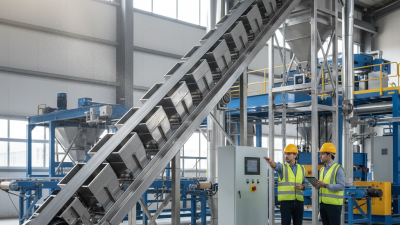
Why Choose a Belt Bucket Elevator?
A Belt Bucket Elevator offers a practical vertical conveying solution for grain, fertilizer, minerals, cement, and many other bulk materials. Its belt-mounted buckets lift material steadily, while enclosed casing reduces dust and product loss. The system also uses less floor space than long inclined conveyors. That matters in crowded processing plants.
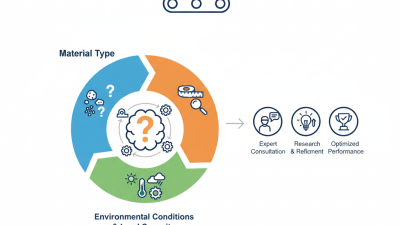
Dr. Andrew Jenike, a recognized bulk-solids handling authority, emphasized, “If you don't know the flow properties of your bulk solid, you don't know how it will flow.” His point remains essential when selecting a Belt Bucket Elevator. Material moisture, particle size, density, temperature, and abrasiveness affect bucket shape and belt selection. A thoughtful design can reduce spillage, belt wear, and unexpected shutdowns. Small details matter.
The advantages are clear, but the equipment is not automatically perfect. Incorrect loading can damage buckets. Poor alignment may increase belt wear. Weak maintenance planning can create expensive interruptions. These risks deserve honest attention. Operators should inspect belt tracking, bucket fasteners, pulleys, bearings, and discharge performance regularly. Reliable performance comes from proper engineering, not the elevator alone.
A well-designed Belt Bucket Elevator can deliver high capacity, gentle handling, and consistent vertical movement. It can also support cleaner production areas and more efficient plant layouts. However, every application needs verification. Product behavior changes. Operating conditions change. Even experienced teams can overlook a basic issue. That is why capacity calculations, material testing, safety guarding, and lifecycle planning should guide the final choice.
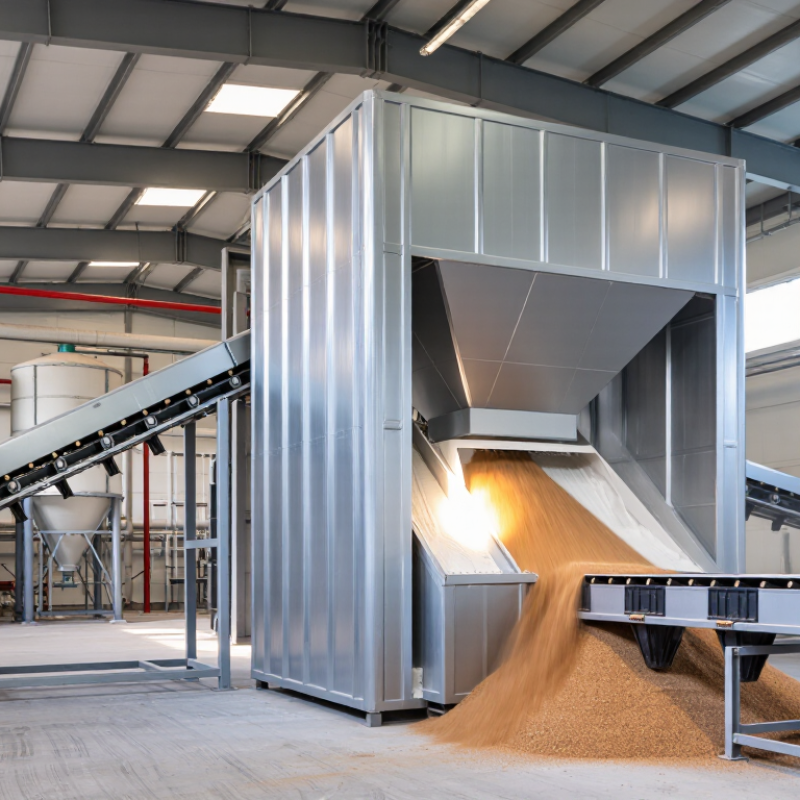
Why Choose a Belt Bucket Elevator?
What Is a Belt Bucket Elevator?
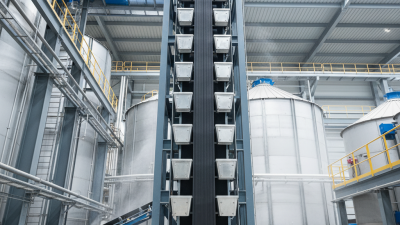
A belt bucket elevator is a vertical conveying machine for bulk materials. An endless belt carries attached buckets inside a protective casing. The buckets load at the boot section, rise continuously, and discharge material at the head.
It handles grain, fertilizer, minerals, and other dry, free-flowing products. The belt usually operates more quietly than a chain system. It also creates less vibration when correctly aligned. The U.S. Department of Agriculture reported global cereal production near 2.8 billion tonnes in 2023. That scale increases the need for reliable vertical handling equipment.
A belt bucket elevator includes a drive pulley, return pulley, buckets, belt, casing, and tensioning system. Engineers select bucket spacing and belt speed according to material density and flow behavior. CEMA guidance stresses correct loading, guarding, and belt tracking. These details often decide whether an elevator performs smoothly.
Small design errors matter.
The U.S. Mine Safety and Health Administration continues to identify powered material-handling equipment as a serious workplace hazard. Inspection doors, emergency stops, backstops, and dust-control measures therefore require practical attention. In real facilities, moisture or uneven feeding can reduce capacity. A theoretical specification may look impressive, yet daily operating conditions can tell a different story.
A belt bucket elevator is a continuous vertical conveying system in which buckets are mounted on a flexible belt. It is commonly used to lift bulk solids such as grain, cement, limestone, sand, and fertilizer. The representative bulk densities below illustrate why material properties are important when selecting bucket size, belt speed, and elevator capacity.
Values are representative loose bulk-density figures in kg/m³. Actual density varies with moisture content, particle size, compaction, and material grade. Belt bucket elevators are selected according to the material’s density, abrasiveness, temperature, required lift height, and target throughput.
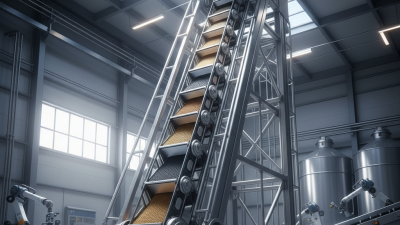
A belt bucket elevator moves bulk material vertically inside a tall, enclosed casing. At the bottom, material enters through an inlet and fills buckets attached to a continuous belt. The belt loops around pulleys at the elevator’s boot and head. As the drive pulley turns, it carries the loaded buckets upward.
Up they go. At the top, the belt passes around the head pulley, and the buckets tip their contents into a discharge chute. The discharge method depends on bucket shape, belt speed, and elevator design. Some systems rely on centrifugal force; others guide material out more gently. The empty buckets then travel down the return side to be filled again.
In practice, that sequence can be less tidy. Damp or sticky material may cling inside buckets, while uneven feeding can create surges and strain the belt. Operators should check belt tracking, tension, bucket fasteners, and buildup around the boot. A faint rubbing sound or material leaking from the casing deserves attention. It may signal a small alignment or wear issue, though diagnosis depends on the machine and material. Proper sizing matters too: a faster belt is not automatically a better one.
| Dimension | How It Works | Why Choose It? | Important Considerations |
|---|---|---|---|
| Basic operating principle | Buckets are attached at intervals to an endless belt. The belt travels around a head pulley and a boot pulley, carrying material upward inside an enclosed casing. | The continuous belt-and-bucket arrangement provides a straightforward way to lift bulk solids vertically. | Bucket spacing, belt speed, pulley diameter, and casing layout should be selected for the material and required capacity. |
| Loading and discharge | Material enters the boot section and fills the passing buckets. At the head, the belt changes direction and material leaves the buckets, typically by centrifugal action or gravity, depending on the elevator design and speed. | Well-matched loading and discharge arrangements support steady material flow and help reduce spillage. | Material properties and operating speed affect how cleanly the buckets fill and discharge. The discharge chute must be designed to prevent buildup. |
| Typical applications | Commonly used to elevate free-flowing or moderately abrasive bulk materials such as grain, seeds, feed ingredients, fertilizer, and some dry minerals. | A belt elevator can suit applications where continuous vertical conveying and relatively gentle handling are priorities. | Hot, sharp, highly abrasive, sticky, or corrosive materials may require a specially selected belt, bucket, and casing—or a different elevator design. |
| Handling characteristics | Material is carried in individual buckets rather than sliding along a trough for the full lift height. | This can limit continuous contact between the material and the elevator casing, which may help reduce wear and product damage in suitable applications. | Impact during loading and discharge can still cause damage or dust. Bucket shape, speed, and transfer-point design matter. |
| Belt versus chain drive element | A belt carries the buckets and runs over pulleys; chain elevators use one or more chains to support and move the buckets. | Belt construction can offer comparatively quiet operation and fewer moving metal-to-metal joints along the conveying path. | Selection depends on load, temperature, abrasion, maintenance practices, and the duty cycle. A belt is not automatically the best choice for every application. |
| Capacity and lift height | Capacity is determined by factors including bucket volume, bucket spacing, belt speed, fill efficiency, and material bulk density. | The system can be configured for different conveying duties by selecting suitable components and operating conditions. | There is no single capacity or height that applies to all belt bucket elevators. Confirm requirements with calculations based on the actual material and layout. |
| Energy and operation | The drive moves the loaded belt and buckets while overcoming friction and lifting the material. The required power depends on throughput, lift height, equipment efficiency, and operating conditions. | Correct sizing and a consistent feed can support efficient, dependable operation. | Overfeeding, poor belt tracking, material buildup, or excessive belt tension can increase wear and operating demands. |
| Maintenance and safety | Routine checks typically cover belt condition and tracking, bucket fasteners, pulleys, bearings, drive components, and buildup in the boot and head. | Planned inspections can help identify wear, misalignment, or material-flow problems before they lead to unplanned downtime. | Provide suitable guarding, access for inspection, and applicable dust-control and fire-safety measures. Isolate and lock out equipment before maintenance. |
Design note: Performance depends on material characteristics, elevator geometry, component selection, installation, and operating conditions. Final equipment sizing should be verified by a qualified designer using site-specific data.
A belt bucket elevator handles free-flowing materials that need vertical movement with limited floor space. Common loads include wheat, corn, rice, seeds, and dry feed. It can also carry certain fertilizers, pellets, and finely crushed minerals, provided their size and flow properties suit the buckets. FAO’s 2023 cereal supply-and-demand report estimated world cereal production at about 2.8 billion tonnes. That scale helps explain why grain facilities rely on equipment built for steady bulk flow. But capacity alone is not the whole story.
Material condition matters. Damp grain can cling to bucket surfaces, while abrasive mineral fines may accelerate wear at loading points. Large, sharp lumps can damage buckets or interfere with filling. CEMA’s Belt Conveyors for Bulk Materials guidance emphasizes assessing properties such as particle size, moisture, and abrasiveness when selecting bulk-handling equipment. Check these factors against the elevator design, not just a product’s stated throughput. In practice, a dusty sample in a lab may behave differently after a rainy delivery. Easy to overlook.
Tips
Share a representative sample with the equipment supplier. Include moisture content, the largest particle size, bulk density, and any tendency to bridge or cake. Ask how the feed point, belt speed, and bucket shape affect spillage and wear. A small test can reveal awkward flow before installation.
A belt bucket elevator moves bulk material vertically in a compact footprint. That matters when floor space is tight and grain must travel from a receiving pit to an overhead bin. Its enclosed casing helps contain material during lifting, while the belt and buckets provide a steady flow when correctly sized and maintained. Fewer exposed transfer points can also mean less spillage around the equipment. Less cleanup. But enclosure alone does not eliminate dust; sound seals and housekeeping still matter.
Capacity is another advantage. USDA’s Grain Stocks report estimated 12.2 billion bushels of corn were stored on U.S. farms and in commercial facilities on December 1, 2023. Handling systems serving operations at that scale need dependable vertical transfer, not just impressive nameplate capacity. A belt elevator can be configured for different materials and lift heights, though actual throughput depends on bucket spacing, belt speed, grain condition, and loading consistency.
The design can also run relatively smoothly, with fewer abrupt material impacts than some high-speed conveying arrangements. That may help limit grain damage, but results depend on operating conditions; it is not a guarantee. FAO’s 2019 State of Food and Agriculture estimated that 14 percent of food is lost between harvest and retail globally. Better handling cannot solve every cause, yet reducing avoidable spills and transfer losses is a practical contribution. Maintenance takes discipline: worn belts, misaligned buckets, or buildup can quickly undermine performance.
Selecting a belt bucket elevator starts with the material, not a catalogue capacity. Note its bulk density, particle size, moisture, temperature, and tendency to stick or abrade. A dry grain behaves differently from damp fertilizer or fine powder. That difference affects bucket shape, belt material, spacing, and discharge design. Be precise about required throughput and lift height, too. Undersizing can create bottlenecks; oversizing may increase energy use and material impact. Ask the supplier for operating data under conditions close to yours. A neat calculation is useful, but actual material can be less cooperative.
Maintenance should follow the machine’s manual and site conditions. Inspect the belt for fraying, cracks, and edge wear. Check bucket fasteners, alignment, and signs of rubbing. Listen for unusual knocking or scraping. Small changes matter. Keep the head and boot areas clear of buildup, since packed material can disrupt flow and strain components. Check belt tension and tracking at the intervals specified by the manufacturer; excessive tension can cause premature wear. Before inspection or cleaning, isolate the power and follow your facility’s safety procedures. Keep a simple log of inspections, adjustments, and recurring blockages. It may feel excessive at first. Still, the pattern often reveals a problem before a stoppage does.