What are the Top Industrial Robots in 2026 for Global Buyers?
As we look ahead to 2026, the landscape of industrial robots is set to transform dramatically. These machines will play a crucial role in automating production processes around the world. Many global buyers seek to enhance efficiency and reduce costs. Thus, understanding the top industrial robots will be essential for making informed purchasing decisions.
In recent years, technological advancements have driven innovation in industrial robots. Companies are exploring new designs, improved algorithms, and enhanced AI capabilities. However, there’s still room for improvement in terms of integration and usability. Buyers must navigate a complex market that offers various options and functionalities. It's not just about speed; precision, flexibility, and reliability are critical factors to consider.
Buyers should also be aware of potential shortcomings. Some industrial robots may require extensive training and maintenance, which can impact productivity. Evaluating each option carefully is vital. In this evolving market, making the right choice in industrial robots could mean significant gains or setbacks for companies worldwide.
Key Trends Driving the Industrial Robot Market in 2026
The industrial robot market is evolving rapidly, driven by key trends in technology and demand. By 2026, the global market is projected to grow significantly, reaching an estimated $61 billion, according to a report by Research and Markets. This growth is largely fueled by the rising demand for automation in manufacturing processes across various sectors.
One significant trend is the integration of artificial intelligence and machine learning in robotics. These technologies enable robots to perform complex tasks with greater precision and efficiency. In 2021, AI-enabled robots accounted for 27% of the market share. This figure is projected to increase, highlighting the shift towards smarter automation solutions. Furthermore, the push for sustainability is reshaping the types of robots that companies are investing in. Many buyers are looking for robots that minimize energy consumption and waste.
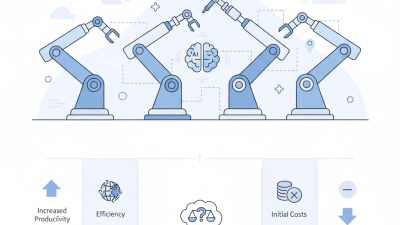
However, there are challenges that need addressing. High initial costs and integration complexities can be barriers for small to mid-sized enterprises. Additionally, the skills gap in the workforce remains a critical issue. Many organizations struggle to find personnel capable of operating and maintaining advanced robotic systems. As a result, continuous training and adaptation will be necessary to ensure the success of robots in industrial settings.
Top Industrial Robots in 2026 for Global Buyers
This chart illustrates the projected market share of various types of industrial robots in 2026 based on key trends driving the industrial robot market. The data reflects the increasing demand for automation across various sectors.
Top Industrial Robot Manufacturers and Their Market Shares
In 2026, the landscape of industrial robots continues to evolve. Understanding key manufacturers and their market shares is crucial for global buyers. Major players dominate the market, influencing technology trends and price points. These companies focus on automation to meet rising production demands. Regional preferences vary, affecting adoption rates.
Market leaders often offer a range of solutions. Considerations include payload capacity and flexibility. Some manufacturers specialize in specific industries, such as automotive or electronics. Buyers may face challenges in scaling operations with diverse robot capabilities. It's essential to evaluate each manufacturer's service support and innovation track record.
Emerging competitors steadily increase their presence. They challenge established leaders by introducing cost-effective options. However, quality and reliability can vary. Buyers should conduct thorough research. Continuous reflection on market dynamics is necessary. The ideal choice should balance innovation with proven performance.
What are the Top Industrial Robots in 2026 for Global Buyers?
| Robot Type |
Market Share (%) |
Key Features |
Typical Applications |
| Articulated Robots |
35 |
High flexibility, precise movement |
Assembly, welding, painting |
| SCARA Robots |
25 |
Fast operation, simple design |
Pick and place, assembly |
| Collaborative Robots (Cobots) |
20 |
User-friendly, safe for human interaction |
Packaging, inspection, assembly |
| Delta Robots |
10 |
High speed, low weight |
Sorting, packing, dispensing |
| Cartesian Robots |
10 |
Simple and robust |
Material handling, CNC machining |
Emerging Technologies in Industrial Robotics: AI and Machine Learning
The integration of AI and machine learning into industrial robotics is transforming manufacturing. In 2026, robots will likely be smarter, more adaptable, and capable of handling complex tasks. These advancements will enable robots to learn from their environment and improve over time. For example, a robot on a factory floor could adjust its operations based on real-time data. This capability helps streamline processes and reduce downtime.
Additionally, AI-driven robots can optimize production lines. They analyze data faster than humans, offering insights to enhance efficiency. Imagine a scenario where a robot predicts equipment failures before they occur. This could prevent costly halts in production. However, relying solely on technology may leave gaps. Continuous human oversight remains essential.
Emerging technologies will drive innovation, but they also present challenges. The balance between automation and human intervention must be carefully managed. Training is critical for workers to understand and utilize these advancements. As the landscape evolves, companies must adapt. The journey of integrating these technologies will require ongoing learning and adaptation, ensuring a harmonious relationship between robots and humans in the industrial sector.
Applications of Industrial Robots Across Diverse Industries in 2026
In 2026, industrial robots are reshaping industries globally. Their applications have evolved significantly, transcending traditional manufacturing roles. They now assist in diverse sectors, including logistics, agriculture, and healthcare. These versatile machines streamline processes, reducing human error while enhancing efficiency.
In logistics, robots automate sorting and packing. They can handle large volumes of goods rapidly. In agriculture, robots tend to crops, optimizing yield. Their precision ensures sustainable practices, making them invaluable during labor shortages. Similarly, in healthcare, robots support surgeries and patient care, demonstrating adaptability in sensitive environments.
Despite these advancements, challenges exist. The integration of robots can lead to job displacement, raising ethical questions. Furthermore, reliance on technology may cause vulnerabilities, especially in cybersecurity. Reflecting on these issues is essential as industries continue to embrace robotic solutions. Balancing innovation with social responsibility remains critical for a harmonious future.
Regulatory Landscape Impacting Global Industrial Robot Adoption
The regulatory landscape is crucial for the growth of industrial robots. As we approach 2026, companies face different compliance requirements across regions. Reports indicate an increase in regulatory scrutiny, especially concerning safety and environmental impacts. The International Federation of Robotics notes that safety standards are shifting, pushing manufacturers to rethink their designs.
Adoption rates of industrial robots vary globally due to these regulations. In Europe, for instance, compliance with stringent labor laws influences the speed of automation. The Robotics Industries Association highlights that countries with clear regulatory frameworks see up to 25% higher adoption rates than those lacking such guidelines. This disparity can affect decisions by global buyers regarding investments.
However, the evolving regulations present challenges. Companies need to invest in R&D to meet compliance standards, which can strain budgets. Some firms may struggle to adapt, leading to uneven competitiveness in the market. As regulations evolve, stakeholders need to anticipate changes to avoid disruption in their supply chains. The industry's future will depend on effectively navigating this regulatory terrain.