Top 10 Bulk Mixer Manufacturers and Suppliers
Selecting a reliable Bulk Mixer supplier requires more than comparing motor power or advertised capacity. Manufacturers serve demanding sectors, including food processing, pharmaceuticals, chemicals, minerals, and construction materials. Each application may involve different powders, moisture levels, bulk densities, and cleaning requirements.
Recent reports from Grand View Research and MarketsandMarkets show continued growth in the global industrial mixing equipment market. Their analyses connect this expansion with automation, hygienic processing, customized production, and rising demand for consistent batch quality. However, these reports use different market definitions. Their figures should guide research, not replace technical evaluation. That distinction matters.
Andrew W. Jenike, a leading authority in bulk-solids handling, famously stated, “There is no such thing as a free-flowing material.” His observation remains practical today. A powder that pours smoothly from a test container may bridge inside a mixer, cling to a wall, or segregate during discharge. Small details matter: ribbon geometry, shaft speed, fill percentage, seal design, and cleanability can change results.
This guide examines the Top 10 Bulk Mixer Manufacturers and Suppliers through a practical lens. It considers engineering capability, product range, customization, safety features, after-sales support, and documented industry experience. Published rankings are never perfect. Supplier strengths can vary by region and application. Buyers should still request trials, technical drawings, maintenance details, and verifiable performance data before making a final decision.
Bulk Mixer Basics: 10 Suppliers Across Batch, Continuous, and High-Shear Systems
Top 10 Bulk Mixer Manufacturers and Suppliers
Bulk Mixer Basics: 10 Suppliers Across Batch, Continuous, and High-Shear Systems
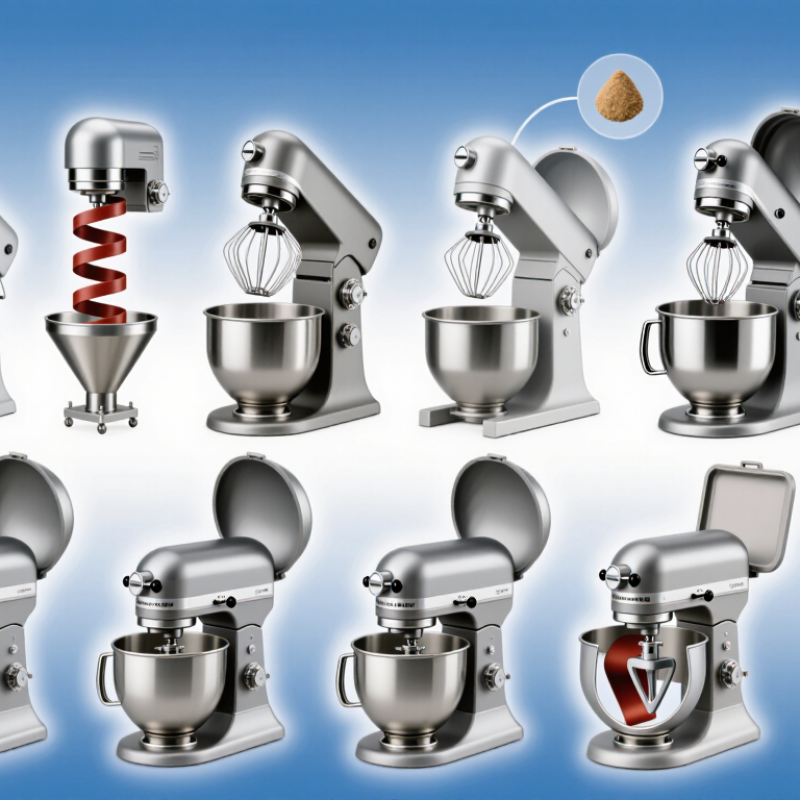
Selecting a bulk mixer supplier starts with the material, not the catalogue. Powders, granules, pastes, and liquids each behave differently during processing. Batch mixers suit variable recipes and controlled production runs. Continuous mixers support steady output and consistent feeding. High-shear systems handle difficult dispersions, agglomerates, and emulsions with intense mechanical energy.
The ten supplier types commonly include batch mixer specialists, continuous processing manufacturers, high-shear equipment builders, ribbon mixer producers, paddle mixer suppliers, ploughshare system makers, conical mixer manufacturers, planetary mixer providers, laboratory-scale equipment suppliers, and custom engineering companies. A reliable supplier should explain residence time, fill level, motor load, cleaning access, and test results. Ask for material trials using your actual ingredients. A polished brochure is not enough. I have seen suitable-looking mixers struggle when moisture changes by only a few percent.
Tips: Check discharge speed, seal design, spare-part availability, and operator access before choosing. Request documented power consumption and mixing uniformity data. Confirm whether the supplier can support installation and process validation. Small details matter.
Supplier expertise also appears in practical questions. Can the team identify dead zones? Can it adjust blade geometry? Does it understand heat-sensitive materials? Some recommendations may need revision after testing. That is normal. Treat pilot trials as evidence, not decoration, and record mixing time, temperature, torque, and final texture for comparison.
Industry Selection Metrics: Capacity, 5–500 RPM, Power, Viscosity, and Throughput
Selecting the top 10 bulk mixer manufacturers and suppliers requires more than comparing catalog photographs. Real performance begins with capacity. Check both total vessel volume and practical working volume, because powders need headspace for movement and dust control.
Speed range matters just as much. A useful specification may cover 5–500 RPM, but maximum speed alone proves little. Low-speed mixing protects fragile granules, while higher speeds can disperse additives or break soft agglomerates. Review the drive system, torque curve, and speed control under load. Power should match material resistance, not simply appear impressive on a data sheet. A supplier should explain motor sizing for dry blends, damp solids, and high-viscosity batches.
Viscosity changes the selection completely. A free-flowing powder may need modest torque, while a dense paste can demand stronger shafts, reinforced seals, and slower operation. Ask for test records using materials with similar moisture, particle size, and viscosity. Throughput should be measured as kilograms per hour, with batch time, loading, discharge, and cleaning included. Watch the hidden minutes. Capacity claims often assume ideal feeding and empty equipment. No ranking is perfect. I would also inspect service response, spare-part access, safety documentation, and installation experience. A smaller supplier with honest test data may outperform a larger supplier with vague promises. Metrics need context.
Supplier Comparison: Materials, Impeller Design, Energy Use, Warranty, and Lead Time
Top 10 Bulk Mixer Manufacturers and Suppliers
Comparing the top ten bulk mixer suppliers requires more than checking advertised capacity. Materials should match the process, not just the product sheet. Stainless steel suits many hygienic applications, while abrasion-resistant alloys handle minerals, powders, and aggressive fillers better. Ask for weld inspection records, surface-finish data, and previous installations with similar materials. Details matter.
Impeller design strongly affects blending time and product damage. Ribbon, paddle, turbine, and plow shapes create different movement patterns. A paddle impeller may protect fragile granules, while a high-shear design disperses liquids faster. In plant trials, I would measure blend uniformity, residue left on the vessel wall, and discharge time. Power ratings mislead. A larger motor does not always mean better mixing. Poorly matched geometry can waste energy and increase heat.
Energy use should be compared through motor load, batch time, and cleaning requirements. Suppliers should provide realistic operating data, not only laboratory figures. Warranty terms need equal attention: check coverage for bearings, seals, gearboxes, liners, and workmanship. A short warranty may signal risk, though not always. Lead time also depends on customization, testing, spare parts, and shipping preparation. Request a dated production schedule and written change-control process. Schedules slip. I would allow contingency time, especially when the mixer includes special coatings or automated controls.
Compliance and Applications: GMP, FDA 21 CFR, ATEX, Food, Chemical, and Pharma Use
Choosing among the top 10 bulk mixer manufacturers and suppliers requires more than comparing capacity and price. Food and pharmaceutical operations need hygienic designs, smooth welds, cleanable surfaces, and documented material traceability. Suppliers should explain how their mixers support GMP practices and relevant FDA 21 CFR requirements. Stainless steel contact parts, validated cleaning procedures, and controlled batch records can reduce contamination risks.
Chemical facilities may need corrosion-resistant alloys, sealed drives, or temperature monitoring. ATEX-rated equipment is essential where dust or vapor can create an explosive atmosphere. The correct mixer depends on the product’s density, moisture, shear sensitivity, and discharge behavior. A supplier with testing experience should provide performance data, not vague promises. Site conditions matter too. A technically sound mixer can still fail when installation space, grounding, or maintenance access is ignored.
Tips: Request drawings, certificates, risk assessments, and test results before purchasing. Confirm whether the documentation covers the exact configuration. Ask for factory acceptance testing and a clear service plan. Do not assume “compliant” means universally approved; requirements vary by country and application. In practice, buyers sometimes focus too heavily on the mixer vessel and overlook controls, seals, or cleaning validation. That is a costly blind spot. A careful review with quality, engineering, and operators usually reveals these gaps early.
Bulk Mixer Compliance Applicability by Industry
This chart shows how commonly selected compliance frameworks apply to bulk mixer installations in food, pharmaceutical, and chemical processing. FDA 21 CFR and GMP are primarily associated with regulated food and pharmaceutical production, while ATEX applies when explosive atmospheres may be present, including certain combustible-dust environments.