China is a major sourcing destination for Screw Conveyors, serving industries that move powders, grains, pellets, and other bulk materials. Yet a polished catalog does not guarantee a suitable machine. Buyers need to compare design capability, manufacturing quality, documentation, and after-sales support—not just price.
CEMA’s Screw Conveyor Section provides a useful technical reference for evaluating conveyor design. A practical paraphrase of its engineering guidance is: “Design around the material, not just the capacity.” That distinction matters. A damp, abrasive powder behaves differently from dry grain, even when both systems require similar throughput. Check the proposed screw diameter, pitch, trough construction, drive selection, and sealing details against your actual operating conditions.
Details matter.
This guide to top screw conveyor manufacturers in China offers a framework for comparing suppliers, rather than treating “top” as a universal ranking. It considers product range, customization, quality controls, export experience, and the clarity of technical communication. Ask for drawings, material specifications, and references for comparable applications. If a supplier cannot explain how its design handles your material, pause and ask more questions. That hesitation is useful. Even experienced buyers can overlook maintenance access or wear-part replacement when they focus only on initial cost. No manufacturer is best for every plant. The right choice depends on the material, operating environment, and level of support your project requires.
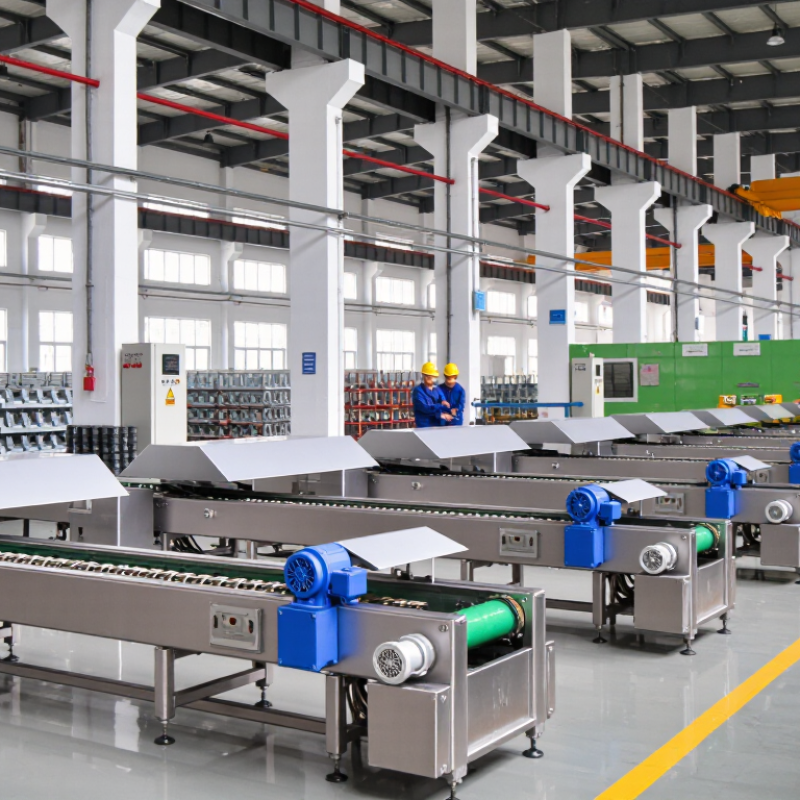
A screw conveyor moves bulk material through a trough or tube using a rotating helical blade, called a flight. As the screw turns, material advances along the conveyor. Think of powder sliding through a long, enclosed channel. The housing helps contain dust and reduce spillage, while the drive controls screw speed. Simple in principle. Not always simple in practice.
Capacity depends on screw diameter, pitch, rotational speed, loading, and the material’s behavior. CEMA’s Screw Conveyors for Bulk Materials handbook provides design guidance for these factors. Moisture, particle size, and bulk density can change how material flows, so a design that works for dry grain may not suit damp cement. The USGS Mineral Commodity Summaries 2024 estimated U.S. cement production at 91 million tons in 2023, illustrating the scale of materials that industrial handling systems must move. That figure is not conveyor throughput; it is useful context, not a sizing shortcut.
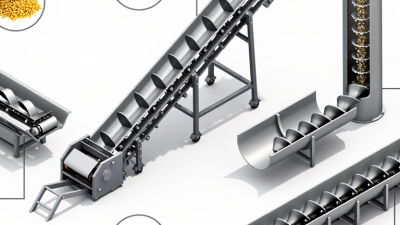
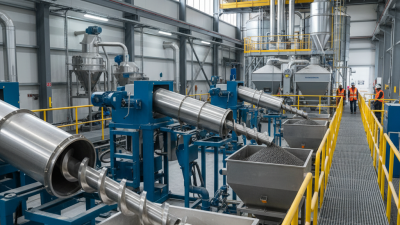
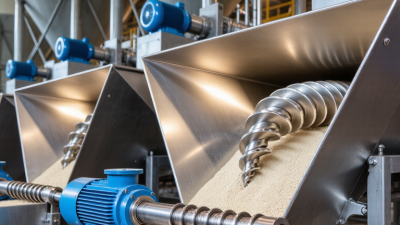
Horizontal screw conveyors are common in grain, cement, and chemical plants. A rotating helical flight moves material through a trough, often over short or moderate distances. U-shaped troughs allow easier inspection, while tubular casings help contain dust. Simple does not mean maintenance-free. Abrasive powder can wear the flight edges, and damp material may cling to the casing.
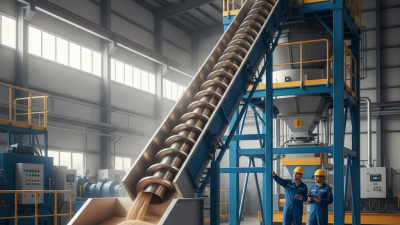
Inclined conveyors lift materials between floors or feed elevated mixers. As the angle increases, capacity can fall because material slips backward between flights. Designers may compensate with a larger diameter or adjusted speed, but the right choice depends on the material. Short trials with actual material can reveal problems that a drawing misses. Vertical screw conveyors handle compact lifting duties where space is limited, but they need controlled, steady feeding.
Shaftless designs suit sticky or stringy materials, such as wastewater screenings and wet food-processing residues. Without a central shaft, these materials have fewer places to wrap and jam. Still, the liner and flight need attention. Short runs suit them best. Selection also depends on temperature, moisture, cleanout access, and required throughput. A conveyor that works well for dry grain may struggle with damp, fibrous waste; that detail is easy to underestimate.
China’s screw conveyor manufacturing sector is built from connected layers rather than a single type of factory. Some workshops produce flights, shafts, troughs, and covers. Others focus on motors, gearboxes, bearings, or seals. Fabricators assemble these parts into horizontal, inclined, or enclosed conveying systems. Larger engineering teams may also design feeders, support frames, and controls for a complete production line. That boundary can blur.
Manufacturers often serve different needs: standard equipment for common materials, or custom units for specific flow rates, layouts, and operating conditions. Practical checks matter. Buyers can compare drawings with finished dimensions, inspect welds and flight pitch, and ask how shaft alignment and bearing protection are verified. A clean catalogue is not enough.
Material handling experience should inform choices such as trough shape and access for cleaning, but those details are sometimes overlooked. Production records and load-test procedures offer useful evidence, though they do not replace a site-specific review.
The sector’s strength is manufacturing flexibility; its challenge is keeping quality consistent across varied orders.
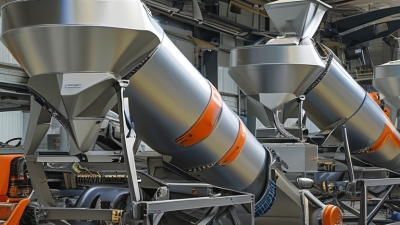
China’s screw conveyor sector includes manufacturers focused on different duties, rather than one design fitting every plant. Some build enclosed tubular units for powders and pellets. Others specialize in U-trough conveyors for short, accessible process lines. Shaftless models are often offered for fibrous or sticky materials that can wrap around a central shaft. Details matter.
For abrasive minerals, suppliers may specify thicker flights, replaceable liners, and reinforced end bearings. Food and chemical applications often call for stainless steel contact surfaces, sealed covers, and cleanable joints. Custom manufacturers can adjust pitch, diameter, inlet positions, and drive arrangements to fit existing equipment. Yet catalog descriptions can be vague. Ask for material grades, tolerances, and a drawing tied to the quoted configuration.
A practical comparison should include throughput at stated bulk density, conveyor length, inclination, and operating hours. Request references for similar materials, along with wear-part and maintenance details. A polished brochure proves little. If possible, inspect a finished trough, welds, shaft alignment, and safety guards before shipment. This is not always convenient, and a sample test may not capture seasonal moisture changes. Real operating data matters.
| Anonymous manufacturer profile | Product specialty | Typical design features | Common applications | Key selection considerations |
|---|---|---|---|---|
| Bulk-material handling specialist | U-trough and tubular screw conveyors for powders and granular materials | Enclosed conveying paths; options for inlet and discharge positions; screw and trough dimensions selected for the material and required throughput | Cement, grain, mineral powders, and general industrial bulk handling | Material bulk density, particle size, moisture, abrasiveness, conveying length, and required capacity |
| Food and chemical process-equipment specialist | Hygienic or corrosion-resistant screw conveyor configurations | Product-contact surfaces and construction materials specified for the process; cleanability and sealing requirements considered during design | Food ingredients, additives, powders, and compatible chemical materials | Required material grade, cleaning method, temperature, corrosion exposure, and applicable food or process requirements |
| Wastewater and difficult-material handling specialist | Shaftless screw conveyors for wet, fibrous, or sticky materials | Helical flights operate without a central shaft; trough liners and covers can be selected to suit the conveyed material and installation | Screenings, sludge, food waste, and other cohesive or fibrous materials | Material consistency, tendency to wrap or adhere, abrasion, cleaning access, and discharge arrangement |
| Plant-integration and layout specialist | Inclined screw conveyors and custom conveyor assemblies | Conveyor geometry, drive arrangement, supports, and openings are configured to fit the layout; conveying performance depends on inclination and material properties | Elevated transfer between hoppers, mixers, silos, and processing equipment | Inclination angle, horizontal and vertical distances, feed consistency, available space, and access for maintenance |
| Heavy-duty industrial equipment specialist | Robust screw conveyors for abrasive or high-load bulk materials | Duty-specific flighting, trough construction, bearings, and drive components can be specified for the operating conditions | Minerals, aggregates, ash, and other demanding bulk solids | Abrasiveness, impact loading, operating hours, wear-part availability, and maintenance requirements |
Profiles describe common screw-conveyor supplier specializations rather than ranked or individually verified companies. Actual materials, dimensions, capacities, certifications, and performance should be confirmed with the supplier for the specific application.
When comparing screw conveyor suppliers in China, look for engineering evidence, not catalogue polish. Ask for a capacity calculation based on your material, throughput, conveyor length, incline, and operating hours. Check whether the supplier identifies bulk density, particle size, moisture, and trough loading. CEMA’s Screw Conveyors for Bulk Materials handbook provides design guidance and capacity data; compare proposals using consistent assumptions. Ask for drawings, material specifications, and a clear explanation of wear-part selection. Small details matter.
MarketsandMarkets’ 2023 Conveyor System Market report estimated the broader conveyor system market at US$10.6 billion in 2023, projecting US$14.1 billion by 2028. This covers multiple conveyor types, not screw conveyors alone, so it indicates sector activity rather than supplier quality. Use it as context, not proof. Request references for applications resembling yours, plus test records or inspection documents where available. A neat sample is not a field trial.
Compare lead times, spare-part availability, warranty terms, and how changes are handled after approval. Ask who checks shaft alignment and flight pitch before dispatch. Clarify what the quoted price excludes, such as installation or commissioning. A supplier may promise high output, but without stated material conditions, that figure is hard to trust. I would still verify calculations independently; buyers can overlook assumptions too.
Typical bulk-density ranges for selected materials (t/m³). Actual values vary with moisture, particle size, and handling conditions.
When comparing screw conveyor suppliers, provide the same verified material data to each supplier and compare their capacity calculations, equipment sizing, and stated assumptions.