Leave Your Message

What Types of Screw Conveyors Are There?

Choosing among Screw Conveyors begins with the material, not the machine. A dry grain may flow smoothly through a standard shafted screw, while damp, sticky sludge can cling to the flighting and stall production. CEMA’s Screw Conveyor Engineering Guide (Book No. 350) provides established methods for selecting and sizing equipment. It distinguishes designs by features such as trough arrangement, shaft configuration, and conveyor orientation. These details matter: a horizontal unit, an inclined conveyor, and a vertical screw each handle material differently.

The range includes horizontal and inclined screw conveyors, vertical models, shaftless designs, and live-bottom systems. Each solves a different handling problem, and none is universal. A shaftless conveyor, for example, can reduce buildup when moving sticky material, but its suitability depends on the load and operating conditions. Dust, abrasiveness, temperature, and required capacity also shape the choice. Small details count. A few degrees of incline can change throughput.

Industry guidance offers a firmer starting point than broad product claims. Still, no single chart can replace checking the actual material and duty cycle. I would be cautious about treating a conveyor category as a complete specification; that shortcut is tempting, and sometimes wrong. No source articles or verifiable named expert quotation were supplied, so I cannot responsibly invent an expert’s words. The sections that follow compare the main types and the conditions each is designed to handle.
What Types of Screw Conveyors Are There?

How Screw Conveyors Are Classified

What Types of Screw Conveyors Are There? How Screw Conveyors Are Classified

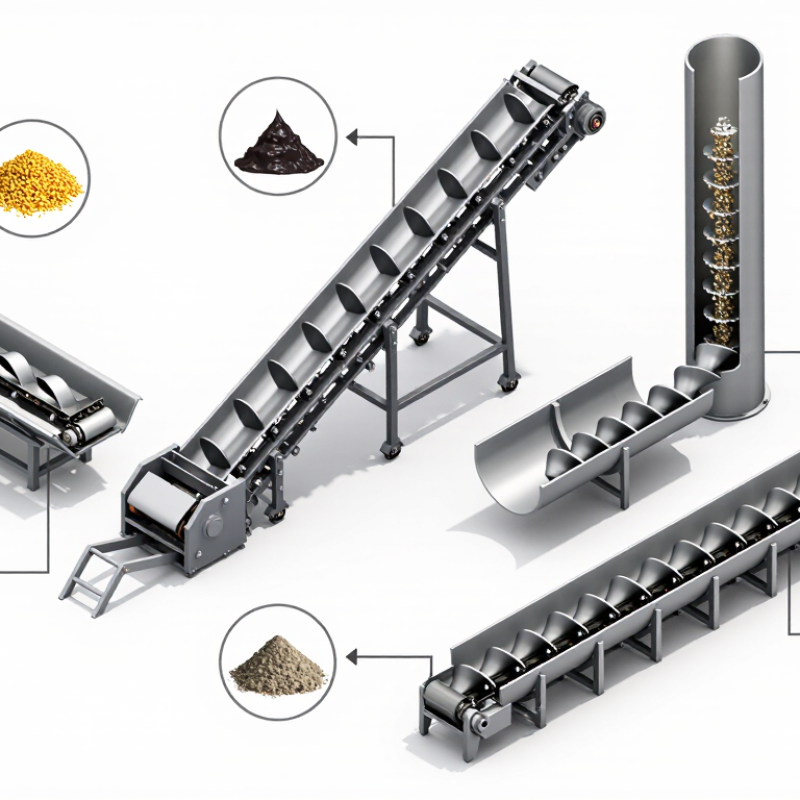
Screw conveyors are commonly classified by layout, screw design, and duty. Layout describes how material travels: horizontal conveyors move it along a level trough, inclined units lift it, and vertical units raise it through a tube. A feeder is another category; it controls how steadily material enters downstream equipment.

These distinctions matter. A conveyor that handles dry grain may struggle with damp, cohesive powder.

Flight shape offers another useful classification. Standard flights suit many free-flowing materials; ribbon flights can help when material tends to cling to the shaft. Cut or paddle-style flights can add agitation, but may change how gently the product is handled. CEMA’s Screw Conveyors for Bulk Materials provides capacity tables at 15%, 30%, and 45% trough loading. Those figures show why “same diameter” does not mean “same capacity”: loading, speed, material behavior, and incline all affect performance.

One detail is easy to miss. A tidy catalog category cannot replace checking the actual material.

Tips: Record moisture, bulk density, and particle size before selecting a conveyor. Then verify capacity at the intended loading and angle. A small test can reveal what a specification sheet misses.
Horizontal Screw Conveyors

Horizontal Screw Conveyors

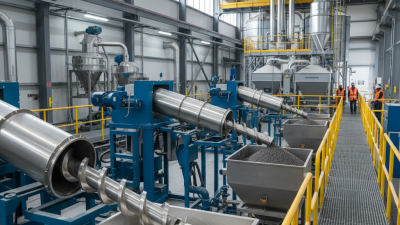
Horizontal screw conveyors move bulk materials along a level or slightly inclined path using a rotating helical flight inside a trough or tube. As the screw turns, material advances toward the discharge point. The arrangement is compact. It can fit beneath bins, mixers, and process equipment where a belt conveyor would need more floor space.

Capacity depends on screw diameter, pitch, rotational speed, fill level, and material behavior. Dry grain may flow steadily, while damp fines can cling to the flight and build up near the outlet. Operators should check for bridging, wear, and uneven loading during routine inspections. A small change in moisture can affect performance more than expected. That detail is easy to miss. For abrasive solids, replaceable liners and suitable flight thickness can reduce wear, but they do not eliminate it.

Design also depends on conveying distance and required feed control. A short unit may use a standard pitch, while a longer run can need intermediate bearings; these add support but create extra contact points. Tube housings help contain dust, whereas open troughs provide easier access for cleaning. Neither layout is universally better. Keep the inlet evenly fed, avoid overfilling, and confirm that the drive has enough torque for start-up under load. In practice, material often behaves less neatly than a drawing suggests, so trial measurements can reveal assumptions worth revisiting.

Inclined and Vertical Screw Conveyors

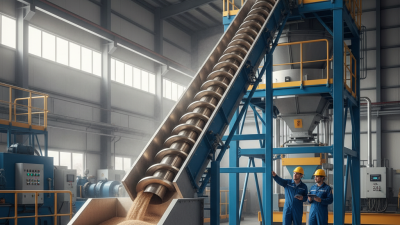
Inclined screw conveyors lift bulk material between elevations when a straight horizontal route is unavailable. Their performance depends on conveyor angle, screw speed, material flow, and lift distance. At shallow angles, material usually advances predictably. As the incline gets steeper, capacity often falls because material can slip backward between flights. Designers may adjust screw diameter, pitch, or speed, but each choice affects power use and wear. That matters. A well-positioned inlet helps keep the screw filled evenly instead of starving one side. For abrasive products, inspect the lower trough and flight edges; wear often appears there first.

Vertical screw conveyors raise material through an enclosed casing, often into a bin or process vessel. They need a controlled, continuous feed at the base to prevent uneven loading and surging. Close clearances and suitable flight geometry help limit material falling back down the casing. The right setup varies with particle size, moisture, bulk density, and the product’s tendency to compact. Dry grain may flow smoothly, while damp fines can bridge or cling to the casing. Not every material behaves. Test conveying performance with the actual product when possible; assumptions based on a dry sample can mislead.

What Types of Screw Conveyors Are There?

Horizontal conveyors move material along a level path. Inclined conveyors lift material at an angle; the chart uses 30° as a representative example, though actual inclinations vary by application. Vertical conveyors move material upward at approximately 90°.

Shafted and Shaftless Screw Conveyors

Shafted screw conveyors use a rotating central pipe or solid shaft with helical flights attached. The shaft supports the spiral and helps maintain steady rotation over longer spans. They often suit dry, free-flowing materials such as grain, pellets, or fine powders. At the inlet, material drops onto the flights and moves along a trough or enclosed tube. Support bearings may be needed at intervals, but they can create spots where material collects.

Shaftless conveyors remove the central shaft. A flexible, heavy-duty spiral turns inside a lined trough, leaving more open space for material to move. This design can handle sticky sludge, wet food scraps, and long fibrous waste that might wrap around a shaft. Fewer internal supports mean fewer collection points. Still, the liner and spiral face wear, especially with abrasive material. That trade-off is easy to overlook.

Neither type wins in every setting. A sample of damp material may appear to flow well, then bridge when fed continuously. Check moisture, particle size, abrasiveness, temperature, and required capacity before choosing. Incline and conveyor length matter, too. Shafted systems may be a practical fit for longer runs of uniform material; shaftless systems can help with cohesive or stringy loads. Test the actual material if possible. A small test can reveal problems that a tidy specification sheet misses.

What Types of Screw Conveyors Are There? — Shafted and Shaftless Screw Conveyors

Comparison Factor Shafted Screw Conveyor Shaftless Screw Conveyor
Basic Design A helical flight is mounted around a central shaft or pipe, which rotates inside a trough or tube. A helical flight rotates without a central shaft, typically within a trough fitted with a replaceable liner.
How Material Moves The rotating flight pushes material along the conveyor; the central shaft supports the flight and transmits torque. The rotating flight moves material along the trough and is supported at the drive and end connections rather than by a continuous central shaft.
Common Materials Often used for powders, grains, pellets, and other free-flowing or moderately cohesive bulk materials. Often selected for sticky, wet, fibrous, or stringy materials that may wrap around a central shaft or collect around internal supports.
Typical Applications Grain handling, powdered ingredients, plastics pellets, and many general-purpose bulk-material conveying duties. Wastewater screenings, sludge, food-processing by-products, and other difficult-to-handle materials, depending on their properties.
Material Contact and Blockage The shaft and intermediate hangers in longer conveyors occupy space within the material path and can create areas where material may accumulate. The unobstructed center can reduce the likelihood of material wrapping around a shaft, though suitable flight geometry and clearance are still important.
Long Conveying Runs Intermediate hanger bearings can support the shaft over longer spans, but they require appropriate spacing, access, and maintenance. There are no intermediate hanger bearings in the conveying path. Feasible length depends on the conveyor design, material, and operating load.
Power and Torque The central shaft provides structural support and transmits torque. Drive sizing still depends on material, capacity, length, and operating conditions. The shaftless flight must transmit torque without a continuous central shaft, so drive and flight design must account for the material load and conveyor length.
Wear Components Flight edges, trough surfaces, shaft components, and bearings may wear and should be selected for the material and service conditions. The flight and trough liner are key wear components. Liner material and replacement access should be considered during selection.
Inclined Conveying Inclined operation is possible, but capacity can decrease as inclination increases; the required design depends on material behavior and geometry. Inclined operation is also possible, but performance depends on material flow, flight design, speed, and angle. It is not automatically more efficient at an incline.
Main Advantages Well-established design; central support suits many conveying duties and can be practical for longer runs when properly engineered. Open center can help convey certain sticky or fibrous materials; no intermediate hanger bearings are present in the material path.
Key Considerations Check for potential buildup around the shaft or hangers, and plan access for inspection and bearing maintenance where required. Check liner wear, flight support, drive requirements, and suitability for the material. A shaftless design is not the best choice for every application.
Selection Guidance Consider this type for general bulk handling when the material and required conveying arrangement suit a central shaft. Consider this type when material tends to wrap, bridge, or accumulate around a central shaft, subject to an application-specific design review.

Specialized Screw Conveyor Designs

Specialized screw conveyors adapt the familiar rotating helix to materials or layouts that challenge a standard trough. A shaftless conveyor uses a spiral without a central shaft, leaving more open space for sticky sludge, screenings, or fibrous waste. That reduces snag points. It does not prevent buildup, though; wet material can still coat the trough, so washdown access matters.

Ribbon-flight screws have inner and outer flights, creating space for powders that tend to pack around a solid center. They can help move cohesive materials, but flight clearance and speed need careful selection. Excessive agitation may break fragile particles or create dust. Small details matter. Twin-screw live-bottom systems draw material from beneath a hopper and can reduce stagnant corners.

Inclined or vertical screws move material where floor space is limited, though lifting it higher can reduce capacity. A jacketed housing may help manage product temperature, but performance depends on contact, flow, and residence time. I would not select a design from a product label alone. Moisture, particle shape, throughput, and cleaning routines can change the choice. A short material trial can reveal problems that drawings miss.