Choosing the right Feed Mixer can shape feed quality, labor costs, animal performance, and daily production reliability. It is not simply a purchase based on capacity or price. A mixer that looks efficient in a brochure may struggle with uneven moisture, fragile ingredients, or frequent batch changes.
As feed manufacturing specialist Charles Stark has put it, “The mixer is the heart of the feed mill.” That view remains practical. Every ingredient must move through the mixing chamber with enough time, space, and mechanical action. A small dairy operation may value gentle mixing and flexible batch sizes. A large livestock business may need rapid discharge, automated weighing, and durable components. The correct choice depends on real operating conditions.
Details matter.
Consider horizontal, vertical, and paddle designs. Review batch volume, mixing time, power demand, cleaning access, and maintenance requirements. Check whether the mixer handles dry grain, silage, liquid supplements, or high-fiber materials without excessive residue. A poorly matched machine can leave visible pockets of minerals or moisture. That problem may not appear immediately, but it can reduce consistency and increase waste.
There is no perfect mixer for every business. That is worth admitting. Some recommendations rely too heavily on advertised capacity. Actual performance also depends on loading order, ingredient density, operator habits, and equipment age. A careful evaluation should include trial batches, service support, spare-parts availability, and long-term operating costs. This guide examines those factors, helping buyers choose a Feed Mixer with greater confidence and fewer expensive surprises.
Choosing a feed mixer starts with one practical question: how much feed must it process each day? The Alltech Agri-Food Outlook 2024 estimated global feed production at 1.126 billion metric tons in 2023. That scale shows why throughput planning matters, even for smaller farms.
A mixer should usually operate at 70–85% of its rated fill capacity. A 10-cubic-meter mixer therefore works best with roughly 7–8.5 cubic meters per batch. Do not calculate volume alone. Moisture, fiber length, and ingredient density change the real load. A dry mineral blend behaves differently from wet silage.
Keep the working range visible.
Underfilling can reduce mixing action and waste electricity per tonne. Overfilling may increase motor current, loading time, and uneven discharge. Feed Strategy’s equipment guidance also emphasizes matching mixer size with batch frequency, ingredient structure, and daily output rather than choosing the largest vessel available. In practice, record actual batch weights for two weeks. Compare them with motor load, mixing time, and rejected feed.
A neat spreadsheet can still mislead. Operators sometimes measure a full vessel, not the usable working volume. That mistake is small on paper, but expensive every day. Allow room for expansion, yet avoid buying capacity that remains half empty. A 75% average fill rate may be more useful than an impressive maximum figure.
| Mixer Nominal Capacity (m³) | Recommended Fill Range (70–85%) | Approx. Feed per Batch* (t) | Typical Mixing Cycle (min) | Estimated Batches per Hour | Estimated Throughput* (t/h) | Suitable Daily Feed Requirement |
|---|---|---|---|---|---|---|
| 2 | 1.4–1.7 m³ | 0.70–0.85 | 8–12 | 5–6 | 3.5–5.1 | Up to approximately 25 t/day |
| 5 | 3.5–4.25 m³ | 1.75–2.13 | 10–15 | 4–5 | 7.0–10.6 | Approximately 25–60 t/day |
| 10 | 7.0–8.5 m³ | 3.50–4.25 | 12–18 | 3–4 | 10.5–17.0 | Approximately 60–100 t/day |
| 15 | 10.5–12.75 m³ | 5.25–6.38 | 15–22 | 2–3 | 10.5–19.1 | Approximately 80–120 t/day |
| 20 | 14.0–17.0 m³ | 7.00–8.50 | 18–25 | 2–3 | 14.0–25.5 | Approximately 120–180 t/day |
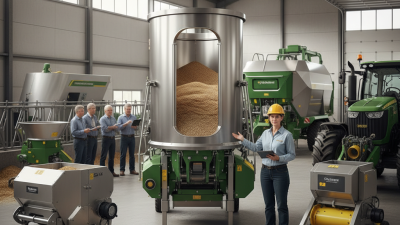
How to Choose the Right Feed Mixer for Your Business?
Mixer design should be judged by TMR uniformity, not only capacity. The coefficient of variation (CV) measures consistency between samples: standard deviation divided by the average, multiplied by 100. Penn State Extension TMR evaluation guidance commonly identifies a CV below 10% as a practical target for nutrient and particle consistency. Lower variation means fewer nutrient-rich pockets in the bunk.
Horizontal mixers often process long forage efficiently, while vertical mixers usually handle dense bales and sticky ingredients better. Paddle designs may reduce overmixing, but poor loading order can still create separation. ASABE testing guidance stresses representative sampling and repeatable test conditions. Take samples from at least several bunk locations, then test dry matter, particle size, and key nutrients. One sample proves very little.
Watch the discharge pattern. A steady ribbon is better than heavy drops followed by bare gaps. Compare CV results after changing knife settings, loading sequence, or mixing time. More mixing is not always better. Excessive processing can reduce effective fiber and increase fuel use. Real farms are imperfect. Moisture changes, worn knives, and hurried loading can distort results. Recheck during seasonal changes, even when last month’s CV looked excellent. Record the mixer fill level, ingredient weights, and sampling time beside every result.
Choosing a feed mixer starts with the material, not the motor nameplate. Haylage, silage, and dry concentrates create different resistance inside the tub. Measure the planned batch in tons, then compare the motor’s usable kW per ton. Divide motor kW by the working batch weight. This figure shows whether the mixer can maintain torque as the load becomes dense. The calculation is useful, but it is not perfect. Do not judge power from an empty-tub demonstration. That test is misleading.
For many operations, a 3–5 minute mixing cycle is a practical target. Reaching it depends on cutting length, moisture, ingredient order, and actual fill level. A high kW-per-ton figure may shorten the cycle, but it can increase energy costs. An undersized motor may need repeated passes, creating uneven feed and longer labor hours. Watch the first few batches. Record start-up strain, current draw, discharge consistency, and time to achieve a uniform texture. These observations are more valuable than a brochure estimate.
Leave room for seasonal changes. A dry winter ration can behave very differently from a wet harvest mixture. If your normal batch uses 80% capacity, test the mixer at the fullest realistic load. Ask for torque data at working speed, not only peak horsepower. Also check whether the stated cycle time includes loading and unloading. Often, it does not. The final choice may involve compromise. Lower power can suit light rations, while dense recipes demand stronger reserve torque. Recheck the numbers after a week of real production.
Choosing the right feed mixer starts with the ration, not the machine’s advertised capacity.
In practice, the target is not simply a fine feed. A well-made TMR usually keeps chopped fiber within a 2–4 mm particle structure. This range supports mixing uniformity while preserving useful chewing activity.
Before buying, measure your actual forage, moisture levels, and daily batch size. A mixer should process your driest hay and heaviest silage without leaving visible layers.
Vertical systems can handle long, dry forage well,
Horizontal systems may offer fast, even distribution.
These are general patterns, not guarantees. Ask for a test using your own ingredients, not a showroom ration. Check samples with a particle separator and record the upper, middle, and lower fractions.
Small detail, big consequence.
Mixer design matters, but operation matters just as much.
Sharp knives, correct loading order, and controlled mixing time help protect the 2–4 mm structure. A machine that reaches the target only when overloaded is a poor daily choice.
Check several batches, not one perfect sample. If cows sort the ration, inspect particle size, moisture, and delivery timing before changing the formula.
I have seen good equipment fail through rushed loading and weak monitoring. A qualified nutritionist can help interpret the results, especially when forage quality changes.
How to Choose the Right Feed Mixer for Your Business?
The purchase price rarely shows the real cost of a feed mixer. A lower-priced machine may consume more fuel, require frequent repairs, or process uneven batches. Compare total cost of ownership over five to ten years, not just the invoice.
Start with cost per ton. Add purchase price, financing, electricity or fuel, labor, maintenance, replacement parts, and expected downtime. Then divide the total by estimated lifetime output. For example, a mixer costing $70,000 may produce 40,000 tons over its service life. If operating expenses reach $50,000, the ownership cost is $3 per ton. Check the assumptions carefully. Small errors grow quickly.
Service life depends on more than steel thickness. Inspect mixing uniformity, gearbox protection, wear-resistant components, access for cleaning, and local service support. Ask operators how long common parts usually last under similar workloads. A reliable maintenance record is more useful than a confident sales promise. Keep a simple log for fuel use, repairs, batch time, and rejected feed.
My first cost estimate was too optimistic. I underestimated lost production during repairs. That mistake changed the comparison. A mixer with a higher purchase price may deliver a lower cost per ton when it runs consistently. However, projected service life is never guaranteed. Match the calculation to your actual daily tonnage, feed type, labor skills, and maintenance discipline. Test those figures before signing.