Why Choose Dust Collectors for Industrial Applications?
Why Choose Dust Collectors for Industrial Applications?
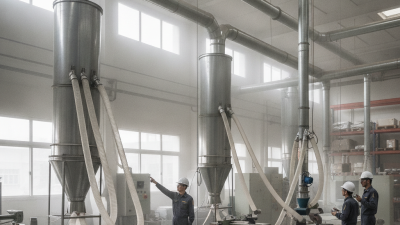
In a busy factory, airborne dust can settle on motors, clog ventilation paths, and reduce visibility around production lines. Dust Collectors capture these particles near their source, helping create cleaner and safer working areas. They support facilities handling wood shavings, metal dust, plastics, minerals, or food-grade materials. The right system depends on particle size, moisture, temperature, airflow, and the process itself. There is no universal solution.
A well-designed collector can improve equipment reliability and reduce housekeeping demands. It may also help manufacturers meet applicable workplace air-quality requirements when correctly selected, installed, and maintained. Experienced engineers usually examine hood placement, duct velocity, filter media, pressure loss, and discharge arrangements before recommending equipment. Small details matter. A poorly sealed duct can undermine an expensive system.
Operational evidence often matters more than a sales promise. Review filter life, energy consumption, cleaning performance, noise levels, and service records. Ask whether replacement parts are available and whether technicians can inspect the system safely. Regular monitoring of differential pressure can reveal blocked filters before production suffers. Still, dust collectors are not magic. They cannot correct poor process design or careless maintenance.
Some facilities focus heavily on initial price and overlook long-term operating costs. That choice may appear efficient, but it can create avoidable downtime later. A practical evaluation should balance worker protection, production continuity, energy use, compliance responsibilities, and total ownership cost. With professional assessment and consistent maintenance, Dust Collectors can become a dependable part of modern industrial operations. However, their performance should be verified in the real workplace, not assumed from a brochure.
Industrial Dust Basics: EPA PM2.5 and PM10 Size Categories
Why Choose Dust Collectors for Industrial Applications?
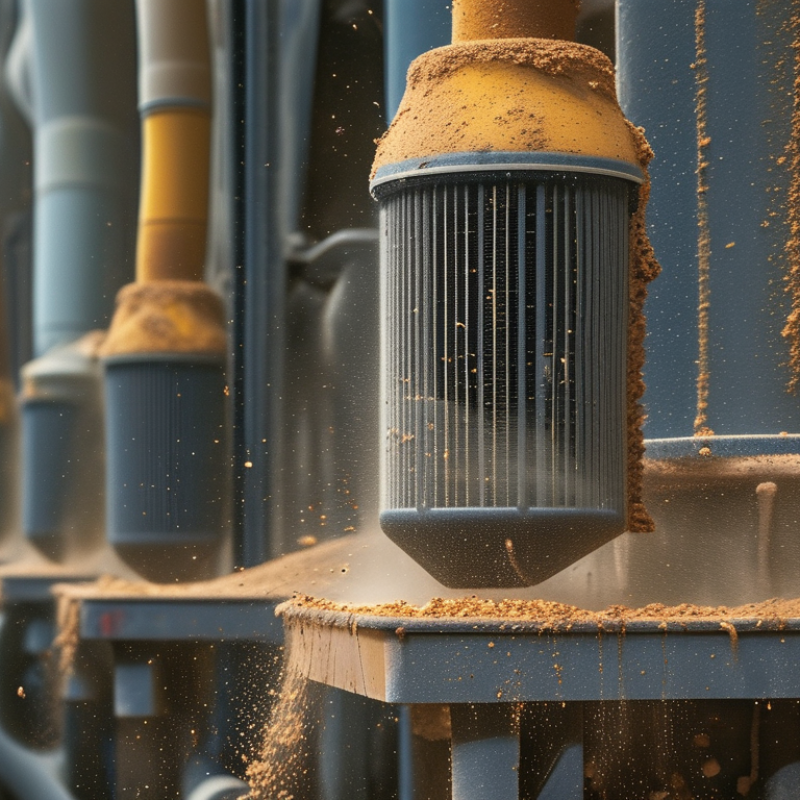
Industrial dust is not one uniform material. The EPA classifies PM10 as particles 10 micrometers or smaller, while PM2.5 measures 2.5 micrometers or smaller. These particles can enter different areas of the respiratory system. PM2.5 is especially concerning because its small size allows deeper lung penetration.
A visible cloud is not a reliable guide. Fine dust may remain suspended around a cutting table, mixing station, or loading bay after larger particles settle. Dust collectors help capture airborne contaminants near their source, reducing the amount workers may breathe. In practice, collection performance depends on airflow, duct design, filter condition, and capture distance. A powerful unit can still perform poorly when the hood sits too far from the emission point.
The material also matters. Concrete dust, wood dust, metal particles, and powdery food ingredients behave differently. A proper assessment should examine particle size, moisture, dust loading, temperature, and possible ignition hazards. PM10 and PM2.5 data can support filter selection, but particle labels alone are not enough. They do not describe the full workplace risk.
Measure the air, not just the dust.
Regular checks of pressure drop and airflow can reveal blocked filters or damaged seals. However, maintenance records are sometimes incomplete, and real conditions change during production. That weakness deserves attention. A dust collection plan should be reviewed after process changes, equipment relocation, or repeated worker complaints.
Worker Protection: OSHA’s 15 mg/m³ Total-Dust Exposure Limit
Why Choose Dust Collectors for Industrial Applications?
Worker protection begins with controlling dust at its source. In many general-industry settings, OSHA lists a 15 mg/m³ permissible exposure limit for total dust over an eight-hour workday. This limit does not apply identically to every material. Dust composition, particle size, and the applicable substance-specific standard still require careful review.
A properly designed dust collector captures particles near cutting, grinding, mixing, or transfer points. This reduces the dust cloud reaching a worker’s breathing zone. Effective systems need suitable airflow, sealed ductwork, and filters rated for the process. They also need regular inspection. A clogged filter can reduce capture performance quickly. Small leaks matter.
Real-world results depend on measurement, not appearance. Personal air sampling can show whether workers remain below the relevant exposure limit. Area monitoring can reveal dust escaping around doors, hoppers, or conveyor connections. Maintenance teams should record pressure readings, filter changes, and visible emissions. Housekeeping must avoid dry sweeping, which can push settled dust back into the air. Vacuum cleaning works better when the equipment is designed for the hazard.
A collector is not a magic shield. Poor duct balancing or an undersized unit can create false confidence. In practice, even well-planned systems may need adjustment after production changes. Respiratory protection may still be necessary during maintenance or unusual releases, based on the workplace assessment. Exposure control should be verified repeatedly, because dust conditions rarely stay constant.
Combustible-Dust Control: NFPA 652 Hazard-Analysis Requirements
Why Choose Dust Collectors for Industrial Applications?
Industrial dust collectors help control airborne particles before they settle on floors, beams, or machinery. For combustible dust, collection is not only a housekeeping choice. It can reduce fuel accumulation near ignition sources and improve visibility around production equipment. However, a collector does not remove every hazard. Its design must match the dust, airflow, process temperature, and maintenance conditions.
NFPA 652 emphasizes a documented Dust Hazard Analysis, or DHA, for processes that generate combustible particulate solids. The analysis should examine dust characteristics, transfer points, filters, ducts, storage areas, and possible ignition sources. It should also identify fire protection, explosion protection, and explosion isolation needs. Operators should document findings and review changes in materials, production rates, or equipment. A collector may appear correctly sized, yet poor duct cleaning or an unexamined discharge bin can weaken the whole system. That is an uncomfortable gap worth addressing.
Tips: Sample dust from real production conditions. Do not rely only on supplier data. Check filter loading, grounding paths, access doors, and housekeeping records. Keep inspection notes specific, such as “dust found beneath the rotary valve.” Involve maintenance workers during the DHA; they often notice leaks before drawings do. Ask a qualified professional to confirm testing, protection methods, and local authority expectations. Some facilities discover that their first risk review was too narrow. That is not failure. It is a reason to revise the analysis carefully.