A bulk mixer can look simple from the outside: a motor, a shaft, and a vessel turning powders or liquids into a consistent blend. The real test comes later. Does it handle the actual batch size, material behavior, cleaning routine, and production pace? In 2026, choosing equipment by capacity alone can leave costly gaps.
This guide compares seven bulk mixers for industrial use, focusing on practical selection factors such as mixing action, throughput, construction, controls, and maintenance access. A ribbon blender may suit free-flowing powders, while a paddle or high-shear design may better fit other processes. Details matter: a stubborn residue behind a discharge gate can slow a shift. So can a motor that struggles with changing loads. No single machine fits every plant.
One transparency note: I can’t verify a real expert quotation from the information provided. Rather than invent an attribution, here is an original editorial line, not a sourced expert quote: “Choose the mixer for the material you run on your hardest day, not the sample that blends easily.” The guide uses that practical lens, while recognizing that a shortlist is only a starting point. Pilot tests and supplier discussions still matter.
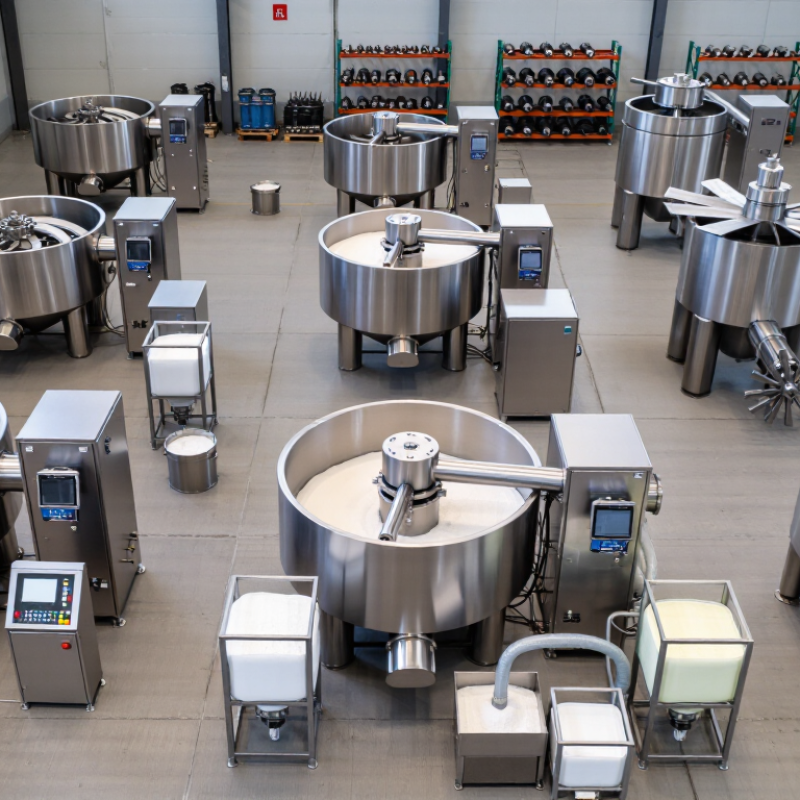
Bulk mixers combine powders, granules, liquids, or pastes inside a controlled vessel. Their working principle is simple, but the details matter. Rotating blades create movement throughout the chamber. Materials travel upward, downward, and across the mixing zone. This circulation reduces concentration differences between ingredients. Some processes need gentle blending to protect fragile particles. Others require stronger shear to break lumps or disperse liquid evenly. The mixer’s shape, blade design, speed, and fill level control that balance.
Industrial operators usually select batch or continuous systems. A batch mixer receives a measured load, processes it for a set time, and discharges it. A continuous mixer feeds ingredients steadily and releases a constant stream.
Sensors can track weight, temperature, torque, and moisture. These readings help maintain repeatable production. They also reveal trouble early. A sudden torque increase may indicate overfilling, poor flow, or hardened material. Small details matter.
Practical performance depends on more than motor power. Seals must prevent leakage, while access points should support safe inspection and cleaning. Dead zones can hold residue and contaminate later batches. That problem is easy to underestimate. In food, chemical, and construction processing, operators should test mixing uniformity under real loads, not only empty-machine conditions. A mixer may perform well in a brochure and poorly with sticky, uneven feedstock. Even reliable settings deserve review when humidity, particle size, or formulation changes.
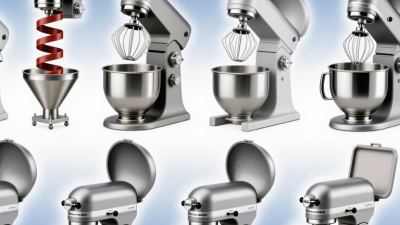
When selecting one of the seven best bulk mixers for industrial use in 2026, evaluation should begin with the material itself. Powder density, moisture, particle size, and heat sensitivity directly affect mixing performance. A mixer that handles dry minerals may struggle with fragile food ingredients. Test realistic batches, not only laboratory samples.
Capacity matters, but usable capacity matters more. Leave enough headspace for movement without creating dead zones. Inspect the vessel shape, blade design, discharge speed, and cleaning access. These details influence production time and operator safety. Ask for measured mixing uniformity, energy consumption, and batch cycle data. Marketing estimates are not enough.
Maintenance deserves equal attention. Check bearing protection, seal life, inspection ports, and replacement-part availability. A short cleaning cycle can reduce downtime, but aggressive washing may damage poorly protected components. I have found that simple access often beats impressive automation. Still, manual checks can introduce inconsistency. Record moisture, temperature, and sample results during trials. Noise levels and dust control should also be verified on the factory floor, where conditions rarely match a brochure. Choose a mixer that supports future formula changes, because today’s ideal machine may become tomorrow’s limitation.
| Rank | Mixer Configuration | Typical Working Capacity | Recommended Fill Level | Typical Batch Time | Typical Drive Range | Mixing Performance | Cleaning and Maintenance | Best Industrial Applications | Key Evaluation Consideration |
|---|---|---|---|---|---|---|---|---|---|
| 1 | Horizontal Ribbon Mixer | 0.1–15 m³ per batch | 30–70% | 3–15 minutes | 5.5–75 kW | Good for routine blending | Moderate; inspect ribbon edges, seals, and bearings | Food ingredients, animal feed, minerals, detergents, dry chemicals | Strong general-purpose option with broad capacity availability |
| 2 | Paddle Mixer | 0.2–20 m³ per batch | 30–70% | 2–10 minutes | 7.5–110 kW | High uniformity with gentle handling | Good; wide trough access supports inspection and washdown | Fragile granules, premixes, powders, biomass, specialty chemicals | Useful where low particle breakage and short cycles are important |
| 3 | Plowshare Mixer | 0.1–12 m³ per batch | 30–65% | 2–8 minutes | 7.5–160 kW | Very good for cohesive powders | Moderate; wear parts may require periodic replacement | Cohesive powders, fertilizers, construction materials, chemical compounds | Select when intensive convective mixing or liquid addition is required |
| 4 | Conical Screw Mixer | 0.1–20 m³ per batch | 20–65% | 5–20 minutes | 2.2–75 kW | Excellent for low-shear blending | Good; enclosed vessel reduces dust exposure, but screw access is slower | Pharmaceutical excipients, fine chemicals, pigments, high-value powders | Best suited to gentle, low-dust processing and high-value formulations |
| 5 | Vertical Screw Mixer | 0.05–10 m³ per batch | 25–70% | 5–30 minutes | 1.5–45 kW | Good for space-efficient blending | Good; compact footprint, though internal access may be limited | Feed additives, plastics, food powders, agricultural products | A practical choice where floor space and low energy use matter |
| 6 | High-Shear Batch Mixer | 0.02–5 m³ per batch | 20–60% | 1–10 minutes | 15–250 kW | Excellent dispersion and agglomerate breakup | More demanding; rotor, seals, and temperature control need attention | Pigments, battery materials, specialty chemicals, instantized powders | Choose for difficult dispersion, but account for heat generation and power demand |
| 7 | Double-Cone Blender | 0.05–15 m³ per batch | 35–65% | 5–25 minutes | 1.5–30 kW | Gentle, low-shear blending | Good; relatively simple internal geometry and limited wear | Pharmaceuticals, nutraceuticals, food powders, delicate granules | Preferable for fragile materials when intensive mixing is unnecessary |
Industrial facilities need mixers that handle volume, consistency, and cleaning demands without creating avoidable downtime. The seven leading bulk mixer designs in 2026 include ribbon, paddle, plowshare, twin-shaft, conical screw, planetary, and high-shear mixers. Each design serves a different process. Ribbon mixers suit dry powders and gentle blending. Paddle mixers reduce dead zones in free-flowing materials. Plowshare mixers manage heavier powders, granules, and short mixing cycles.
Twin-shaft mixers provide strong circulation for difficult, cohesive materials. Conical screw mixers lift ingredients vertically and support controlled, low-impact blending. Planetary mixers work well with dense pastes, dough-like compounds, and high-viscosity batches. High-shear mixers disperse liquids, binders, or fine additives quickly. They can also generate unwanted heat.
In plant evaluations, I check batch size, moisture, bulk density, discharge time, and cleaning access before choosing equipment. A polished specification sheet can still hide poor internal movement. Ask for test data using your actual material. Inspect the discharge valve, seals, shaft supports, and inspection doors closely. Safety interlocks and dust control deserve equal attention. Energy use matters, but a cheaper mixer may demand more labor later. I have seen efficient machines underperform because operators overloaded them. Small details matter. Process feedback should guide the final selection, not catalog language alone.
Industrial bulk mixer designs differ more in handling behavior than in appearance. Ribbon mixers suit dry powders, granules, and moderate batch sizes. Their horizontal trough creates steady circulation, but corners may retain material. Paddle mixers move gently and reduce particle damage. They work well with fragile flakes, though blending can take longer.
Plow mixers create strong movement around a horizontal vessel. They handle cohesive powders and small liquid additions effectively. High-shear tools can break lumps quickly, but they may raise product temperature. Twin-shaft mixers deliver intense, even distribution in dense blends. They often need more maintenance around seals and drive components. Check access carefully.
Vertical screw mixers use a central screw to lift material upward. They save floor space and suit powders with different bulk densities. Conical screw mixers provide gentle lifting and are useful for delicate ingredients. Their discharge pattern can be less predictable than expected. Drum mixers remain practical for smaller batches and simple formulations. They offer easy loading, but production capacity is limited.
In field evaluations, the best design depends on moisture, density, batch size, cleaning time, and discharge requirements. A mixer that performs beautifully with dry flour may struggle with sticky mineral powder. Ask for trials using your actual material. Measure blend uniformity, residue, power use, and cleaning labor. Small design details matter. One overlooked inspection port can delay an entire shift.
Selecting a bulk mixer begins with the process, not the equipment catalogue. Define the material’s moisture, bulk density, particle size, and flow behavior. Powders may bridge, smear, segregate, or form hard lumps during mixing. These problems demand different mixer designs.
Consider the batch size and required mixing time. A mixer that performs well at 30% capacity may struggle when filled to 90%. Check the working volume, discharge speed, cleaning access, and heat transfer needs. For fragile particles, low-shear movement may protect product quality. For cohesive compounds, stronger agitation and controlled moisture may be necessary. It is not always obvious.
Tips: Request trials with your actual material. Measure blend uniformity, residue after discharge, energy use, and cleaning time. Ask for test records, maintenance guidance, and verified operating limits. A small sample can reveal more than a polished specification sheet.
Safety and reliability also influence the final choice. Confirm dust-control provisions, guarding, emergency stops, and compatible construction materials. The mixer should suit the entire line, including feeders, conveyors, and packaging equipment. Watch for dead zones around shafts, corners, and discharge gates. They can create contamination or inconsistent batches. A design may look efficient but still waste several minutes per cycle. Review real production data before approval, and leave room for process changes that may appear after installation.