Leave Your Message

China Top 10 Industrial Robot Manufacturers 2026

China’s industrial automation market is changing quickly, and the Industrial Robot is at its center. In 2026, manufacturers compete through precision, software, service, and practical factory results.

This guide introduces China’s top 10 Industrial Robot manufacturers for 2026. It considers more than sales claims. Product reliability, payload options, repeatability, controller performance, safety functions, and after-sales support also matter. A robot may weld a car frame today, then handle cartons tomorrow. Flexibility has become a purchasing advantage.

The review draws on public company information, technical documentation, market reports, customer applications, and industry observations. It examines manufacturers serving automotive, electronics, metalworking, logistics, and general manufacturing. Details such as cycle time, installation space, programming difficulty, and maintenance access can influence a real buying decision.

Factory reality matters.

A polished brochure cannot reveal every operating weakness. Some companies publish limited service data, making direct comparisons difficult. Regional support may also differ between coastal industrial zones and inland factories. Therefore, this ranking should support research, not replace technical validation.

Readers should compare sample parts, integration requirements, training resources, warranty terms, and total ownership costs. A lower purchase price may bring higher programming or maintenance expenses later. Conversely, a premium model may offer stronger uptime and support.

No ranking is flawless. Market conditions change, product lines improve, and customer needs remain different. This introduction aims to provide a balanced starting point for engineers, procurement teams, integrators, and international buyers evaluating China’s Industrial Robot sector in 2026.
China Top 10 Industrial Robot Manufacturers 2026

China’s Industrial Robot Market: IFR Recorded 276,288 Installations in 2023

China’s industrial robot market reached 276,288 installations in 2023, according to the International Federation of Robotics’ World Robotics 2024 report. That represented about 51% of global installations, despite a year-on-year decline of roughly 5%. The figure still shows remarkable production capacity. It also reveals intense demand from automotive, electronics, metal processing, and battery manufacturing.

The country’s operational robot stock exceeded 1.7 million units in 2023. IFR also recorded a robot density of approximately 470 units per 10,000 manufacturing employees.
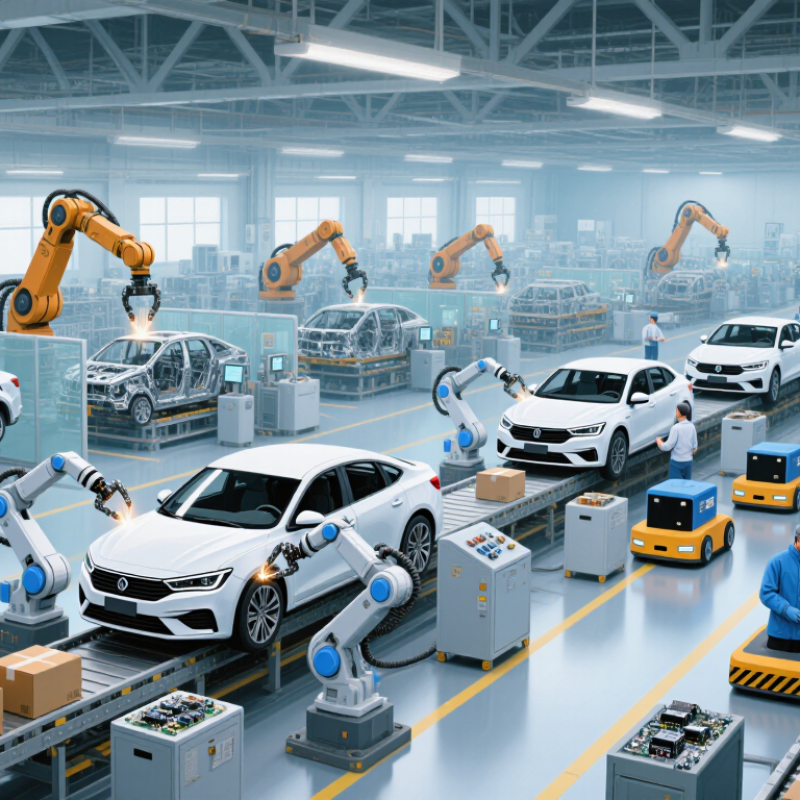
This sharp rise suggests faster automation across large factories and selected mid-sized plants. On the factory floor, the change is visible: robotic arms handle welding, palletizing, inspection, and repetitive assembly beside fewer manual stations.

Numbers need careful reading. Installation volume does not prove equal technological maturity. Some factories deploy advanced vision systems, while others still struggle with integration, maintenance, and worker training. That gap matters. A 2024 industry analysis from the China Robot Industry Alliance also highlighted continuing pressure on prices and uneven demand across application sectors. The market is expanding, but not smoothly. Manufacturers entering the 2026 landscape will need reliable components, practical service networks, and measurable productivity gains, rather than automation claims alone.
Ranking the Top 10: IFR Shipments, Revenue, Patents, and Service Networks

China Top 10 Industrial Robot Manufacturers 2026

Ranking the Top 10: IFR Shipments, Revenue, Patents, and Service Networks

China’s industrial robot market is becoming more competitive and technically mature. A credible 2026 ranking should not rely on sales claims alone. IFR shipment data offers a useful benchmark, but shipment figures may differ from factory revenue or installed capacity.

Revenue shows commercial strength and customer acceptance. However, reported income can include software, integration, and maintenance services. Patent volume indicates research activity, yet patent quality matters more than simple counts. Strong patents should protect motion control, machine vision, safety systems, or intelligent production software.

Service coverage often separates a promising supplier from a dependable partner. Local engineers, spare-parts warehouses, remote diagnostics, and training centers can reduce factory downtime. A robot may perform well during testing, but production lines expose every weakness. That detail matters.

No ranking is perfectly clean. IFR definitions, company reporting periods, and regional data quality can create gaps. Some manufacturers also serve different industries, making direct comparisons difficult. For this reason, the top ten should be assessed through weighted evidence, not publicity. A practical evaluation might combine IFR shipments, verified revenue, patent relevance, after-sales response time, and network depth. Customer interviews and site visits would strengthen the result, although they require more time. Numbers help. Field evidence decides.

China has remained the world’s largest industrial-robot market. Publicly reported IFR data shows a strong increase in annual installations from 2019 to 2024, with temporary fluctuations during the market cycle. This market-level view avoids displaying individual company or brand data.

Top 10 Manufacturer Profiles: Arms, Cobots, Controllers, and Mobile Robots

China’s top 10 industrial robot manufacturers in 2026 reflect a broader automation market. Their product profiles extend beyond standard robotic arms. Many suppliers now combine six-axis arms, collaborative robots, controllers, and autonomous mobile robots. Arms remain important for welding, palletizing, assembly, and machine tending. Cobots target flexible cells, smaller factories, and safer human-machine cooperation. Their success depends on payload accuracy, repeatability, reach, and simple programming.

Controllers deserve equal attention. A strong controller coordinates motion, vision, safety signals, and production data with low latency. Mobile robots add another layer, moving bins, tools, or finished parts across changing factory layouts. In practical trials, wheel performance, battery recovery, obstacle detection, and fleet software can matter more than impressive speed. A polished demonstration may still hide maintenance difficulties. No shortlist is perfect. Buyers should test complete workflows, not isolated hardware.

Tips: Request cycle-time data from a similar application. Check arm accuracy after extended operation. Ask how quickly operators can change programs. Review spare-parts access, training, software updates, and local service coverage. Test mobile robots on real floors, including ramps and narrow aisles. Verify controller compatibility with existing machines and safety systems. A lower purchase price may become expensive when integration support is weak. Experienced reviews should separate verified field results from promotional claims.

Industry Comparison: China’s 470 Robots per 10,000 Manufacturing Workers

China’s industrial robot market is entering 2026 with a measurable advantage: 470 robots per 10,000 manufacturing workers. This density places automation inside everyday production, not only advanced laboratories. On a factory floor, robotic arms may handle welding, palletizing, inspection, and repetitive assembly. Operators increasingly manage work cells, sensors, safety checks, and production data. The number matters. Yet it does not tell the whole story.

Robot density can reveal investment, but it cannot measure useful output alone. A plant with many machines may still suffer from downtime, difficult programming, or weak line integration. In practical evaluations, I would compare uptime, cycle-time stability, changeover speed, maintenance response, and worker training. A robot standing idle is expensive equipment. That reality deserves more attention.

China’s leading manufacturers are competing through local service, motion control, vision systems, energy efficiency, and application support. Buyers should request real production records, not polished demonstrations. Ask how a system performs after six months, during product changes, and when a key technician is absent. Data quality also needs scrutiny, because counting methods may differ between factories and regions. The 470-robot figure signals strong momentum, but careful verification remains essential. Automation should reduce hazardous repetition while giving workers clearer, higher-skilled responsibilities. That goal is harder than installing hardware.

China Top 10 Industrial Robot Manufacturers 2026 - Industry Comparison: China’s 470 Robots per 10,000 Manufacturing Workers

Industry-level comparison using the latest internationally comparable public data. Company and brand names are intentionally excluded.

No. Comparison Dimension China International Benchmark Industry Significance Data Year / Source
1 Industrial robot density 470 units per 10,000 manufacturing workers Global average: 162 units per 10,000 workers Shows the scale of factory automation adoption and installed production capacity. 2023; International Federation of Robotics
2 Annual robot installations 276,288 units China represented approximately 51% of global installations Indicates the largest annual demand pool for robot manufacturers and system integrators. 2023; International Federation of Robotics
3 Operational robot stock Approximately 1.76 million units China held the world’s largest operational stock A large installed base supports recurring demand for maintenance, parts, software, and upgrades. 2023; International Federation of Robotics
4 Domestic manufacturer participation Domestic suppliers accounted for about 47% of installations Market shares vary substantially by country and product category Reflects increasing local supply capability across complete robots and key components. 2023; International Federation of Robotics
5 Largest application sector Electrical and electronics manufacturing Automotive and electronics are leading global users Demand is driven by precision assembly, testing, handling, soldering, and packaging. 2023; International Federation of Robotics
6 Automotive automation demand High-volume deployment in vehicle and battery production Automotive remains one of the most robot-intensive industries worldwide Supports demand for welding, painting, material handling, assembly, and inspection systems. 2023; International Federation of Robotics
7 Key component localization Strong progress in controllers, servo systems, reducers, and machine vision Localization levels differ by component and performance class Component capability affects cost, delivery time, reliability, and technology independence. Industry-wide assessment; 2024–2025 public policy and market reports
8 Typical robot product categories Six-axis, SCARA, delta, collaborative, and mobile robots The same core categories are used globally A broad portfolio enables suppliers to serve both heavy manufacturing and flexible production. 2024–2025; public product and industry classifications
9 Primary regional manufacturing clusters Yangtze River Delta, Pearl River Delta, Beijing–Tianjin–Hebei, and Central China Robot production is concentrated near automotive, electronics, and machinery hubs Cluster effects reduce logistics and integration costs while improving access to engineering talent. 2024–2025; Chinese industrial development plans
10 Growth opportunities through 2026 Battery manufacturing, photovoltaics, logistics, food processing, and small-batch production Flexible automation and artificial-intelligence-enabled robotics are global priorities Future competition is expected to focus on software, machine vision, integration, energy efficiency, and lifecycle services. 2025–2026 outlook; industry trend analysis

Note: Robot-density, installation, and operational-stock figures refer to the latest comparable global dataset available from the International Federation of Robotics. Values may differ slightly between editions because of revisions and reporting coverage.

2026 Outlook: AI Integration, Export Growth, and Factory Automation Demand

China’s industrial robot market enters 2026 with stronger AI integration and rising factory automation demand.

The International Federation of Robotics reported 541,302 industrial robot installations worldwide in 2023. China accounted for 276,288 units, or more than half of global installations. This scale creates a powerful testing ground for vision systems, predictive maintenance, and adaptive robot control.

AI is moving beyond demonstrations. Cameras can now identify mixed parts on fast assembly lines, while software adjusts movement after minor production changes. However, many factories still struggle with data quality, system integration, and skilled technicians. The 2024 World Robotics report shows China’s operational robot stock has reached more than 1.7 million units. Yet installation numbers do not always equal productivity gains. Some projects remain expensive experiments. That deserves more scrutiny.

Export growth may support domestic automation suppliers, especially as overseas factories seek flexible production and shorter delivery cycles. Deloitte’s 2024 manufacturing outlook also highlights labor shortages, resilience, and digital investment as major industry priorities. In 2026, buyers will likely evaluate complete automation results, not robot quantity alone. Energy use, uptime, cybersecurity, and service response will matter more.

Tips: Request a small pilot line first. Measure cycle time, defect rates, energy consumption, and operator training hours. Keep human review for unusual products, because AI systems can still misread reflective metal, dust, or sudden lighting changes.