Leave Your Message

What Are the 2026 Top Industrial Robot Manufacturers?

The 2026 industrial automation market is becoming more competitive, connected, and demanding. This guide examines the leading Industrial Robot manufacturers shaping modern production lines. It considers companies such as ABB, FANUC, Yaskawa, KUKA, and other influential suppliers. Their strengths differ across automotive, electronics, logistics, food processing, and heavy industry.

Market leadership is not based on sales figures alone. It also depends on payload range, repeatability, programming tools, safety systems, energy efficiency, and after-sales support. A robot moving a 500-kilogram component needs different capabilities from one placing tiny circuit boards. Service coverage matters, especially when a factory cannot afford prolonged downtime. Real installations, technical documentation, independent testing, and customer experience provide stronger evidence than promotional claims.

Some rankings remain debatable. No single manufacturer leads every category. A strong welding robot may not be the best choice for cleanroom assembly. Regional distributors can also influence performance through training and maintenance quality. This article therefore compares manufacturers through practical criteria, not simple brand recognition. It also considers software ecosystems, collaborative robotics, artificial intelligence, digital twins, and integration costs. These details often decide whether a promising system succeeds on the factory floor.

The goal is a balanced, evidence-based overview for engineers, procurement teams, and business leaders. Readers should verify current specifications before making investment decisions. Product portfolios and ownership structures can change quickly. That uncertainty deserves attention.
What Are the 2026 Top Industrial Robot Manufacturers?

The 2026 Industrial Robot Manufacturing Landscape

What Are the 2026 Top Industrial Robot Manufacturers?

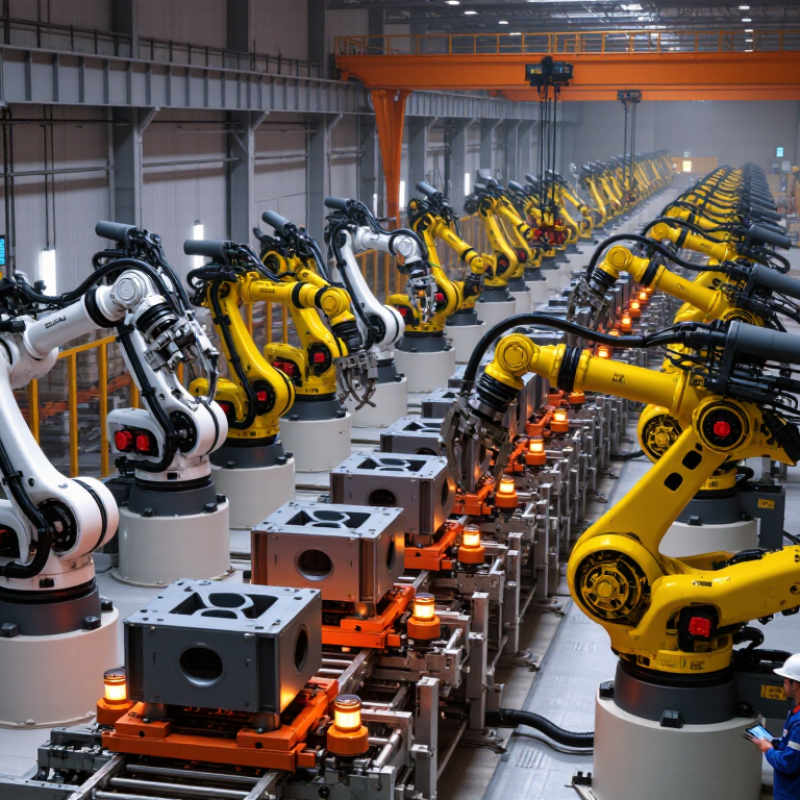
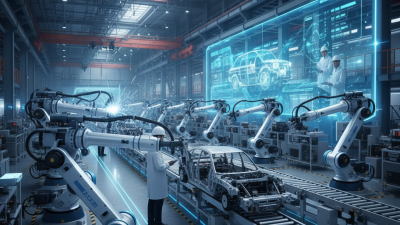
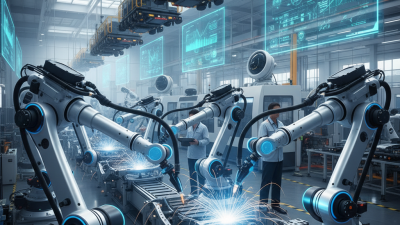
The 2026 industrial robot manufacturing landscape is broader than a simple ranking. Leading manufacturers now compete through motion accuracy, software integration, energy efficiency, and dependable service. Their systems support welding, assembly, palletizing, inspection, and delicate material handling. Some factories use compact six-axis robots beside high-speed parallel machines. Others need large systems that move heavy loads across long production lines.

From a buyer’s perspective, performance data matters more than impressive demonstrations. Check repeatability under heat, dust, vibration, and continuous shifts. Review controller response times, safety functions, spare-parts access, and technician training. A factory visit can reveal details that brochures hide, such as cable wear or difficult maintenance points. Independent testing and documented compliance also improve confidence. The picture is not perfectly clear. Published cycle times may depend on ideal conditions.

Tips: Compare complete operating costs, not only purchase prices. Ask for sample data from similar applications. Test programming changes with real operators. Confirm integration support before signing. Leave room for future tools and sensors.

Manufacturers with strong 2026 positions will likely combine robotics, vision, simulation, and predictive maintenance. Yet no supplier fits every plant. A fast robot can still disappoint when software is awkward or service is distant. I may be too cautious, but practical reliability often beats headline speed. The best choice should match the workforce, floor layout, product variation, and expected production changes.
Criteria for Identifying Top Industrial Robot Manufacturers

Criteria for Identifying Top Industrial Robot Manufacturers in 2026

A serious evaluation starts with measurable performance, not attractive brochures. Check payload accuracy, repeatability, cycle time, and energy use under real production loads. Request test data from comparable applications. A robot handling metal parts needs different proof than one moving lightweight packages. Site visits can reveal vibration, cable wear, and awkward maintenance access. These details often escape polished demonstrations.

Safety and compliance deserve equal attention. Examine documented risk assessments, guarding options, emergency functions, and relevant international standards. Ask whether technicians receive practical training, not only digital manuals. Reliable manufacturers provide traceable service records, spare-part plans, and clear response times. Their software should support secure updates and useful production data. Vague promises are a warning.

No scorecard is perfect. I have seen strong machines fail because integration support was weak. An experienced assessment should include the controller, grippers, vision systems, and factory network. Calculate total ownership costs over several years, including downtime and training. Independent references matter, but they can still be selective. Speak with operators, maintenance teams, and plant managers separately. Their answers may disagree. That is valuable evidence.

What Are the 2026 Top Industrial Robot Manufacturers? - Criteria for Identifying Top Industrial Robot Manufacturers

Evaluation Dimension What to Examine Verified 2026 Benchmark for a Leading Supplier Why It Matters Suggested Priority
Product Portfolio Availability of articulated, SCARA, delta, collaborative, and specialized robots for different production environments. At least 4 major robot categories and multiple payload or reach options. A broad portfolio reduces the need to combine incompatible platforms from several suppliers. High
Payload Coverage Maximum payload range across the product portfolio, including wrist and arm load limits. Solutions ranging from approximately 1 kg for light assembly to more than 500 kg for heavy handling. Payload capacity determines whether the supplier can support applications from electronics assembly to automotive material handling. High
Reach and Work Envelope Horizontal reach, vertical reach, mounting flexibility, and ability to operate in confined workspaces. Compact models below 1 m reach and heavy-duty models exceeding 3 m reach. Correct reach prevents singularity problems, excessive repositioning, and inefficient cell layouts. High
Repeatability Declared pose repeatability under the applicable international measurement conditions. Approximately ±0.01 mm to ±0.1 mm for high-performance industrial applications, depending on robot type and size. High repeatability supports welding, dispensing, assembly, inspection, and other precision processes. High
Cycle-Time Performance Joint speed, path performance, acceleration, and application-specific cycle-time results. SCARA robots commonly achieve sub-second pick-and-place cycles; articulated robot performance varies by payload and motion path. Cycle time directly affects production capacity, labor efficiency, and return on investment. High
Controller and Software Motion control, offline programming, simulation, diagnostics, recipe management, and remote monitoring. Support for digital simulation, automated program backup, condition monitoring, and multi-robot synchronization. Modern software reduces commissioning time and improves production transparency. High
Industrial Communication Compatibility with PLCs, sensors, vision systems, safety systems, and manufacturing execution platforms. Support for commonly used industrial Ethernet protocols, discrete I/O, OPC UA, and standard fieldbus integration. Strong connectivity simplifies integration with existing factory automation infrastructure. High
Safety Compliance Compliance documentation, safety functions, risk-reduction features, and integration with protective devices. Conformance supported by applicable standards such as ISO 10218, ISO 13849, IEC 61508, and ISO/TS 15066 where relevant. Compliance reduces operational risk and supports approval for deployment in regulated production facilities. High
Environmental Durability Protection against dust, water, oil, heat, humidity, cleanroom contamination, and washdown conditions. Industrial models commonly offer IP54 or higher body protection; wrist protection may reach IP65, IP67, or above on suitable models. Appropriate protection improves uptime in machining, food processing, painting, and harsh manufacturing environments. High
Energy Efficiency Motor efficiency, regenerative braking, standby consumption, and energy-monitoring functions. Availability of energy-saving modes, automatic standby functions, and measurable power-consumption data. Lower energy use helps reduce operating costs and supports industrial decarbonization targets. Medium
Application Ecosystem Availability of grippers, vision systems, welding packages, software libraries, simulation tools, and certified integrators. A documented ecosystem covering at least handling, welding, assembly, palletizing, inspection, and machine tending. A mature ecosystem shortens engineering time and increases the probability of successful deployment. High
After-Sales Service Local technical support, spare-parts availability, preventive maintenance, training, and response capability. Regional service coverage, documented maintenance schedules, training programs, and defined spare-parts channels. Service quality has a direct effect on mean time to repair and long-term equipment availability. High
Reliability and Uptime Field reliability, mean time between failures, service history, and performance in comparable applications. Evaluation should be based on customer references, maintenance records, warranty terms, and application-specific uptime evidence. Purchase decisions based only on initial price may overlook downtime and lifecycle costs. High
Cybersecurity Secure remote access, user authentication, software-update controls, network segmentation, and vulnerability management. Documented security procedures aligned with industrial cybersecurity practices such as IEC 62443 principles. Connected robots can affect production networks and should be protected throughout their operating life. High
Total Cost of Ownership Robot price, tooling, integration, programming, training, maintenance, energy, spare parts, and end-of-life costs. A complete lifecycle-cost model covering the expected service period, rather than purchase price alone. Total cost provides a more reliable basis for comparing competing automation solutions. High
Market and Industry Experience Installed base, relevant application references, engineering capacity, and continuity of product support. Multiple documented deployments in the target industry and evidence of long-term product and software support. Relevant experience reduces implementation risk and improves the availability of proven application packages. High

Leading Industrial Robot Manufacturers in 2026

Leading industrial robot manufacturers in 2026 are judged by more than shipment volume. Buyers now examine payload accuracy, uptime, software openness, and regional service coverage.

According to the International Federation of Robotics’ World Robotics 2024 report, factories installed 541,302 industrial robots in 2023.

The global operational stock reached about 4.28 million units. Asia represented roughly 70% of new installations, making local support and spare-parts access especially important.

The strongest suppliers usually cover several robot types, including articulated arms, delta systems, collaborative units, and autonomous mobile platforms. Their advantage appears on the factory floor: a welding cell repeats a motion within tight tolerances, while vision software detects a misplaced component under changing light.

Interact Analysis reports that demand remains closely tied to automotive, electronics, metalworking, and logistics investment. However, rankings can be misleading. Shipment data may reward low-cost volume, while reliability data often remains private. That is a weakness.

For 2026 procurement, manufacturers should compare mean time between failures, integration hours, energy use, cybersecurity controls, and technician response times.

A polished demonstration proves little.

A 72-hour production trial reveals more.

Smaller factories may also value programming simplicity over maximum speed. This point is easy to overlook.

Industry reports provide useful direction, but plant-level evidence should carry greater weight. The best supplier is not always the largest; it is the one that keeps a specific process stable, measurable, and supportable.

Key Technologies Shaping Industrial Robots in 2026

What Are the 2026 Top Industrial Robot Manufacturers?

Key Technologies Shaping Industrial Robots in 2026

Industrial robot leadership in 2026 will depend less on arm speed alone. According to the International Federation of Robotics’ World Robotics 2024 report, factories installed 541,302 industrial robots in 2023. The global operational stock exceeded 4.28 million units. This scale is pushing manufacturers toward smarter, safer, and easier-to-integrate systems.

AI-based vision is becoming central. A robot can now identify irregular parts, adjust its grip, and detect surface defects beside a moving conveyor. Edge computing reduces response delays because decisions stay near the machine. Digital twins also let engineers test motion, collision risks, and cycle times before installation. These tools can reduce commissioning errors, although results still depend heavily on clean data and skilled operators.

Connectivity matters too. Modern controllers increasingly support industrial Ethernet, real-time monitoring, and predictive maintenance. The OPC Foundation’s information on OPC UA highlights secure, interoperable data exchange across industrial equipment. Energy efficiency is another practical measure. Lightweight joints, regenerative drives, and adaptive motion profiles can reduce unnecessary movement. Small savings matter.

Collaborative robots are gaining attention in flexible production. Yet they are not automatically safer or cheaper. Risk assessments, workspace design, training, and validation remain essential. The IFR reports that automation growth is uneven across regions and sectors. That warning deserves attention: advanced hardware cannot repair weak processes, poor maintenance, or unrealistic return-on-investment assumptions.

How to Select the Right Industrial Robot Manufacturer

In 2026, selecting the right industrial robot manufacturer requires more than comparing catalog prices. Start with the production task, not the product label. Record payload, reach, cycle time, positioning accuracy, working temperature, and required protection rating. A robot lifting 25 kilograms may need greater capacity when grippers and tools are included. Small details hurt.

Ask manufacturers for test results from applications similar to yours. Request a live demonstration using your materials, fixtures, and target cycle time. A polished showroom trial can hide problems with dust, vibration, reflective surfaces, or irregular parts. Test it live. Measure cycle consistency over several hours, not just a few successful movements.

Technical support often determines whether an installation succeeds. Check local service coverage, response times, spare-part availability, software training, and maintenance instructions. Review integration experience with your controllers, vision systems, conveyors, and safety equipment. Request documented safety procedures and clear acceptance criteria before signing. Total cost should include installation, programming, training, energy use, downtime, and future upgrades.

I would also inspect the manufacturer’s quality records, reference projects, warranty terms, and change-control process. Speak with operators, not only sales representatives. Their comments may reveal awkward teaching steps or difficult maintenance access. A spreadsheet can still mislead. The cheapest quotation may create expensive delays during commissioning. Allow time for factory acceptance testing, site acceptance testing, and operator feedback. Even experienced teams sometimes underestimate floor space, cable routing, or cleaning requirements. That mistake deserves attention before the purchase order.

What Are the 2026 Top Industrial Robot Manufacturers?

How to Select the Right Industrial Robot Manufacturer: compare regional automation maturity using robot density, measured as operational industrial robots per 10,000 manufacturing employees.

Higher robot density indicates a more established industrial automation environment. When evaluating a manufacturer, also consider payload range, repeatability, integration support, safety functions, service coverage, software compatibility, energy efficiency, and total cost of ownership.

Data source: International Federation of Robotics, World Robotics 2024 report; figures represent 2023 robot density.