How to Choose the Right Pneumatic Mixer for Your Business?
Choosing the right Pneumatic Mixer can significantly impact your business operations. With various models available, understanding features and applications is vital. Businesses often face challenges in selecting mixers that meet their specific needs.
A Pneumatic Mixer uses compressed air to blend materials efficiently. This technology is essential for industries like food processing, pharmaceuticals, and chemicals. However, the decisions can feel overwhelming due to numerous options. Each operation type demands different specifications, making it crucial to reflect on your unique requirements.
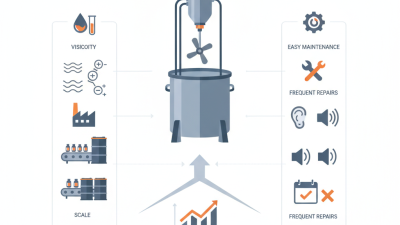
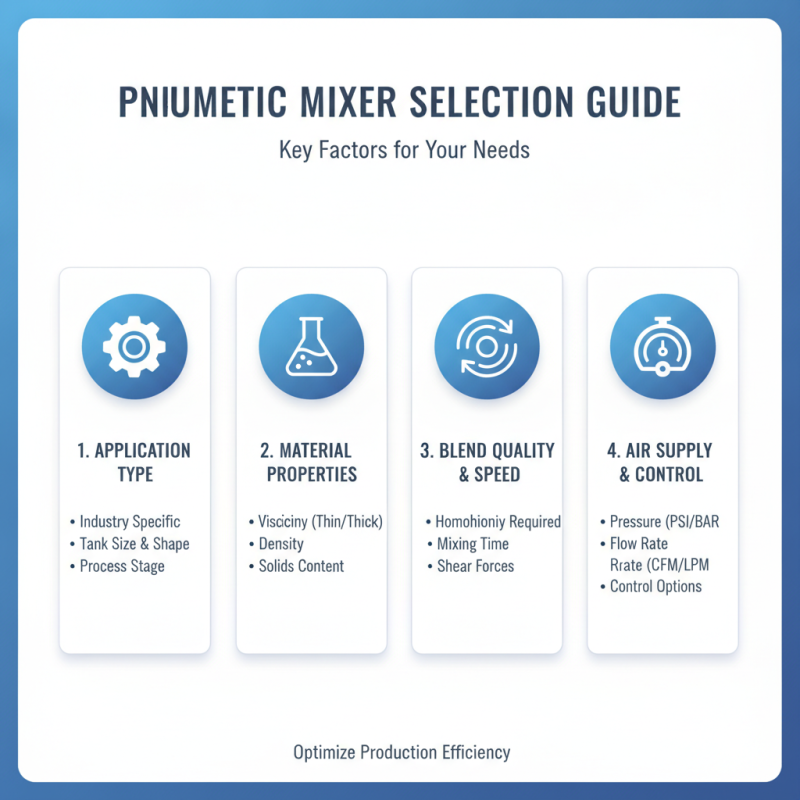
Selecting the appropriate Pneumatic Mixer isn't just a technical choice. It's an investment that affects productivity and safety. Many companies miss out on optimal performance due to improper selection. Evaluating your application, material viscosity, and mixing requirements can guide your decision. Always consider the mixer’s efficiency and maintenance needs alongside initial costs.
Understanding the Types of Pneumatic Mixers Available in the Market
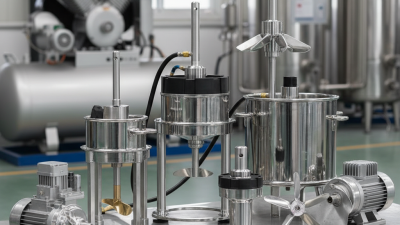
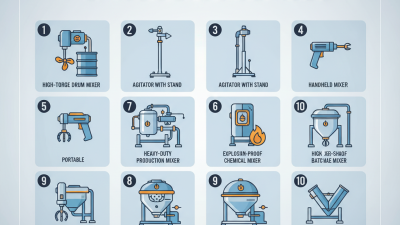
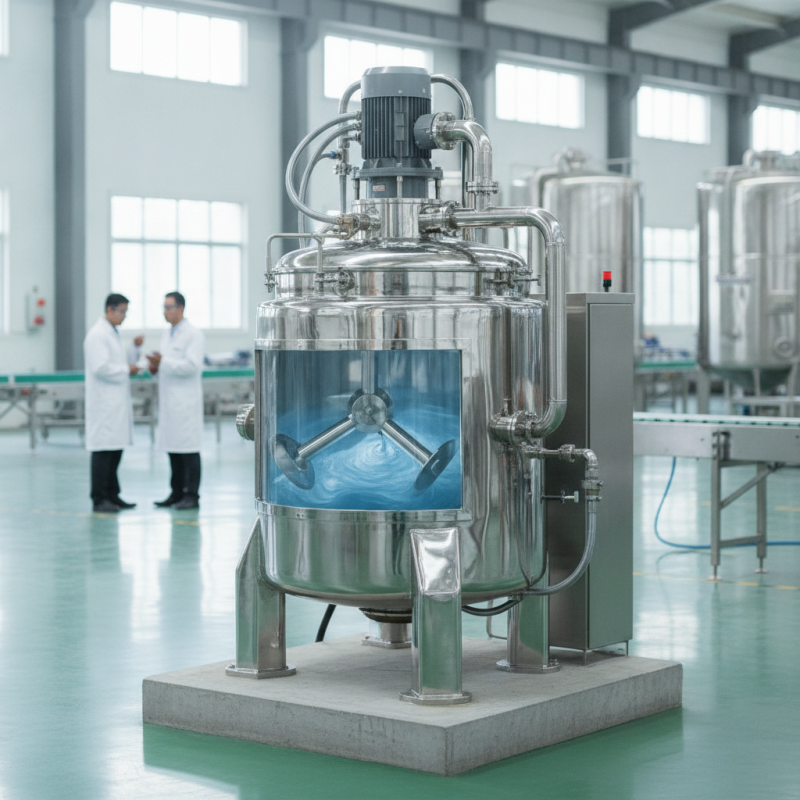
When selecting a pneumatic mixer, it’s essential to understand the types available in the market. Pneumatic mixers generally fall into two categories: high-shear mixers and low-shear mixers.
High-shear mixers use rapid blade rotation to create a vortex, making them ideal for emulsifying and dispersing fine particles. These are great for products that require a thorough mix.
On the other hand, low-shear mixers gently blend materials without breaking down the particles. They maintain the integrity of the components, making them suitable for sensitive formulations. For example, if you're mixing fragile ingredients, a low-shear mixer may be a better choice.
Additionally, consider factors like capacity and pressure requirements. A mixer must operate effectively under the specific conditions of your business. Choosing the wrong type might lead to inefficient mixing or product inconsistency.
It’s crucial to evaluate both the mixing process and the end product to avoid any costly mistakes. Understand the unique needs of your operations to identify the best pneumatic mixer for your situation.
Evaluating the Performance Specifications of Pneumatic Mixers
When selecting a pneumatic mixer for your business, evaluating performance specifications is crucial. Look into the mixer’s capacity. It should match your production needs. A mixer that is too small will underperform. Conversely, an oversized mixer can lead to inefficiencies.
Consider the mixer’s air pressure requirements. Higher air pressure can enhance mixing effectiveness, but it can also increase operational costs. Ensure the air supply system can support your chosen mixer. This aspect is often overlooked, leading to issues down the line.
Tips: Always check the mixing speed. A slower speed might not blend materials uniformly. However, too fast can introduce air pockets. Find a balance that works for your specific materials. Also, don’t ignore maintenance requirements. Regular upkeep is essential for longevity. Evaluate your team’s expertise with pneumatic systems. A lack of knowledge can lead to costly mistakes.
Assessing the Compatibility of Pneumatic Mixers with Your Materials
Choosing a pneumatic mixer requires careful consideration of your materials. Different materials have unique characteristics. For instance, viscosity and density play significant roles in mixing efficiency. Understanding these properties helps in selecting an appropriate mixer.
Compatibility is not just about size or power. It extends to the mixer’s construction materials. For example, corrosive substances demand mixers made from resistant materials. If your materials react with specific metals, avoid them to ensure safety. This requires a thorough assessment of both materials and mixers. Conducting small-scale tests can reveal potential issues.
Sometimes, it’s easy to underestimate the importance of the environment. Temperature and humidity can alter material behavior. If the mixer isn’t equipped to handle these conditions, you may face complications. Documenting past experiences will help refine your selection process. Continuous evaluation of your mixing setup can lead to improvements.
Maintaining and Troubleshooting Your Pneumatic Mixer for Longevity
Maintaining a pneumatic mixer is crucial for maximizing its lifespan and ensuring optimal performance. Regular maintenance can prevent costly downtime and repairs. An industry report published by the Fluid Mixing Association indicates that over 40% of mixer failures are due to inadequate maintenance practices. This highlights the need for a structured approach to keep your equipment in top shape.
One essential tip is routine inspections. Check for leaks, wear, and tear. Ensure that the air supply is regulated properly. Regularly clean the mixing chamber to avoid contamination. These steps can significantly extend the life of your mixer. Ensure that any lubrication is consistent and meets the manufacturer’s specifications to enhance efficiency.
Another critical aspect is troubleshooting common issues. Noise and vibration can signal that parts are out of alignment. Address these problems quickly to avoid further damage. It’s also important to monitor the performance regularly. Tracking output consistency can help identify underlying issues before they escalate. Remember, documentation of any maintenance performed is vital. It provides a clear record and helps in future troubleshooting efforts.