10 Tips for Choosing Blenders and Mixers for Your Business
Choosing commercial Blenders Mixers is less about buying the machine with the biggest motor and more about matching equipment to daily work. A café making smoothies during a morning rush has different needs from a bakery mixing thick batters in measured batches. Capacity, motor duty rating, speed controls, and container design all affect performance. So does the space around the machine. A blender that fits under the counter but blocks a busy prep area may create more problems than it solves.
This guide offers ten practical tips for comparing blenders and mixers for your business. Look beyond headline wattage: check the manufacturer’s intended use, batch limits, warranty, and availability of replacement parts. Consider how easily staff can clean the jar, change attachments, and operate controls with wet hands. Noise matters too, especially in open kitchens. Small details add up. Ask a supplier to demonstrate the equipment with ingredients similar to yours, then note how it handles a realistic workload. A showroom test is useful, but it cannot predict every shift.
No checklist can replace your own workflow assessment. Some specifications look impressive and still prove irrelevant after installation. Record what you prepare, how often you prepare it, and where the machine will sit. Then compare options against those observations, not guesses. A careful choice can support consistency, reduce avoidable downtime, and make service easier. The right fit may be less powerful, less expensive, or simply easier to maintain. That is worth questioning before you buy.
Define Your Menu, Output Volume, and Daily Workload
Start with the menu, not the machine. A café making smoothie bowls needs a blender that handles frozen fruit and thick mixtures without overheating. A bakery whipping small batches may need a mixer with a suitable bowl size and speed range instead. List your heaviest ingredients, batch sizes, and peak-hour recipes. Then estimate how many batches staff must complete during a typical rush.
Volume matters, but so does the pace of repeated use. The National Restaurant Association’s 2024 State of the Restaurant Industry reported that 45% of operators said their restaurant was not profitable in 2023. That makes buying excess capacity a costly gamble. The U.S. Bureau of Labor Statistics projects employment of food preparation workers to grow 6% from 2023 to 2033, a useful reminder to consider how equipment fits real staffing patterns. A forecast is imperfect. Track orders for a week, note the busiest 30 minutes, and test whether one machine can keep up without delaying other prep. Record noise, cleanup time, and how warm the motor feels after repeated batches. Those details are easy to overlook. I would revisit the estimate after a seasonal menu change; demand rarely stays exactly where the spreadsheet says.
Compare Blender and Mixer Types for Each Task
Choosing equipment starts with the texture you need, not the motor’s headline power.
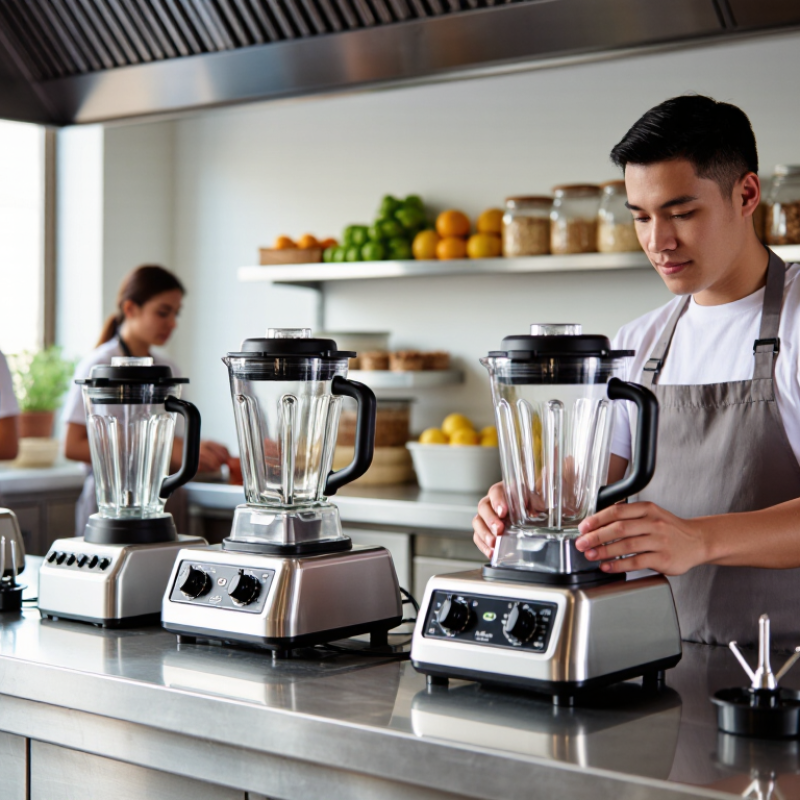
A high-speed blender suits smooth soups, sauces, and frozen drinks; a sound lid and sturdy jar matter when blending hot liquids. For thick purées, check whether the machine can run steadily without frequent stopping. An immersion blender works well in a stockpot and saves transfer time, though it may leave small bits in fibrous ingredients. Small batches matter. A countertop blender can struggle when its jar is barely covered.
Mixers serve different jobs. A planetary stand mixer handles cake batter, buttercream, and moderate dough, while a spiral mixer is better suited to repeated bread-dough batches. A hand mixer is practical for light batters and occasional whipping, but it is not a substitute for a dough mixer.
Check bowl capacity against your busiest realistic batch, not an unusually large one. Also consider speed control, attachments, cleaning access, and how long the machine can run before cooling.
It depends. A powerful unit may still be a poor fit if staff must scrape it constantly or the bowl is awkward to wash. Test the actual ingredients and batch size when possible; catalog descriptions cannot show every texture or workflow.
Assess Capacity, Power, Speed, and Material Compatibility
Capacity should match your busiest service period, not an unusually quiet afternoon. Estimate the number of portions you prepare per batch, then leave room for ingredients to move freely. A pitcher filled to the rim may leak or blend unevenly. For a café making several smoothies at once, a larger jug can reduce repeated runs, but it also takes more counter space. Check both working capacity and total capacity; they are not always the same. A small detail, but an easy one to miss.
Power matters most when ingredients are dense or frozen. Compare the motor’s rated output and the machine’s recommended duty cycle, rather than relying on peak wattage alone. If staff will crush ice or process thick mixtures, choose equipment designed for that workload. Listen for changes in sound during a test run, and check whether the unit vibrates on your counter. Speed settings should suit your recipes: low speeds help combine delicate ingredients, while higher speeds can create smoother results. More settings are not automatically better. Inspect material compatibility, too. Stainless-steel bowls handle many kitchen tasks, while some plastics may stain or retain odors. Confirm that seals, blades, and containers tolerate your ingredients and cleaning routine. One overlooked issue: a vessel that fits the recipe may still be awkward to wash. Test the parts in hand before buying.
Check Durability, Safety Features, Cleaning, and Maintenance
A commercial blender or mixer may run through dozens of cycles during a busy shift. Check the housing, jar, coupling, and controls for sturdy construction. Look for parts that feel secure, not loose or flimsy. Ask the supplier about expected service intervals and replacement-part availability. A low purchase price can become expensive if a small worn component stops daily work.
Tips: Check that lids lock firmly and guards stay in place during operation. Choose controls staff can understand quickly. Inspect removable parts for smooth surfaces and corners that are easy to reach. After a sample cycle, listen for unusual rattling. It is a small test, but easy to overlook.
Cleaning and maintenance affect both reliability and workflow. Confirm whether jars, blades, and attachments can be removed safely, and follow the maker’s cleaning instructions. Staff should unplug equipment before handling blades or clearing a jam. Wipe spills promptly, then check seals and cords during routine cleaning. No checklist catches every weak point; busy teams may skip small checks. Keep a simple maintenance log, and train each shift to report damage before the next use.