How to Choose the Best Blown Film Extruder Machine for Your Needs?
Choosing the right Blown Film Extruder Machine is crucial for success in film production. According to industry expert Dr. Emily Chen, “The machine's efficiency directly impacts your profit margins.” Selecting the right machine requires a deep understanding of your production needs.
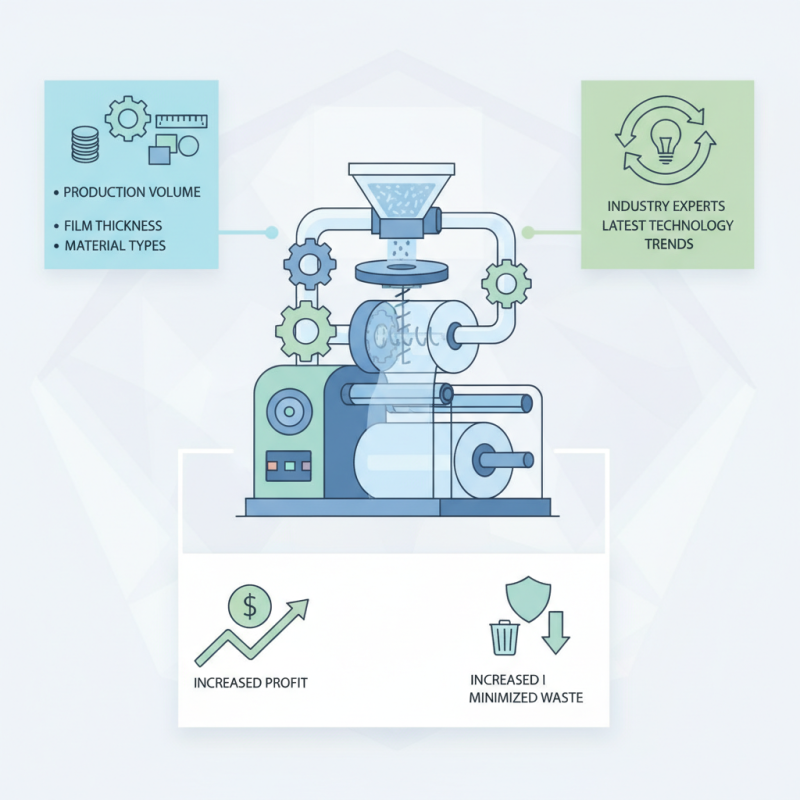
The Blown Film Extruder Machine market is vast and intricate. You may find numerous options, each with different specifications and capabilities. It is easy to feel overwhelmed. Assessing your specific requirements can simplify the selection process. Consider factors such as production volume, desired film thickness, and material types.
Many manufacturers offer features that promise high efficiency, but not all meet expectations. Mistakes can lead to wasted resources and increased costs. Regularly engage with industry experts and stay updated with the latest technology trends. This approach fosters informed decisions and minimizes risks in choosing a Blown Film Extruder Machine tailored to your goals.
Factors to Consider When Choosing a Blown Film Extruder Machine
When selecting a blown film extruder machine, it’s crucial to evaluate specific factors that align with your production needs. The extrusion speed is a key consideration. Higher speeds can improve efficiency but may require more sophisticated technology to ensure quality. You must also consider the thickness and width of the film you wish to produce. Different models offer varying capacities, and buying one that underperforms can lead to wasted time and resources.
Material compatibility is another important aspect. Make sure the machine can handle the types of resin you intend to use. If not, you may face issues like poor film quality. You might also want to reflect on the machine's energy consumption. Efficient models can reduce operational costs and environmental impact.
Finally, do not overlook the importance of maintenance and support. A reliable extruder should come with good service options. If technical issues arise, prompt assistance can prevent lengthy downtimes. Weighing these considerations can create a balance between necessary features and your budget constraints.
Understanding Different Types of Blown Film Extruders Available in the Market
When exploring blown film extruders, it's essential to understand the various types available. Each type caters to different production needs and materials. Single-extrusion machines are popular for simplicity and cost-effectiveness. They offer a straightforward setup, making them ideal for small-scale operations. Their versatility allows for a range of film thicknesses, serving various applications. However, they may limit production speed.
On the other hand, co-extrusion machines involve multiple layers. This technology enhances film properties, such as strength and barrier performance. Layering different polymers can lead to improved functionality. Yet, co-extrusion setups are more complex and may require specialized training. This can be daunting for new businesses.
Another option is blown film die heads, which play a crucial role in film quality. Choosing an appropriate die ensures even thickness and reduces defects. Defects can lead to wasted materials and lost revenue. Regardless of the type chosen, evaluating specific production goals is essential for making the best decision. Consider factors like material compatibility and desired output when selecting a blown film extruder.
Blown Film Extruder Machine Types and Their Production Capacities
This chart illustrates the production capacities of different types of blown film extruder machines available in the market. The Single Layer extruder can produce up to 200 kg/hour, while the Multi Layer model reaches 500 kg/hour, showcasing the potential efficiency and output variations based on machine type.
Evaluating Output Capacity: How Much Film Do You Really Need?
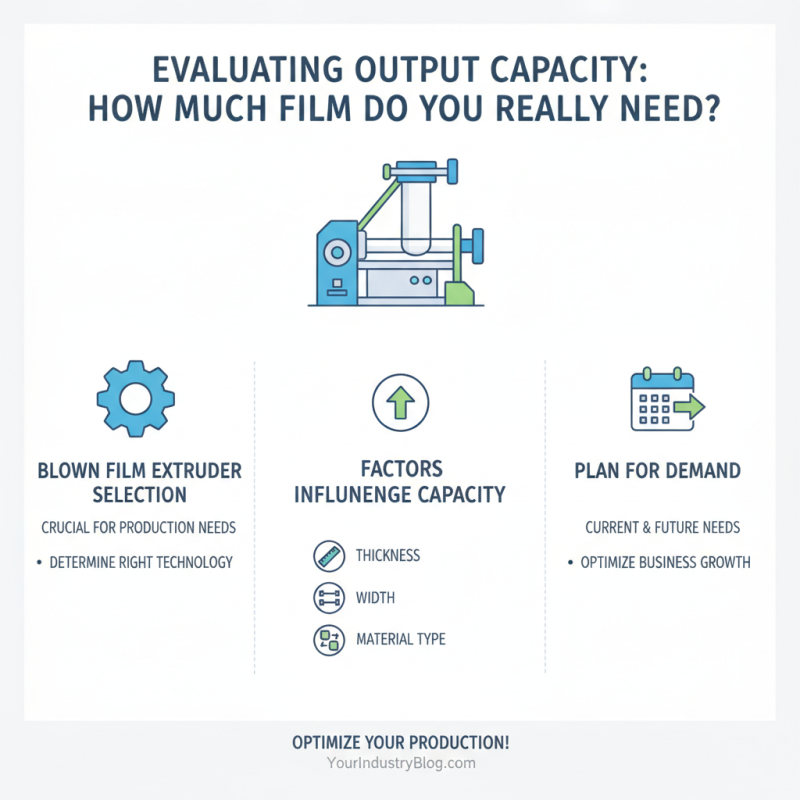
When selecting a blown film extruder machine, evaluating output capacity is crucial. Understanding your production needs helps determine the right technology for your business. Many factors influence output capacity, including thickness, width, and material used. Think about your current and future demands.
To gauge how much film you need, consider your daily production goals. Some industries have fluctuating demands. Are you prepared for unexpected increases? Be realistic about your capacity and production timelines. It's essential to align the machine's output with your operational goals.
Tips: Start with a production audit. Analyze your current film usage and predict future trends. Consult with industry professionals to understand capacity needs. Additionally, inquire about the machine's flexibility in adjusting output settings. Balancing efficiency and adaptability is key. Remember, the right machine should grow with your needs, not limit them.
Material Compatibility: Choosing the Right Resin for Your Applications
When selecting a blown film extruder machine, material compatibility is crucial. The choice of resin directly impacts the quality and properties of the end product. Different applications require specific resins. Understanding these needs is key.
Polyethylene is a popular choice for flexible films. It offers excellent resistance and clarity. However, it may not be suitable for high-temperature applications. Considerations such as melting point and processing conditions are vital. In contrast, polypropylene can handle higher temperatures but may lack the transparency some products need.
Experimentation can lead to unexpected results. You might find that a blend of resins achieves the desired properties. However, blending can complicate the manufacturing process. It’s essential to maintain uniformity to prevent defects. Testing and adjusting are part of the learning curve.
How to Choose the Best Blown Film Extruder Machine for Your Needs? - Material Compatibility: Choosing the Right Resin for Your Applications
| Resin Type |
Melt Flow Index (MFI) |
Typical Applications |
Compatibility with Blown Film Extruder |
| LDPE |
0.5 - 3.0 |
Shopping bags, liners |
Excellent |
| HDPE |
0.3 - 1.0 |
Buckets, containers |
Good |
| LLDPE |
1.0 - 10.0 |
Stretch films, pouches |
Very good |
| PLA |
1.5 - 3.0 |
Biodegradable films |
Limited |
| PET |
0.5 - 0.8 |
Bottles, packaging |
Not recommended |
Cost Effectiveness vs. Production Quality: Striking the Right Balance
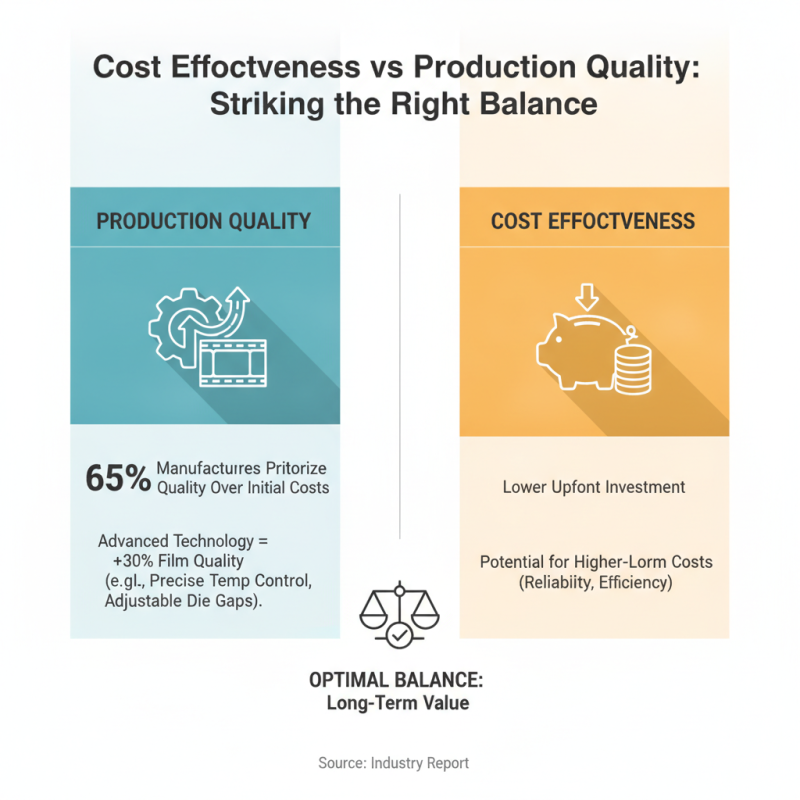
When considering a blown film extruder machine, businesses often grapple with the dilemma of cost effectiveness versus production quality. According to a recent industry report, approximately 65% of manufacturers prioritize production quality over initial costs. This trend highlights the value placed on long-term reliability and efficiency, despite higher upfront investments. For instance, machines with advanced technology, including precise temperature control and adjustable die gaps, show a 30% increase in film output quality.
However, this focus on quality can lead to budget constraints. Reports indicate that around 40% of companies experience unexpected expenses due to maintenance and operational inefficiencies. Businesses must strike the right balance between investing in high-quality machines and managing operational costs. A well-chosen extruder can have a lifespan of 15 years, but poor maintenance may reduce this significantly, illustrating the need for ongoing attention. Therefore, evaluating total cost of ownership is critical to achieving an optimal balance.