Leave Your Message
Global waste volumes are rising, making reliable Dumping Stations increasingly important for cities, contractors, and industrial operators. The World Bank’s What a Waste 2.0 report estimated 2.01 billion tonnes of municipal solid waste in 2016. It projects annual volumes could reach 3.40 billion tonnes by 2050. That growth creates pressure on collection routes, transfer capacity, worker safety, and environmental controls.
A well-designed station can reduce vehicle mileage, improve material handling, and support cleaner downstream processing. However, supplier quality varies widely. Practical buyers must examine hopper design, compaction systems, odor control, dust suppression, drainage, weighing technology, and after-sales service. Equipment should also match local waste density, climate, traffic patterns, and operating budgets. A solution proven in Europe may perform differently in tropical or remote locations.
Waste-management specialist Antonis Mavropoulos has stated, “Waste is a resource in the wrong place.” His observation remains useful when evaluating modern Dumping Stations. The best facilities do more than receive waste. They create controlled flows for recovery, transfer, treatment, and responsible disposal.
This guide reviews China’s top ten Dumping Stations suppliers for global buyers. The comparison considers manufacturing experience, customization, certifications, export capability, maintenance support, and project references. Information should still be verified directly with each supplier. Catalog promises are not performance evidence. Site visits, operating data, and independent inspections matter. Some suppliers may appear technically similar, yet their installation discipline can differ sharply. That uncomfortable detail deserves attention before signing a purchase contract.
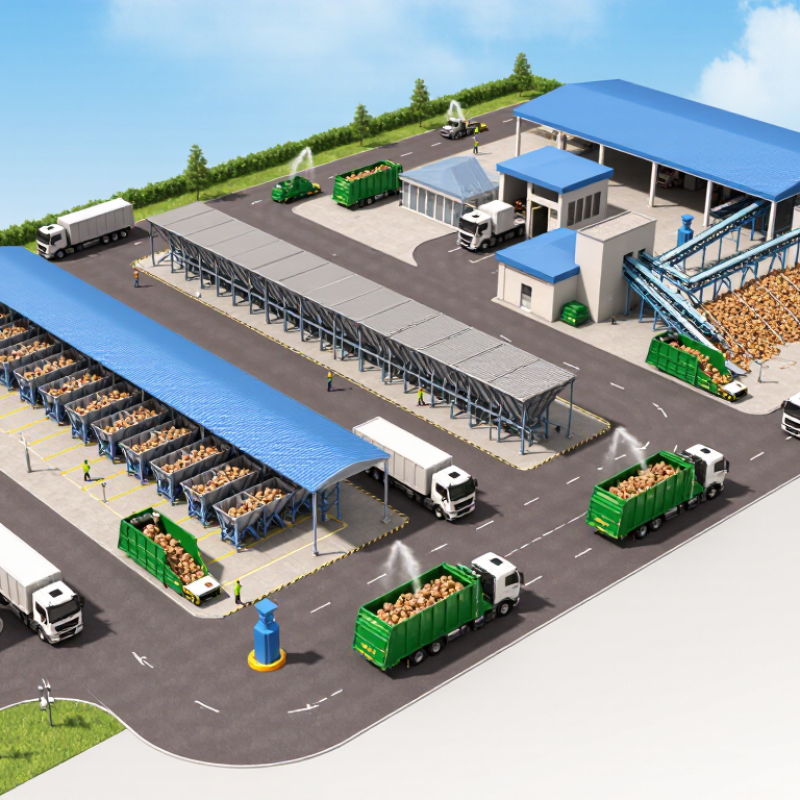
Dumping stations are the controlled entry points where bags, boxes, or bulk materials are emptied into a conveying or feeding system. For global buyers, a practical capacity range is 1–20 t/h. The correct model depends on material density, packaging size, and feeding rhythm. A station handling fine powder needs different protection from one receiving granules. Capacity figures can also change during real operation.
Dust control starts at the unloading opening. A sealed hood, cartridge filters, and steady airflow help reduce visible dust. Flexible curtains can limit escape during bag tipping. The hopper should avoid sharp corners, where powder may collect. Access doors need reliable seals, but easy maintenance matters too. A perfect seal is rarely practical.
Tips: Ask suppliers for tested throughput, filter airflow, noise data, and cleaning procedures. Request material trials when possible. Check whether the feeder can maintain stable output at low rates, not only peak capacity. Feeding screws, rotary valves, or vibrating units may suit different materials. Moisture, stickiness, and particle size can change performance quickly. I would not trust capacity claims without test conditions. Small details, such as a narrow discharge outlet or weak inspection window, may create daily delays. Reliable suppliers should explain these limitations clearly and provide drawings, manuals, and service guidance.
| Supplier Profile | Typical Throughput | Station Configuration | Dust-Control System | Feeding Method | Suitable Materials | Discharge Arrangement | Typical Customization | Common Export Suitability |
|---|---|---|---|---|---|---|---|---|
| Supplier Profile 01 | 1–3 t/h | Compact manual bag-dumping station with enclosed hopper | Integrated cartridge filter with pulse-jet cleaning | Manual bag emptying with gravity discharge | Cement, lime, gypsum, mineral powders | Flange outlet for screw conveyor or flexible hose | 304 stainless-steel contact parts; inspection door; bag-support grate | Suitable for small batch plants and laboratory-scale production |
| Supplier Profile 02 | 2–5 t/h | Enclosed bag-dumping unit with vibratory hopper | Cartridge filter, negative-pressure extraction, dust-tight cover | Manual feeding with vibration-assisted material flow | Food powders, starch, salt, detergent powder | Rotary valve or flexible screw conveyor connection | Food-contact stainless steel; polished internal surfaces; quick clamps | Appropriate for hygienic processing and frequent product changes |
| Supplier Profile 03 | 3–6 t/h | Heavy-duty dumping station with hopper-mounted agitator | Pulse-cleaned filter element with differential-pressure gauge | Manual or forklift-assisted bag loading | Fly ash, silica, carbon black, fine minerals | Double flap valve or screw feeder outlet | Wear-resistant lining; reinforced hopper; anti-bridging agitator | Suitable for abrasive and cohesive powder handling |
| Supplier Profile 04 | 4–8 t/h | Bulk-bag unloading station with lifting frame | Vent filter with sealed connection to a central dust collector | Flexible bulk-bag spout with controlled discharge | Plastic pellets, fertilizer, powdered chemicals | Butterfly valve, rotary valve, or loss-in-weight feeder | Electric hoist; height-adjustable frame; residual-bag vibrator | Suitable for containerized bulk-bag logistics |
| Supplier Profile 05 | 5–10 t/h | Combined manual-bag and bulk-bag unloading system | Centralized extraction duct with pulse-jet filter unit | Manual bag feeding plus bulk-bag discharge station | Powdered food ingredients, additives, ceramics | Flexible screw conveyor or pneumatic conveying inlet | Dual feeding ports; level sensor; automatic filter cleaning control | Suitable for medium-capacity continuous production lines |
| Supplier Profile 06 | 6–12 t/h | Industrial bulk-bag discharger with mass-flow hopper | Dedicated filter receiver with dust-return arrangement | Bulk-bag spout, pneumatic tapping, and controlled gate valve | Powdered minerals, premix materials, industrial additives | Rotary airlock or twin-screw feeder | Load cells; automatic refill control; anti-static grounding points | Suitable for automated material-replenishment systems |
| Supplier Profile 07 | 8–14 t/h | High-capacity enclosed unloading station with storage hopper | Two-stage dust separation with cartridge filtration | Forklift-loaded bulk bags with pneumatic discharge assistance | Cementitious powders, fly ash, bentonite, powdered stone | Rotary feeder, screw conveyor, or pneumatic transfer line | Large-volume hopper; wear plates; level monitoring; access platform | Suitable for construction-material and mineral-processing plants |
| Supplier Profile 08 | 10–16 t/h | Automated bulk-bag unloading line with buffer hopper | Negative-pressure enclosure with filter-fan package | Timed bulk-bag discharge with automated flow regulation | Resins, polymers, fertilizers, granular additives | Loss-in-weight feeder or pneumatic conveying system | PLC control; high-level alarm; empty-bag detection; remote I/O | Suitable for integrated production and batching systems |
| Supplier Profile 09 | 12–18 t/h | Continuous-duty dumping station with twin discharge outlets | High-efficiency cartridge filter with automatic pulse cleaning | Bulk-bag unloading with dual-line material transfer | Dry mortar ingredients, cement, micronized minerals | Parallel screw feeders or pneumatic conveying outlets | Redundant discharge lines; abrasion-resistant components; load cells | Suitable for high-utilization plants requiring process continuity |
| Supplier Profile 10 | 15–20 t/h | High-throughput automated unloading and feeding system | Enclosed extraction hood, pulse-jet filtration, and dust-return loop | Automated bulk-bag discharge with metered feeding | Cement, mineral powders, chemical powders, dry premixes | Multiple screw feeders with pneumatic conveying integration | PLC/HMI controls; weighing system; safety interlocks; platform access | Suitable for large-scale continuous manufacturing facilities |