2026 Top Extruder Screw Types for Global Buyers
Choosing the right Extruder Screw in 2026 requires more than comparing catalog photos or advertised output rates. Global buyers must match screw geometry with polymer type, processing temperature, throughput, and equipment design. A 45 mm screw for general-purpose polyethylene may perform poorly with glass-filled engineering plastics. Small details matter, including flight depth, compression ratio, mixing sections, surface hardness, and cooling capacity.
This guide examines common screw types, including general-purpose, barrier, mixing, vented, and twin-screw designs. It focuses on practical selection evidence. Manufacturer drawings, material certificates, torque limits, and documented trial results deserve careful review. Maintenance records can also reveal problems that brochures often hide, such as uneven wear near the feed zone or unstable melt pressure after several production cycles.
There is no universal best screw. Not even close. A barrier design may improve melting, yet increase sensitivity to contamination or incorrect operating conditions. A mixing screw can improve color dispersion, but excessive shear may damage temperature-sensitive polymers. Buyers should question unclear performance claims and request test data under comparable conditions. Regional service support, spare-part availability, lead time, and technical communication also affect the real purchase value. This overview offers a structured starting point, while acknowledging an important limitation: screw performance depends on the complete extrusion system, not one component alone.
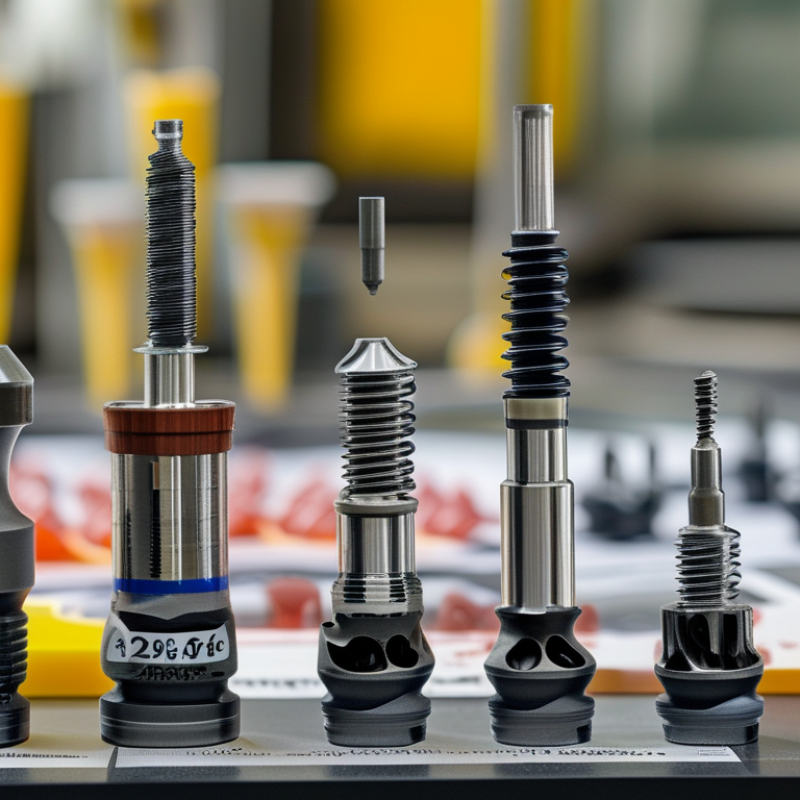
Single-Flight Screws: 20:1–30:1 L/D for General Thermoplastics
For global buyers, single-flight screws remain a practical choice for general thermoplastics. A 20:1–30:1 L/D ratio offers a useful processing window. At 20:1, the screw supports stable conveying and melting for common PE, PP, and PS grades. A 25:1–30:1 design provides more melting length and homogenization. It can also increase residence time and heat history.
PlasticsEurope’s Plastics—The Fast Facts 2024 reports 413.8 million tonnes of global plastics production in 2023. That scale makes screw selection a production issue, not merely a machine detail. The OECD Global Plastics Outlook reports 353 million tonnes of plastic waste in 2019, with only 9% recycled. Recycled feedstock often changes in moisture, bulk density, and melt flow. A fixed general-purpose design may struggle here.
A purchasing brief should specify polymer family, target output, melt temperature, screw speed, compression ratio, and allowable residence time. Ask for measured output data, not only theoretical rpm claims. Check flight depth, root diameter, steel grade, surface treatment, and wear allowances. A 30:1 screw can look impressive on paper. It may still overheat sensitive material. I would not select the longest screw automatically. That assumption deserves testing.
2026 Top Extruder Screw Types for Global Buyers - Single-Flight Screws: 20:1–30:1 L/D for General Thermoplastics
Practical selection guide for conventional single-flight, three-zone extrusion screws
| Material / Grade Family |
Recommended L/D |
Typical Compression Ratio |
Typical Melt Temperature |
Suitable Screw Profile |
Metering Section |
Key Processing Consideration |
| LDPE / LLDPE |
20:1–28:1 |
2.0:1–3.0:1 |
160–220°C |
Standard three-zone; moderate compression |
25–35% of screw length |
Use gradual melting and avoid excessive shear to limit melt temperature rise. |
| HDPE |
24:1–30:1 |
2.5:1–3.5:1 |
190–240°C |
Three-zone; medium-to-high compression |
25–35% of screw length |
A longer L/D can improve melting uniformity and output stability. |
| PP Homopolymer / Copolymer |
24:1–30:1 |
2.5:1–3.5:1 |
200–250°C |
Standard three-zone; controlled compression |
25–35% of screw length |
Balance shear and residence time; excessive shear may cause degradation or discoloration. |
| GPPS / HIPS |
20:1–28:1 |
2.0:1–3.0:1 |
200–250°C |
Standard three-zone; low-to-medium compression |
25–35% of screw length |
A general-purpose profile is normally adequate for sheet, profile, and filament applications. |
| ABS |
24:1–30:1 |
2.0:1–3.0:1 |
220–270°C |
Three-zone; moderate compression and shear |
25–35% of screw length |
Dry hygroscopic grades before processing and provide adequate venting where required. |
| HIPS with Mineral or Color Additives |
24:1–30:1 |
1.8:1–2.5:1 |
200–245°C |
Low-compression, wear-conscious three-zone profile |
25–35% of screw length |
Use abrasion-resistant screw and barrel materials when mineral fillers are present. |
| Rigid PVC |
20:1–26:1 |
1.5:1–2.5:1 |
170–200°C |
Low-shear, low-compression profile |
30–40% of screw length |
Maintain tight temperature control; excessive shear and residence time can accelerate degradation. |
| Flexible PVC |
20:1–26:1 |
1.5:1–2.5:1 |
150–190°C |
Low-compression three-zone profile |
30–40% of screw length |
Use gentle solids conveying and avoid localized hot spots. |
| PMMA |
24:1–30:1 |
2.0:1–3.0:1 |
230–270°C |
Moderate-compression, low-to-moderate shear profile |
25–35% of screw length |
Dry material thoroughly and control residence time to reduce bubbles and degradation. |
| EVA |
20:1–28:1 |
2.0:1–3.0:1 |
160–220°C |
Standard three-zone; moderate compression |
25–35% of screw length |
Select temperature settings according to vinyl acetate content and melt viscosity. |
| TPU |
24:1–30:1 |
1.8:1–2.5:1 |
180–230°C |
Low-compression, low-shear profile |
30–40% of screw length |
Dry moisture-sensitive grades and avoid excessive residence time or shear heating. |
Technical notes: L/D is the flighted screw length divided by nominal screw diameter. Compression ratio is the feed-section flight depth divided by the metering-section flight depth. Temperature values are typical melt-temperature starting ranges, not barrel-zone setpoints. Final screw geometry should be verified against resin grade, additives, throughput, die pressure, cooling capacity, and required product quality.
Parallel Twin-Screws: 24:1–52:1 L/D for High-Throughput Compounding
For global buyers, parallel twin-screws offer a flexible route to high-throughput compounding. The 24:1 to 52:1 L/D range changes how the machine processes heat, fillers, and polymer blends. Shorter designs support simpler formulations and reduced residence time. Longer designs provide more room for melting, dispersion, devolatilization, and controlled feeding. The extra length is not automatically better.
A 24:1–32:1 screw can suit stable recipes with moderate filler loading and limited venting needs. A 40:1–52:1 configuration gives operators more process zones and adjustment points. It can improve dispersion when screw elements, temperature settings, and feed rates work together. However, added zones may increase residence time, energy demand, and thermal stress. That tradeoff is often underestimated. Parallel shafts also need accurate alignment and balanced torque distribution. Poor matching may cause unstable melt pressure or uneven wear.
Before purchasing, buyers should compare polymer viscosity, filler percentage, moisture level, target output, and cleaning frequency. Ask for torque limits, maximum screw speed, venting capacity, and documented test results. A factory trial remains valuable. Measure output per hour, melt temperature, pressure variation, and dispersion quality. Do not judge performance from throughput alone. In practice, a well-matched 32:1 machine can outperform a poorly configured 52:1 line. That result can challenge catalogue assumptions.
Conical Twin-Screws: 1.5:1–2.5:1 Compression for PVC Processing
Conical Twin-Screws for PVC Processing: 1.5:1–2.5:1 Compression
Conical twin-screws are widely selected for rigid PVC profiles, pipes, and technical sheets. Their tapered geometry supports steady conveying as material moves toward the die. A compression ratio between 1.5:1 and 2.5:1 can help compact dry blend and improve melting consistency. However, the ratio alone does not define performance. Suppliers may calculate it from channel depth, flight geometry, or another reference point. Ask for the exact method.
In practical production, I would examine screw diameter, effective length, torque capacity, and mixing-section design together. PVC is sensitive to excessive heat and residence time. A screw that compresses too aggressively may increase shear, raise melt temperature, or leave discolored particles. Watch the melt, not only the barrel display. Actual material temperature can differ noticeably. Small changes in stabilizer, filler, moisture, and output rate also affect processing behavior.
One assumption deserves challenge. Higher compression is not automatically better. A 2.5:1 design may suit a dense formulation, while a 1.5:1 design may reduce stress in a delicate compound. I have seen stable output improve after lowering speed slightly and adjusting feeding, rather than changing the screw. Check flight wear regularly. Even modest wear can alter conveying balance and create uneven surface quality. Request application data, dimensional drawings, material specifications, and test records before purchasing. Supplier claims need practical verification.
2026 Top Extruder Screw Types for Global Buyers
Conical Twin-Screws: 1.5:1–2.5:1 Compression for PVC Processing
The chart presents three practical compression-ratio design points within the commonly specified
1.5:1–2.5:1 range for conical twin-screw extrusion. Lower ratios generally support gentler melting,
while higher ratios provide stronger compaction for more demanding PVC formulations. Final screw
geometry should be selected according to material formulation, output target, and processing temperature.
Mixing and Vented Screws: 20%–40% Mixing Length for Uniform Melts
2026 Top Extruder Screw Types for Global Buyers
Mixing and Vented Screws: 20%–40% Mixing Length for Uniform Melts
For many extrusion lines, mixing screws remain a practical choice for color, filler, and recycled resin. A mixing section of 20%–40% of the total screw length can improve melt uniformity. The correct ratio depends on resin viscosity, throughput, and temperature sensitivity. More mixing is not always better. Excessive shear can raise melt temperature and damage sensitive materials.
A well-designed mixing zone should distribute additives without creating unstable pressure. In production trials, technicians often check strand appearance, melt temperature, and output fluctuation together. A simple sample can reveal unmixed pellets or color streaks. These details matter more than a catalog claim. Screw clearance, flight depth, and rotation speed also influence performance. Small geometry changes can produce noticeable results.
Vented screws help release moisture, trapped air, and some volatile compounds before final forming. The vent position needs enough upstream melting, but not excessive pressure. If the melt seals the vent, gases cannot escape effectively. If the vent opens too early, material may surge or escape through the opening. This balance is easy to underestimate. Buyers should review resin data, expected moisture levels, and machine operating records before selecting a screw. A 30% mixing length may work well in one line, yet perform poorly in another. Trial runs remain necessary.