Top 10 Industrial Robots in China for Global Buyers?
The landscape of industrial automation is rapidly changing, particularly in China. Renowned expert Dr. Li Wei, a specialist in robotics, states, "China is leading the way in industrial robot innovation." This statement reflects a growing trend where efficiency and precision are paramount.
Chinese manufacturers are at the forefront, designing versatile industrial robots that cater to various sectors. These robots are not just tools; they are transforming production processes. For global buyers, understanding the top models available provides an edge. The performance and reliability of these machines can significantly influence operational success.
However, evaluating these robots is not straightforward. Buyers need to consider numerous factors, including cost, functionality, and support services. Sometimes, even top products may fall short in certain applications. Thus, careful assessment and testing are crucial. The evolution of industrial robots offers exciting opportunities, yet it demands thoughtful analysis and reflection.
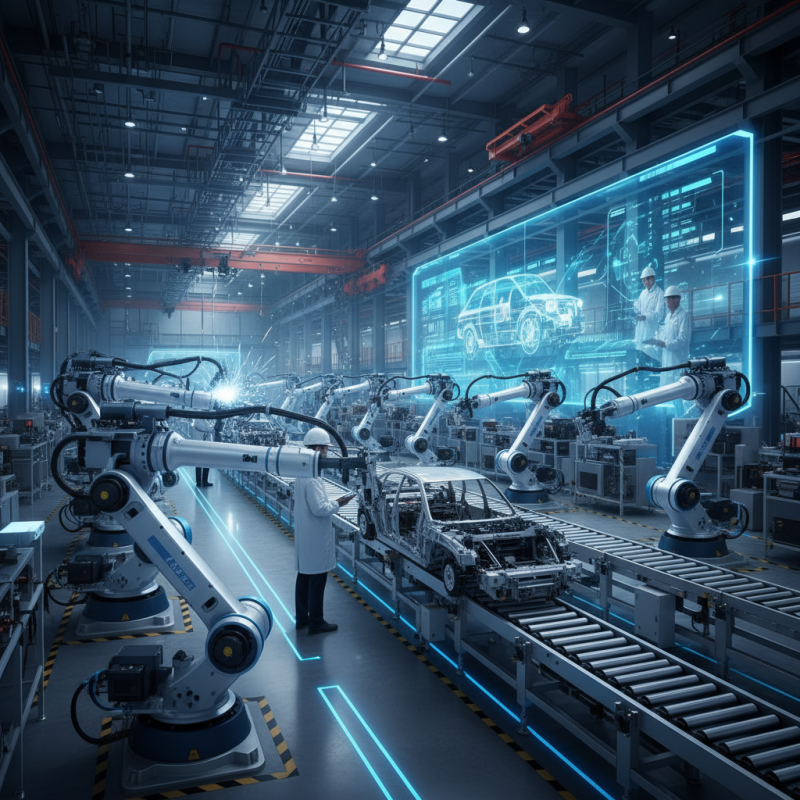
Overview of the Industrial Robotics Market in China
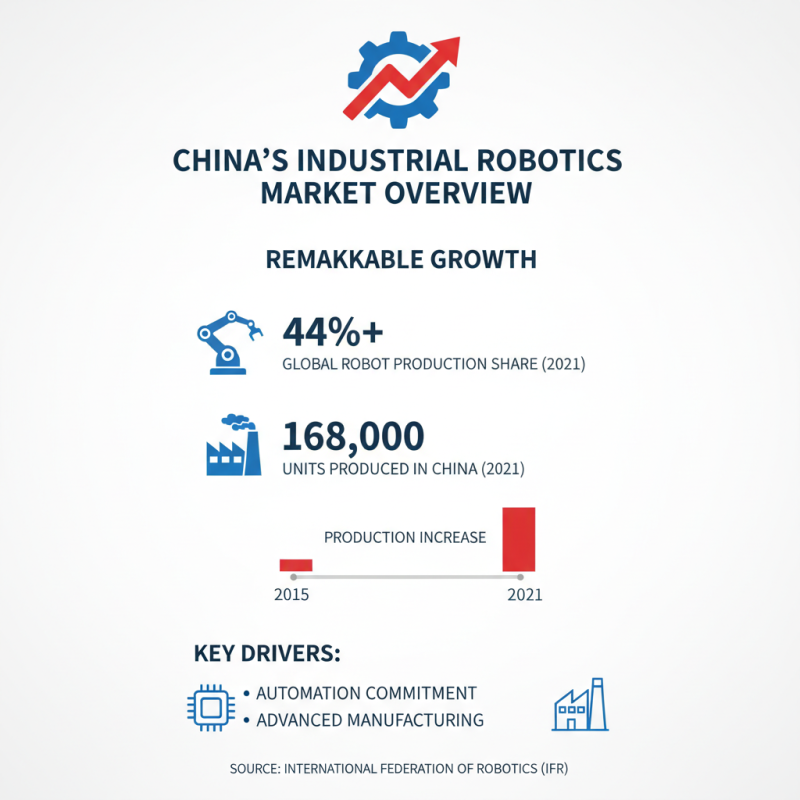
China's industrial robotics market has seen remarkable growth in recent years. According to a report by the International Federation of Robotics, the production of industrial robots in China reached 168,000 units in 2021, which accounted for over 44% of global robot production. This rapid increase reflects China's commitment to automation and advanced manufacturing technologies.
Despite this growth, challenges remain. Many local companies struggle with technology transfer and innovation. The reliance on foreign technology can hinder the development of homegrown solutions. Moreover, the workforce faces a skills gap that affects productivity. A 2022 survey indicated that only 30% of manufacturing employees received adequate training in robot operation and maintenance.
Investment in research and development is critical. With the government's push for a "Made in China 2025" strategy, the focus is on enhancing the capabilities of local manufacturers. Still, questions persist about sustainability and environmental impact. The industry must balance rapid growth with eco-friendly practices to avoid future repercussions.
Key Features and Capabilities of Top Industrial Robots
Industrial robots in China are transforming manufacturing processes. Their key features greatly enhance productivity and accuracy. High-speed motion is one of the crucial capabilities of these robots. They can execute tasks rapidly, reducing production time significantly. Additionally, advanced sensors allow robots to adapt to their environments, improving safety and efficiency.
When selecting an industrial robot, consider the payload capacity. This aspect is vital for tasks that involve heavy materials. Check the precision of the robot, as even small errors can lead to waste and inefficiency. Think about the ease of integration with existing systems. A robot that complicates your workflow could negate its benefits.
Tips: Always review the specifications closely. Look for robots that offer flexibility in programming and operation. Seek feedback from existing users to better understand real-world applications. Remember, the right choice saves time and cost in the long run, but choosing poorly can create lasting problems.
Major Manufacturers of Industrial Robots in China
China has rapidly become a leader in industrial robotics. The country's manufacturers are driving innovation and meeting global demands. These companies focus on automation across various sectors, improving efficiency in manufacturing.
Many major players excel in different robot types, such as collaborative robots and automated guided vehicles. These manufacturers emphasize quality and adaptability. Yet, not all produce consistent results. Some struggle with software integration, affecting operational capabilities.
Innovation doesn't always guarantee reliability. Some companies face challenges ensuring robots meet various industrial needs. Decisions on design and functionality can impact market competitiveness. Buyers should evaluate each manufacturer carefully and consider long-term support.
Top 10 Industrial Robots in China for Global Buyers
| Rank |
Robot Type |
Payload Capacity (kg) |
Application |
Price Range (USD) |
Market Share (%) |
| 1 |
Articulated Robot |
200 |
Assembly, Welding |
25,000 - 50,000 |
20 |
| 2 |
SCARA Robot |
10 |
Pick and Place |
15,000 - 30,000 |
15 |
| 3 |
Delta Robot |
3 |
Food Packaging |
10,000 - 20,000 |
12 |
| 4 |
Collaborative Robot |
8 |
Assembly, Inspection |
20,000 - 40,000 |
18 |
| 5 |
Cartesian Robot |
50 |
Material Handling |
12,000 - 25,000 |
10 |
| 6 |
Mobile Robot |
200 |
Logistics, Delivery |
30,000 - 70,000 |
8 |
| 7 |
Painting Robot |
20 |
Coating, Painting |
40,000 - 80,000 |
6 |
| 8 |
Welding Robot |
150 |
Metal Welding |
50,000 - 100,000 |
9 |
| 9 |
Inspection Robot |
5 |
Quality Control |
8,000 - 15,000 |
3 |
| 10 |
Automated Palletizing Robot |
300 |
Palletizing |
60,000 - 150,000 |
5 |
Applications of Industrial Robots Across Various Industries
Industrial robots play a critical role in various sectors. They enhance productivity, improve precision, and ultimately drive growth. According to the International Federation of Robotics (IFR), the global industrial robot market is expected to exceed $70 billion by 2025. This growth opens opportunities for businesses in China, whose industrial robots are rapidly gaining traction worldwide.
In automotive manufacturing, robots can handle assembly, painting, and welding tasks. A report by Deloitte indicates that the automotive sector accounts for over 30% of all industrial robot installations. In electronics, robots are essential for tasks like soldering and testing. This industry is projected to grow at a CAGR of 15% through 2024, according to MarketsandMarkets.
However, challenges remain. Integrating robots into existing workflows can be complex. Many companies face difficulties training staff to work alongside robots. Additionally, concerns about job displacement persist in industries heavily reliant on automation. Addressing these issues is crucial for maximizing the benefits of robotics in manufacturing and beyond.
Future Trends and Developments in China's Industrial Robotics Sector
China is rapidly advancing in the field of industrial robotics. Many industries are adopting automation to enhance productivity. This shift is driven by the need for efficiency and precision in manufacturing processes. Robotics technology is evolving quickly. New innovations in AI and machine learning are becoming more integrated into robotic systems.
Key trends include increased collaboration between humans and robots. Cobots (collaborative robots) are emerging as essential tools in factories. They work alongside human workers, enhancing safety and productivity. However, the challenge lies in balancing automation with workforce impacts. As robotics skills expand, reskilling workers becomes necessary. Workforce adaptation is vital for integrating robots successfully.
Another significant trend is the focus on sustainability. Manufacturers are exploring eco-friendly robotics solutions. Energy-efficient designs and recyclable materials are gaining attention. Yet, the industry faces hurdles in achieving these sustainability goals. The tech used must align with environmental standards. Continuous improvement is essential to drive innovation while considering ecological impacts.