Leave Your Message

What Is a Feed Mixer and How Does It Work?

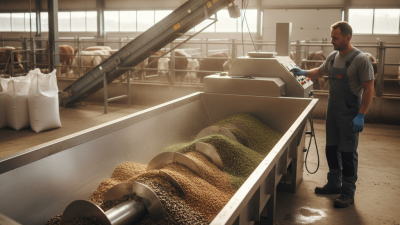
A Feed Mixer is the working center of many modern livestock feeding systems. It combines forage, grains, minerals, liquids, and supplements into a more consistent ration. The machine helps animals receive similar nutrients in each bite. That consistency can support stable intake, digestion, and production.

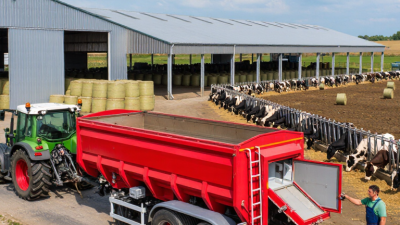
Dr. Michael Hutjens, a respected dairy nutrition expert, has said, “Consistency is the key to successful TMR feeding.” This principle explains why mixer design and operation matter. A vertical mixer uses rotating augers to lift and tumble ingredients. A horizontal mixer uses paddles or reels to move them across the chamber. Both systems aim to distribute particles evenly.

The process begins with accurate weighing. Operators usually load heavier, dry ingredients before adding lighter materials or liquids. Mixing time must remain controlled. Too little time leaves visible layers. Too much time may reduce particle structure and encourage sorting. A practical operator checks the ration with a particle separator, watches the load, and inspects knives, paddles, augers, and discharge doors. Small wear can create large feeding differences.

Real farms rarely operate under perfect conditions. Moisture changes. Ingredients arrive unevenly. Human decisions also vary. That is why regular calibration and observation remain essential. A Feed Mixer is not simply a metal box with an auger. It is a measured system that connects equipment performance with animal health.

Some details remain easy to overlook. The best mixing plan can fail when loading order is ignored. Careful records reveal those weaknesses. Good results come from equipment, training, and honest review.
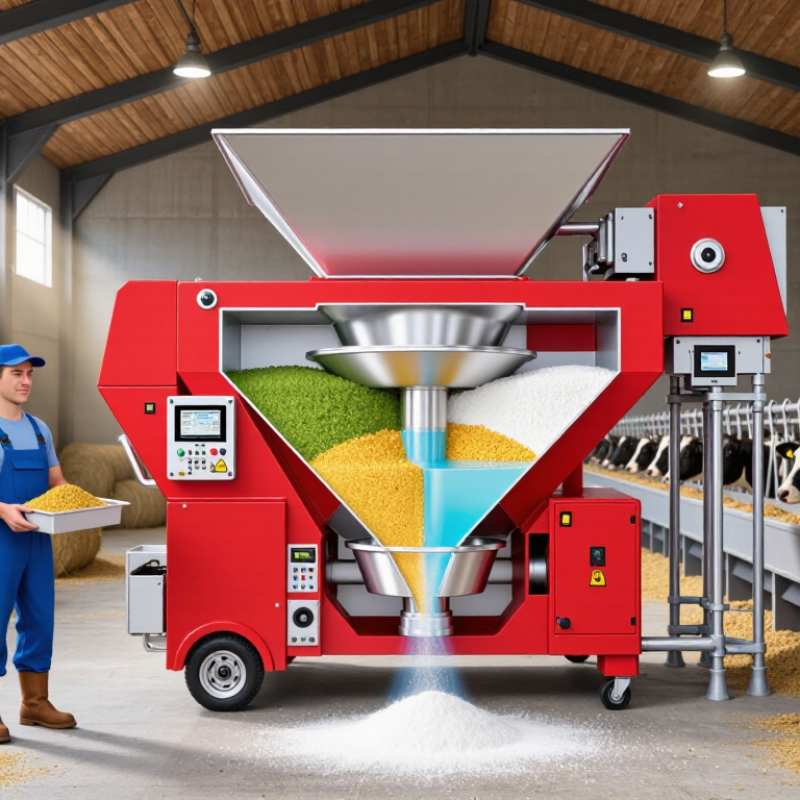
What Is a Feed Mixer and How Does It Work?

What a Feed Mixer Is: TMR Equipment for Consistent Ration Preparation

What Is a Feed Mixer and How Does It Work?

What a Feed Mixer Is: TMR Equipment for Consistent Ration Preparation

A feed mixer is a machine designed to combine forage, grain, minerals, and liquid ingredients into a total mixed ration, or TMR. Each bite should contain a similar nutrient balance. This supports steadier feeding and helps reduce ingredient selection by livestock.

The process begins with accurate weighing. Operators load dry forage, silage, concentrates, and supplements according to the ration plan. An auger or paddle system then cuts and folds the materials through the mixing chamber. Mixing time matters. Too little time leaves visible pockets of ingredients. Too much time can damage forage structure and increase sorting.

Moisture affects the final texture. A ration that is too dry may separate during delivery, while excess moisture can create heavy, uneven clumps. Experienced operators check the ration by hand and collect samples from different discharge points. A simple sieve test can reveal whether fine particles are collecting at the bottom.

Small adjustments help.

Mixer scales need regular verification. Worn knives, damaged augers, or overloaded chambers can also affect consistency. In daily use, perfect uniformity is difficult. That is worth admitting. A reliable process combines equipment maintenance, careful loading, proper mixing time, and periodic review with a qualified feed specialist.
What Is a Feed Mixer and How Does It Work?

A feed mixer combines forage, silage, concentrates, minerals, and other ingredients into a Total Mixed Ration (TMR). Consistent particle distribution helps reduce sorting and delivers a more uniform ration to every animal.

The chart shows a representative particle-size target measured with a Penn State Particle Separator: material is distributed across particles larger than 19 mm, between 8 and 19 mm, between 4 and 8 mm, and smaller than 4 mm. Actual targets should be adjusted for animal group, forage type, moisture, and ration formulation.

How Ingredients Are Loaded: Forage First, Concentrates Next, Liquids Last

A feed mixer combines forage, grains, protein sources, minerals, and liquids into a consistent ration. The loading order matters because each ingredient changes how the material flows. According to the 2024 Alltech Agri-Food Outlook, global feed production reached about 1.13 billion metric tons in 2023. At that scale, small mixing errors can affect many animals and farms.

Load forage first, especially long hay or silage. This material creates the mixer’s basic structure and gives knives time to reduce oversized pieces. Watch the texture, not only the clock. The Penn State Particle Separator is widely used to check forage distribution and identify excessive sorting risk.

Add concentrates next, including grains, protein meals, minerals, and dry additives. Pour them over moving forage, rather than dropping them into one corner. This improves contact and limits dense pockets.

Add liquids last. Water, molasses, or liquid supplements can coat dry feed and reduce dust. However, too much liquid may create sticky clumps. The National Research Council’s Nutrient Requirements of Dairy Cattle stresses accurate nutrient delivery, but accuracy depends on more than a formula. It depends on weighing, timing, and equipment condition. A practical loading cycle may take several minutes, yet rushing remains tempting. That is where mistakes begin. I would not treat this sequence as an absolute rule. Very wet forage, frozen material, or a nearly full tub may require adjustment. Check the finished mix by hand and record what changed.

How Mixing Works: Cutting, Folding, and Blending in a 3–5-Minute Cycle

A feed mixer combines forage, grains, minerals, and liquid ingredients into one consistent ration. Its action is more than simple spinning. During a typical 3–5-minute cycle, sharp edges cut long fibers into shorter pieces. Paddles or augers then fold material across the chamber. Repeated movement blends heavier and lighter particles. The goal is a ration that looks similar from the first scoop to the last.

Mixing time matters. Too little time leaves dry pockets and mineral clumps. Too much time may reduce fiber length and encourage sorting.

The 2024 Alltech Agri-Food Outlook reported about 1.126 billion metric tons of global feed production in 2023. That scale shows why small process errors can affect many animals and large volumes of feed.

Feed uniformity is commonly checked through sampling and coefficient of variation. Many nutrition programs aim for a variation near 5% or lower, although the correct target depends on the ration.

Tips:

Load dry ingredients carefully. Add liquids after the main structure forms. Watch the mixer, not only the clock. A 3-minute cycle may work well today, but wetter forage, worn knives, or a fuller chamber can change the result. I have found that visual checks are useful, but they are not enough. A ration can appear blended while minerals remain unevenly distributed. Periodic laboratory testing and practical feed-bunk observations provide stronger evidence.

How Particle Size Is Checked Using the 4-Sieve 19–8–4 mm Method

What Is a Feed Mixer and How Does It Work?

A feed mixer combines forage, grains, minerals, and liquids into a consistent total mixed ration. Its performance depends on more than mixing time. Particle size matters because it influences sorting, chewing activity, rumen stability, and feed intake.

The 4-sieve 19–8–4 mm method gives a practical field check. Collect samples from several mixer discharge points, not only the first scoop. Place the sample on sieves measuring over 19 mm, 8–19 mm, 4–8 mm, and under 4 mm. Shake the stack 40 times with even movements. Weigh each fraction, then calculate its percentage of the total sample.

A widely used technical guide suggests approximately 2–8% above 19 mm, 30–50% at 8–19 mm, 30–50% at 4–8 mm, and less than 20% below 4 mm. These ranges are linked to the particle-separation recommendations of Kononoff and colleagues. NASEM’s 2021 dairy nutrition report also stresses adequate physically effective fibre, although it does not replace on-farm particle testing. These numbers are guides, not sacred limits. I have seen acceptable results from one sample and poor sorting later in the bunk. Sampling remains the weak point.

Tips

Use a clean, dry sample. Record moisture, mixer load, mixing time, and sieve weights. Repeat the test on different days. A 1% calculation error can change the feeding decision. Check for long pieces caught across the top sieve. They may indicate poor cutting or uneven loading.

What Is a Feed Mixer and How Does It Work? - How Particle Size Is Checked Using the 4-Sieve 19–8–4 mm Method
Section Parameter Typical Value or Target How It Works or How It Is Checked
Feed Mixer Fundamentals
Definition Feed mixer Mechanical blending equipment A feed mixer combines forage, grain, protein sources, minerals, liquids, and other ingredients into a more uniform ration.
Primary objective Ration uniformity Consistent nutrient distribution Uniform mixing helps reduce ingredient sorting and gives animals a more consistent nutrient intake from one mouthful to the next.
Common mixer types Horizontal, vertical, and paddle mixers Selected according to ration and farm capacity Horizontal mixers commonly use augers or reels, vertical mixers use one or more vertical augers, and paddle mixers use paddles mounted on a shaft.
Mixing action Conveying, lifting, folding, and tumbling Continuous circulation during mixing Rotating augers, paddles, or reels move material through the mixing chamber so heavier and lighter particles are repeatedly redistributed.
Loading sequence Ingredient addition order Usually forage, dry ingredients, then liquids The correct order depends on the mixer and ration. Dry ingredients should be distributed evenly, while liquids are commonly added after sufficient dry circulation has begun.
Mixing time Time after the final ingredient is added Often about 3–6 minutes The proper time must be established for each mixer and ration. Excessive mixing can reduce effective fiber length and increase particle breakdown.
Moisture management Liquid distribution and clumping control Even coating without visible wet pockets Liquids should be applied gradually and distributed across the moving feed. Excess moisture or poor distribution can create clumps and encourage sorting.
Mixing quality check Visual and laboratory uniformity No obvious ingredient pockets Representative samples can be collected from multiple points in the discharge stream and tested for dry matter, nutrients, or marker ingredients.
4-Sieve Particle-Size Method
Method purpose Physical particle-size distribution Four fractions The method estimates how much material is retained above 19 mm, between 19 and 8 mm, between 8 and 4 mm, and below 4 mm.
Sieve stack Screen openings 19 mm, 8 mm, 4 mm, and collection pan Place the largest-opening sieve on top, followed by the 8 mm sieve, the 4 mm sieve, and the bottom pan.
Sample quantity Representative feed sample Approximately 1.4–1.5 L Collect a representative sample from the feed discharge or several locations in the delivered ration. Avoid selecting only visible large particles.
Shaking procedure Standardized agitation 40 strokes with periodic rotation Shake the assembled separator with consistent back-and-forth strokes and rotate it approximately 90 degrees after every five strokes to improve separation.
Fraction 1 Material retained above the 19 mm sieve Long forage particles Weigh the material remaining on the top sieve. This fraction is associated with the longest pieces and should be monitored for excessive sorting risk.
Fraction 2 Material passing 19 mm but retained above 8 mm Medium-long particles Weigh the material retained on the second sieve. This fraction contributes substantially to physically effective fiber in many total mixed rations.
Fraction 3 Material passing 8 mm but retained above 4 mm Short particles Weigh the material retained on the third sieve. A high proportion may indicate excessive chopping or over-processing of forage.
Fraction 4 Material passing the 4 mm sieve Fine particles Weigh the material collected in the bottom pan. A high fine-particle proportion can increase sorting, reduce effective fiber, and affect ration intake behavior.
Calculation Percentage of each fraction Fraction weight ÷ total sample weight × 100 Record the weight from each sieve and the pan. The four percentages should total approximately 100%, allowing for small weighing or handling differences.
Typical Total Mixed Ration Reference Ranges
Top sieve Above 19 mm 2–8% A practical reference range for many dairy total mixed rations. The appropriate value depends on forage type, moisture, animal group, and ration design.
Second sieve 19–8 mm 30–50% This fraction generally represents medium-length material that supports adequate physical structure in the ration.
Third sieve 8–4 mm 10–20% This range is commonly used as a practical guide, but it should not replace evaluation of animal performance and the complete ration formulation.
Bottom pan Below 4 mm 30–40% Fine material is expected in many mixed rations. Excessive fines may increase sorting and reduce the physical effectiveness of fiber.
Interpretation Use of target ranges Guide, not a universal rule Targets should be interpreted with dry matter, forage quality, chewing activity, manure consistency, milk production, feed refusals, and evidence of sorting.
Note: The reference ranges are general guidelines for total mixed rations. Actual targets should be adjusted by a qualified nutrition professional according to animal category, forage characteristics, ration moisture, and production objectives.

How Mixing Uniformity Is Measured Against the Industry Target of CV <10%

A feed mixer combines grains, forage, minerals, and liquid ingredients into a more consistent ration. Vertical mixers lift material with augers, while horizontal mixers move it through paddles or ribbons. The goal is simple: each scoop should resemble the intended formula.

Mixing uniformity is commonly measured with the coefficient of variation, or CV. Technicians collect samples from different mixer areas or discharge points. A laboratory then tests a key nutrient, salt marker, or approved tracer. The formula is CV = standard deviation divided by the average, multiplied by 100. A CV below 10% is often used as an industry target. Lower variation usually indicates better distribution.

The number alone does not tell the whole story. Samples must represent the entire load, not only the first discharge. Poor sampling can make a good mixer look unreliable. Overloading, incorrect ingredient order, excessive moisture, and worn paddles can also increase variation. In field checks, I would record loading time, mixing time, batch size, and discharge sequence. Small process changes matter. Still, a CV under 10% may hide uneven physical texture or nutrient separation during transport. Repeating the test on different days gives stronger evidence. Results should be reviewed with operating records, not treated as a perfect answer.