Leave Your Message

Essential Tips for Choosing Screw Conveyors for Your Needs?

Choosing the right Screw Conveyors can significantly impact your operations. According to Dr. John Smith, a leading expert in the field, "Selecting the right conveyor is crucial for efficiency and productivity." This statement highlights the importance of understanding your specific needs.

Screw Conveyors come in various designs and sizes. Each option serves different applications. It is vital to analyze factors such as material type, flow rate, and length. Not all Screw Conveyors are created equal; some may falter under specific conditions. Reflecting on your needs can save time and resources.

Many users overlook the significance of maintenance and compatibility. A well-chosen Screw Conveyor can last years. However, improper choice can lead to breakdowns. Therefore, careful evaluation is essential. Each aspect of your choice deserves consideration to avoid future issues.
Essential Tips for Choosing Screw Conveyors for Your Needs?

Understanding the Basics of Screw Conveyors

Essential Tips for Choosing Screw Conveyors for Your Needs?

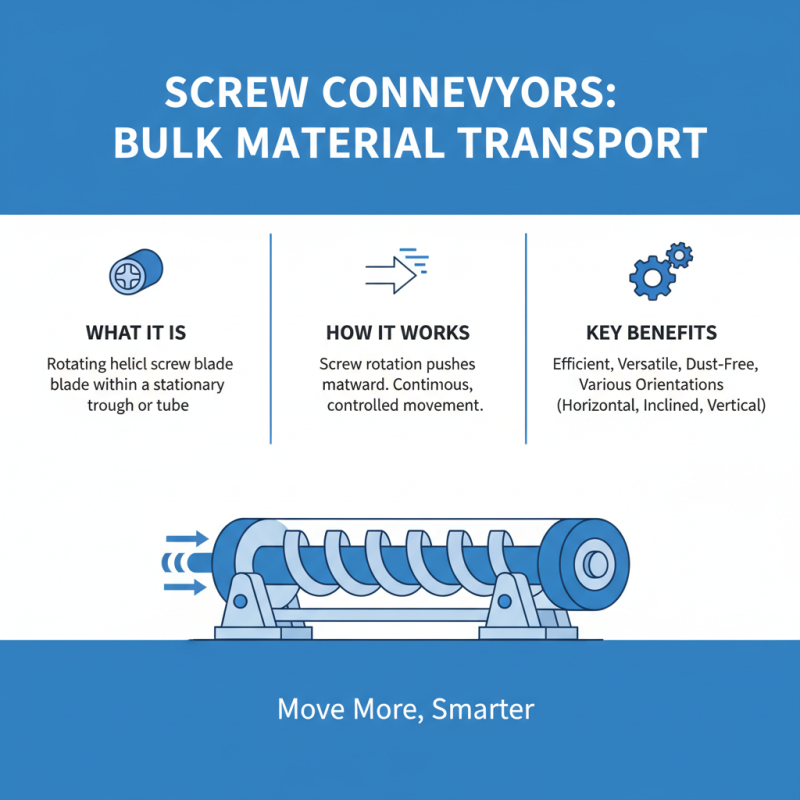
Screw conveyors are vital for many industries. They transport bulk materials efficiently. Understanding how they work can help you choose the right one. A screw conveyor consists of a rotating helical screw blade. This design allows it to move materials along a trough or tube.

Industry studies indicate that screw conveyors can handle various materials. They are effective for both granular and powdery substances. According to a recent report, the average efficiency of well-designed screw conveyors is around 80%. However, improper design can lead to significant material loss. Designers must consider factors like material type and flow properties.

Sizing and power requirements are crucial in the selection process. For example, a longer conveyor requires more power. A short conveyor may not deliver materials effectively. As a result, many companies underestimate the power needs, causing performance issues later. Regular maintenance is essential too. Over time, wear and tear can diminish effectiveness. Knowing these basics can guide you in making informed choices.


Factors to Consider When Selecting Screw Conveyors

When selecting screw conveyors, it’s vital to consider several factors. The type of material being conveyed plays a crucial role. Different materials require specific designs and configurations. According to industry reports, bulk density and flow characteristics influence the conveyor's efficiency. For instance, powders may need a different approach than granules.

Another important aspect is the length and diameter of the screw conveyor. A longer conveyor can lead to greater friction, affecting performance. A report by the Conveying Equipment Manufacturers Association suggests that the ideal length should be balanced with the material type. If the diameter is too small, it could lead to clogging, especially with high-viscosity materials.

Power requirements are often overlooked but are essential in your selection process. The motor’s power needs must align with the conveyor's specifications. Underestimating power can lead to failure. A study indicated that 30% of conveyor issues stem from inadequate power supply. Regular maintenance also cannot be ignored. Neglected systems can result in unexpected downtime, ultimately impacting productivity.

Essential Tips for Choosing Screw Conveyors

This chart represents the factors to consider when selecting screw conveyors based on their importance level. Each factor is rated on a scale from 1 to 10, demonstrating the significance of attributes such as material type and capacity when making your choice.

Types of Screw Conveyors and Their Applications

Essential Tips for Choosing Screw Conveyors for Your Needs?

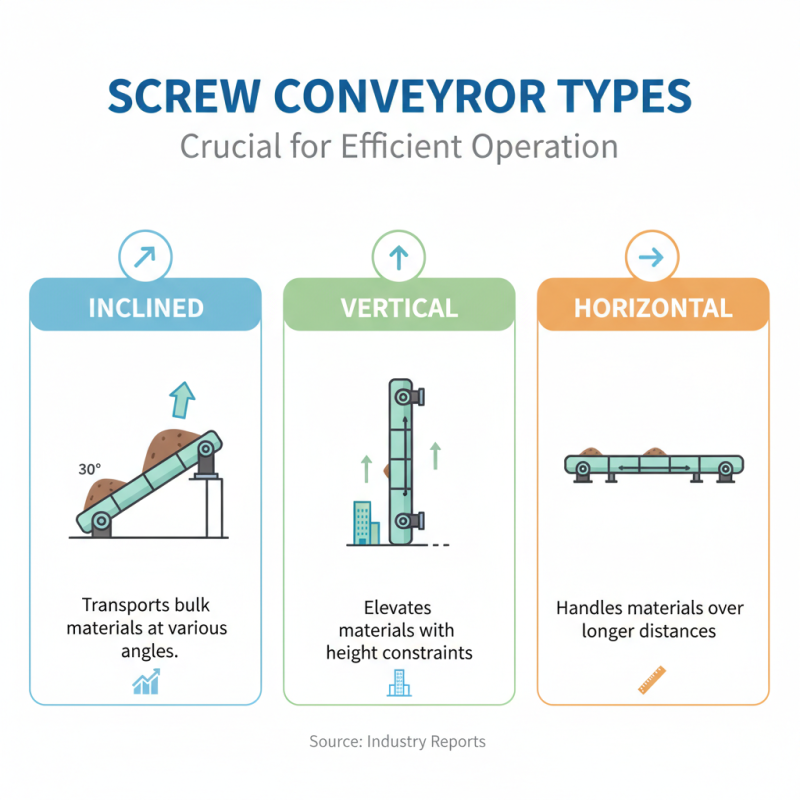
When selecting a screw conveyor, understanding the types available is crucial for efficient operation. The three primary types include inclined screw conveyors, vertical screw conveyors, and horizontal screw conveyors. Each type has unique characteristics suited for specific applications. According to industry reports, inclined screw conveyors excel in transporting bulk materials at various angles. Vertical screw conveyors are perfect for elevating materials with height constraints, while horizontal screw conveyors effectively handle a range of materials over longer distances.

For many industries, such as food processing, agricultural, and mining, the right choice can impact productivity and safety. Evaluating the material being transported is essential. A material's flowability and particle size can determine the appropriate screw design, which is critical in preventing jams. A report from the Conveying Equipment Manufacturers Association highlights that a tailored screw design can improve efficiency by up to 25%.

Tips: Always consider the environment in which the screw conveyor will operate. Factors like temperature, humidity, and chemical exposure can affect material performance. Additionally, regular maintenance checks are vital to avoid wear and tear. Failing to address this might lead to operational downtime or increased costs. Each decision in selecting a screw conveyor should be deliberate, as the wrong choice can ripple throughout your operation.

Material Handling Requirements for Screw Conveyors

When selecting screw conveyors, understanding material handling requirements is crucial. Different materials demand varied handling techniques. For instance, granular materials may flow easily through a screw conveyor, while dense powders could cause blockages. According to a report by the Conveyor Equipment Manufacturers Association, nearly 30% of conveyor failures stem from inadequate material handling assessments.

The moisture content in materials also plays a significant role. High moisture levels can lead to clumping, which affects performance. Selecting the right screw pitch and design can mitigate these issues. Engineers often recommend a pitch that matches the material characteristics. Interestingly, about 15% of users overlook this factor, leading to suboptimal operational efficiency.

Material compatibility cannot be ignored. For example, abrasive materials require specific construction materials for durability. Users often opt for cheaper options, only to face higher long-term costs. It's a critical decision that impacts maintenance and lifecycle of equipment. These considerations are essential for ensuring that the screw conveyor system operates reliably and effectively in various environments.

Maintenance Tips for Optimal Screw Conveyor Performance

Maintaining screw conveyors is crucial for optimal performance. Regular inspections can prevent costly breakdowns. According to industry reports, nearly 30% of conveyor inefficiencies are due to lack of maintenance. A maintenance schedule should include checks on the motor, bearings, and troughs.

Cleaning is essential too. Dust and debris can accumulate, leading to blockages. A study showed that a clean conveyor operates 15% more efficiently. Operators should be trained to recognize signs of wear and tear. Ignoring these can double repair costs over time.

Another vital aspect is lubrication. Insufficient lubrication can lead to friction and heat. This accelerates wear on critical components. A well-lubricated conveyor not only lasts longer but also reduces energy consumption by 10%. Insufficient attention to these details can result in significant operational setbacks.

Essential Tips for Choosing Screw Conveyors for Your Needs - Maintenance Tips for Optimal Screw Conveyor Performance

Feature Description Maintenance Tips
Material Type Select materials that suit the transported media (e.g., food-grade, corrosion-resistant). Regularly inspect for wear due to abrasive materials.
Screw Design Choose the optimum flight pitch and diameter based on capacity needs. Ensure flights are not damaged and replace them as needed.
Drive System Select between direct or belt drive depending on power requirements. Lubricate bearings and check alignment periodically.
Capacity Determine the required throughput based on your application. Monitor performance to adjust for changes in material density.
Length and Incline Consider transport length and angle when selecting design. Check for blockages especially in steep inclines.