How to Choose the Right Screw Conveyors for Your Needs?
Selecting the right screw conveyors can be challenging. They play a crucial role in material handling across various industries. With numerous designs and features available, making an informed choice is essential to optimize efficiency.
Screw conveyors are designed to transport bulk materials. They come in different sizes and configurations. Each design serves specific functions and materials. Understanding your needs is vital. Consider factors like material type, volume, and environmental conditions. These affect the performance and longevity of the conveyors.
Moreover, reliability is paramount. Choosing a poorly designed screw conveyor can lead to maintenance issues. Think about the long-term costs. Finding the right balance between cost and effectiveness requires careful analysis. Expert advice can guide your decision, ensuring you select a screw conveyor that fits your unique requirements.
Understanding the Basics of Screw Conveyors and Their Applications
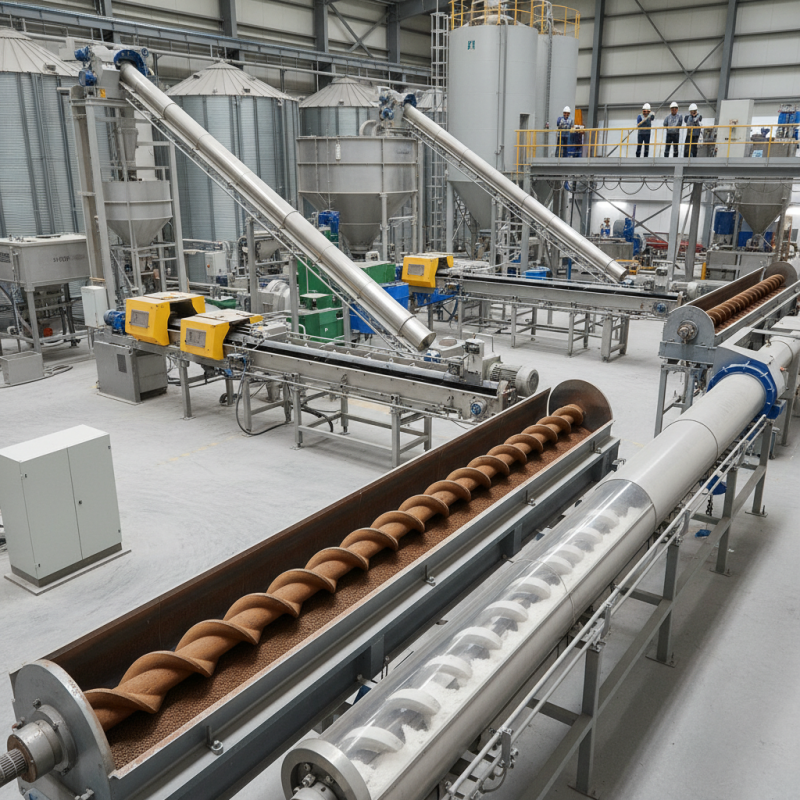
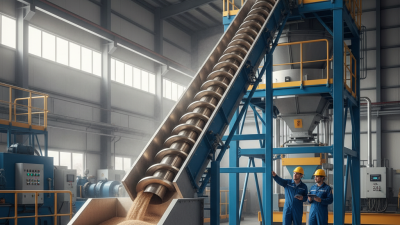
Screw conveyors are vital in various industries. They efficiently move bulk materials like grains, powders, and granules. Understanding the basics is key to making the right choice. The design involves a rotating helical screw element, often housed in a tube. As the screw turns, it moves the material forward.
When selecting a screw conveyor, consider the material's characteristics. Different materials come with different flow properties. For instance, cohesive materials might require more power than free-flowing ones. Analyze how the material behaves when stored.
**Tip:** Always assess the environment where the conveyor will operate. Dust, humidity, and temperature can affect performance.
Maintenance is another crucial factor. Regular inspections can prevent breakdowns. However, some users overlook this. Establishing a routine can enhance reliability.
**Tip:** Keep an eye on wear and tear. This can save costs in the long run.
Identifying the right specifications requires detailed attention. If you're unsure about capacities or sizes, consulting with experts can be beneficial. Balancing efficiency and cost will lead you to the best option.
Understanding Screw Conveyors: Capacity vs. Power Requirements
Identifying Your Material Characteristics and Handling Requirements
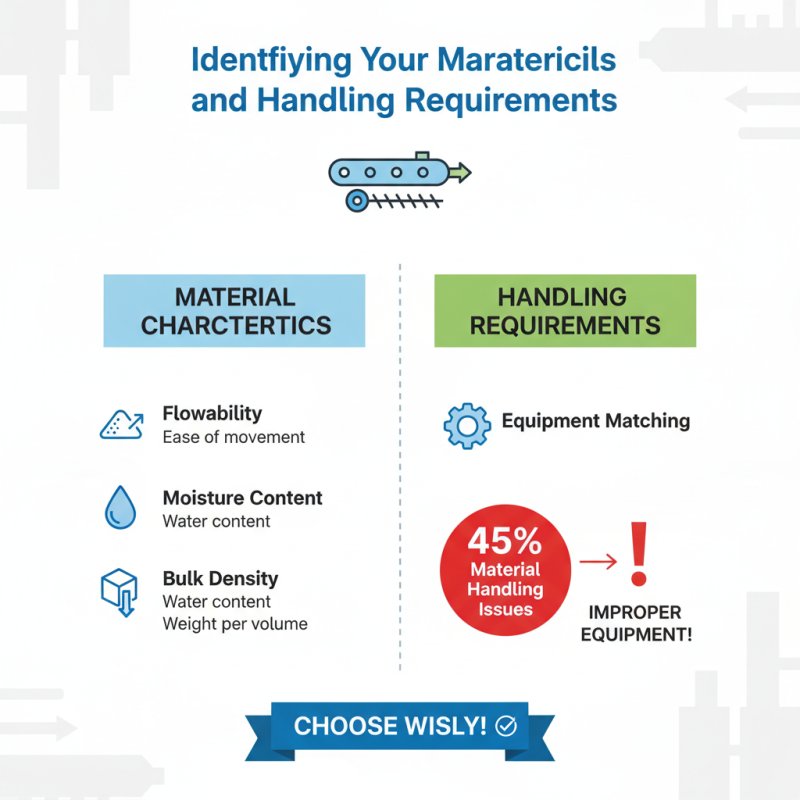
Choosing the right screw conveyor begins with understanding your material characteristics and handling requirements. Each material behaves differently under stress. For instance, flowability, moisture content, and bulk density are crucial factors. Industry reports indicate that about 45% of material handling issues arise from improper matching of equipment to materials.
Consider material flowability. Some materials flow freely, while others may clump or bridge. For example, granular materials often require less energy to move compared to those with high moisture content. An analysis by the Conveyor Equipment Manufacturers Association (CEMA) notes that improper handling can lead to a 15% increase in operational costs. This highlights the importance of thorough material evaluation.
Next, think about your handling requirements. Is your system inclined, or does it run horizontally? Inclined systems can affect flow and require specific screw configurations. A report from the International Journal of Mechanical Engineering shows that up to one-third of screw conveyor installations experience performance issues due to design miscalculations. Addressing these considerations early can prevent costly mistakes later.
Evaluating Different Screw Conveyor Designs and Configurations
When selecting a screw conveyor, understanding different designs and configurations is crucial. Each design caters to specific applications and material types. For instance, a standard screw conveyor is effective for horizontal transport.
However, if your materials are fragile, you might consider a tubular design. This option minimizes material degradation.
Configuration also plays a significant role. Angle and length can impact efficiency. Shorter conveyors often handle materials quickly. Yet, longer systems may be necessary for certain setups. You should consider your space and layout before making a decision.
Observing how other configurations impact flow can provide insights.
Testing different options can reveal hidden strengths or weaknesses. Sometimes, what seems ideal may not function effectively in practice. Gathering feedback from operators is invaluable.
They can share real-world performance details that data alone might miss. This collaborative approach often uncovers practical adjustments needed for optimal operations.
Assessing Motor Power and Speed Requirements for Efficient Operation
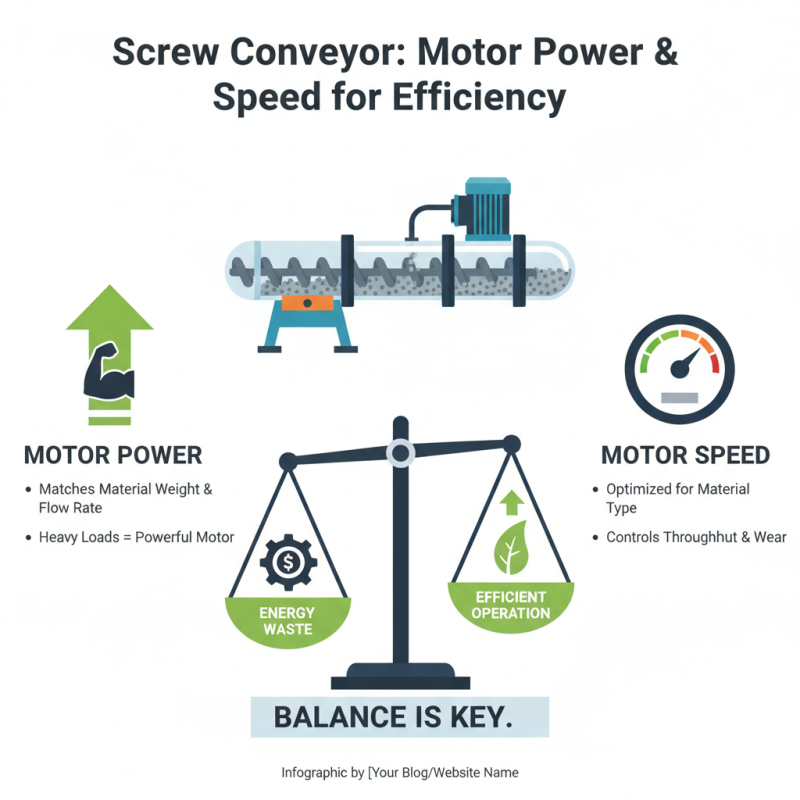
Selecting the right screw conveyor involves many aspects, but motor power and speed are crucial. Understanding these factors can greatly impact efficiency. The motor's power rating should match the material's weight and flow rate. A powerful motor ensures smooth operation, especially for heavy materials. Yet, an overly powerful motor can lead to energy waste. Balance is key.
Speed is equally important. The right speed will depend on the material characteristics and application. Faster speeds can enhance productivity but may risk material degradation. Conversely, slow speeds can ensure safe handling but may reduce throughput. Observing your material flow and consulting industry standards can provide insight.
Sometimes, users overlook maintenance requirements. A suitable motor must be easy to maintain. Regular maintenance checks can prevent unexpected downtimes. Also, consider the overall system design and installation location. Excessive heat or dust can affect the motor's performance. Attention to detail here can lead to better operational efficiency.
Considering Installation Space and Maintenance Needs for Optimal Use
When choosing screw conveyors, installation space is vital. Start by measuring the area where you plan to install the conveyor. Ensure there is enough room for the conveyor's dimensions. This includes the length, diameter, and any required loading or unloading stations. Space constraints can impact performance. A cramped environment may lead to operational issues or increased maintenance needs.
Maintenance is another key factor. Consider how accessible the conveyor is for servicing. Conveyors require regular inspections and potential repairs. If the unit is hard to reach, it may be neglected. This oversight can lead to breakdowns or inefficiencies. Moreover, think about the ease of replacing components. Frequent part replacements can be costly and time-consuming.
Reflecting on your specific industry can provide insight too. Different materials and environments affect conveyor performance. Noting the type of materials transported helps determine durability needs. For example, abrasive materials wear out components faster. In turn, this influences maintenance schedules. Adapting your choice of screw conveyor to your environment ensures longevity and efficiency.